Indonesia fast-tracks Rp65.77 trillion sugarcane program in sugar self-sufficiency drive
The Indonesian government is accelerating a Rp65.77 trillion sugarcane investment and downstream program aimed at sugar self-sufficiency, according to investor.id. Farmers are being enlisted as plasma partners for state-owned processors, with the goal of halting imports. The drive was showcased at a large harvest in Jember attended by the Air Force chief of staff.
Rp65.77 trillion sugarcane program fast-tracked
The Indonesian government is accelerating a national sugarcane investment and downstream-processing (hilirisasi) program valued at Rp65.77 trillion, or roughly US$4 billion, as part of a drive toward sugar self-sufficiency. According to investor.id, officials are pushing to advance the program quickly, with one of the central measures being the integration of farmers into the supply chains of state-owned enterprises (BUMN).
The stated objective is to lift domestic sugar output and ultimately halt imports, framing sugar as a matter of food security rather than a purely agricultural concern. The program links upstream cane cultivation with downstream processing capacity, so that more of the value chain — from the field to the refined product — is captured inside Indonesia.
The word officials have used to describe the effort, "dikebut," signals urgency: the investment and downstream package is being pushed forward on an accelerated timeline rather than left to develop gradually.
Farmers enlisted as partners for state processors
A central mechanism is the "plasma" model, under which farmers become partners (mitra) supplying cane to BUMN mills. According to investor.id, encouraging growers to join as plasma partners is one of the main levers the government is using to expand cultivation and secure feedstock for state-owned processors.
For the sugar industry, the arrangement is designed to lock in cane volumes for mills while giving farmers a guaranteed buyer. That combination — assured supply for processors and assured offtake for growers — is the foundation on which the self-sufficiency target rests. Without a reliable flow of cane, additional milling and refining capacity would sit underused.
Military backing and the import question
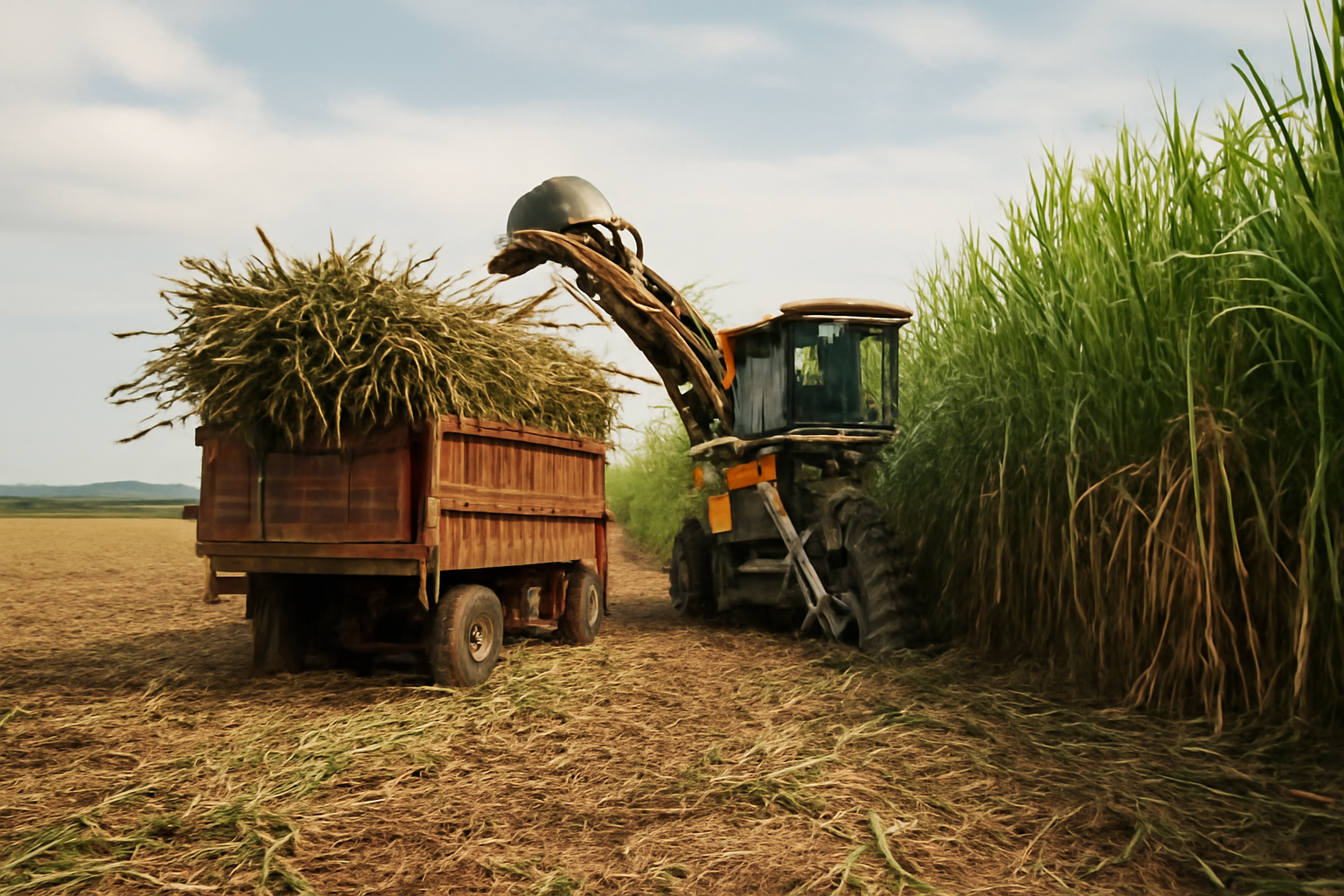
The push was on display at a large sugarcane harvest (panen raya tebu) in Jember, East Java. Air Force Chief of Staff (KASAU) Marshal M. Tonny Harjono attended the harvest and voiced support for the sugar self-sufficiency target, linking it to national food security and the goal of ending imports.
The presence of a senior military figure signals that sugar self-sufficiency is being treated as a strategic national priority rather than a routine agricultural program. For importers and exporters, the key question is timing. Building cane acreage and crushing capacity takes years, so any reduction in Indonesia's sugar import demand would be gradual rather than immediate.
Until domestic production actually rises, trade flows are unlikely to shift, and suppliers currently shipping sugar to Indonesia would retain their volumes in the near term. The figure to watch is whether the Rp65.77 trillion translates into planted hectares and operating mills — the physical capacity that alone can change the country's import needs.