Indonesia eyes egg exports to Singapore to ease domestic price slump
Indonesia's Ministry of Trade plans to export chicken eggs to Singapore to absorb a domestic oversupply that has pushed local prices sharply lower. The move, reported by Bisnis.com, is also framed as a way to widen Indonesian access to ASEAN markets. No volumes or timelines have been disclosed.
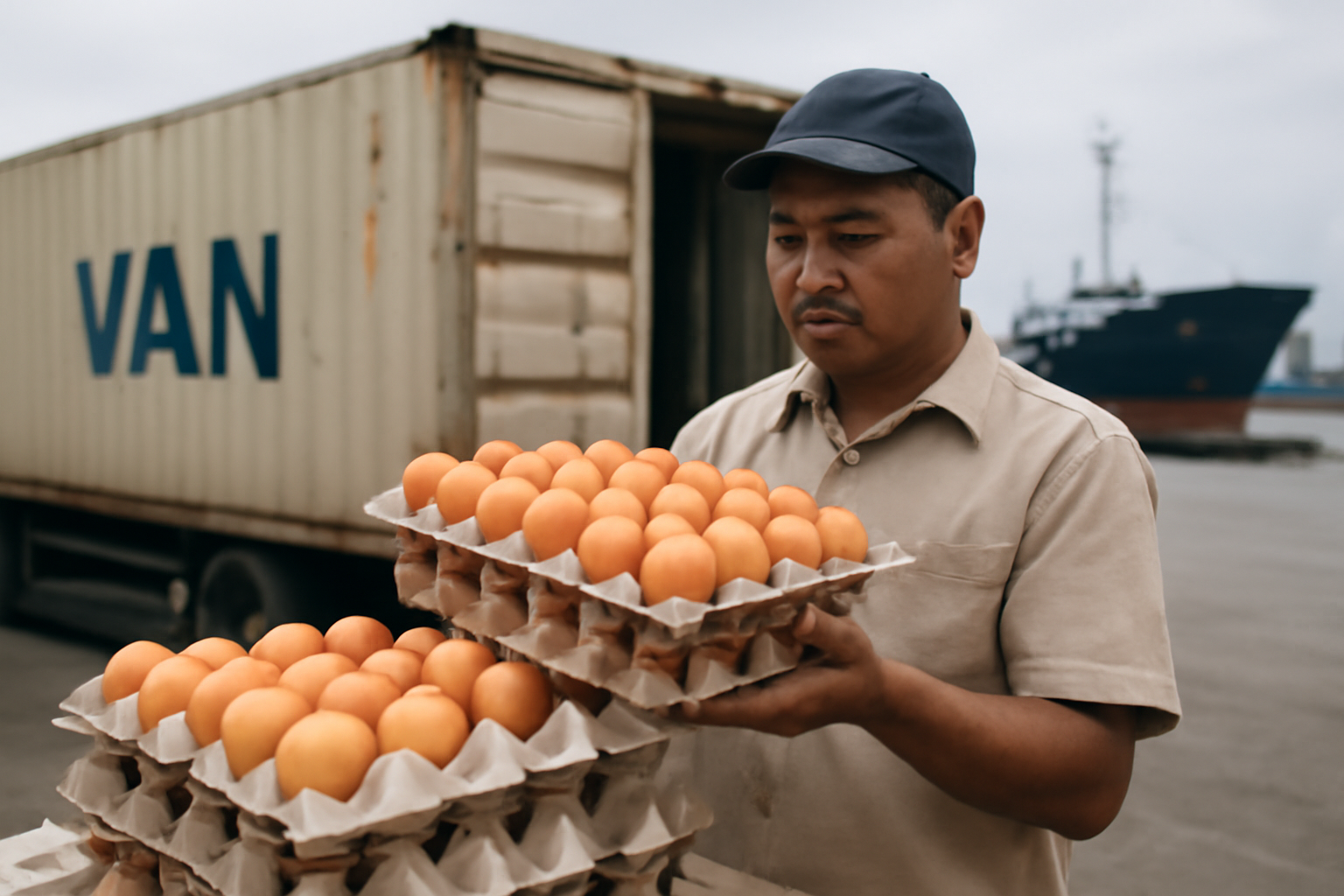
Indonesia weighs egg exports to Singapore to counter falling domestic prices
Indonesia's Ministry of Trade (Kementerian Perdagangan, or Kemendag) is preparing to open egg exports to Singapore, aiming to draw down a domestic oversupply that has pushed local prices sharply lower, according to reports from Bisnis.com outlets ekonomi.bisnis.com and market.bisnis.com.
The plan centers on farm eggs — telur ayam ras, or eggs from commercial layer hens — a mainstay of Indonesia's protein supply and one of the country's most price-sensitive food staples. Kemendag's stated goal is twofold: relieve the price pressure weighing on domestic producers and broaden Indonesian access to markets across ASEAN.
Falling prices at home
Bisnis.com reports that egg prices in Indonesia have fallen sharply, prompting the trade ministry to look abroad for demand. When domestic production outpaces consumption, farm-gate prices drop, squeezing the margins of layer farmers who face relatively fixed costs for feed, chicks and labor. Exporting surplus volumes is a conventional release valve: it removes supply from the local market and, in principle, allows prices to recover toward levels that keep producers solvent.
The cited reports do not disclose the volumes the ministry intends to ship, a timeline for the first shipments, or the price levels it is targeting. Nor do they specify which exporters or producer groups would handle the trade.
Why Singapore
Singapore is the initial target market. The city-state produces only a small share of its own food and sources most of its supply from abroad, making it a natural outlet for neighboring exporters. Its proximity to Indonesia keeps freight times and costs low for a perishable product such as eggs, where shelf life and cold-chain handling are critical to landed quality.
For Indonesian suppliers, gaining a foothold in Singapore would also serve as a proving ground for meeting the import standards — food safety, traceability and packaging requirements — that typically govern egg trade into higher-income markets.
An ASEAN market play
Beyond the immediate price problem, Kemendag frames the initiative as part of a wider push to expand Indonesia's presence in ASEAN markets, according to market.bisnis.com. Establishing egg exports to Singapore could lay groundwork for shipments to other regional buyers, giving Indonesian producers an additional channel to balance domestic supply swings.
Whether the plan delivers durable price relief will depend on execution: securing Singaporean import approvals, meeting sanitary requirements, and moving volumes large enough to matter against the scale of Indonesia's domestic egg output. For now, the reports describe intent rather than confirmed contracts.
What to watch
- Confirmation of export volumes, timelines and the exporters involved.
- Singaporean import clearances and any sanitary or certification conditions.
- Whether domestic Indonesian egg prices stabilize once shipments begin.
- Any extension of the strategy to other ASEAN buyers.