Indonesia's Coffee, Tea and Spice Exports Rise 54% on Global Demand and Higher Prices
Indonesian exports of coffee, tea and spices increased 54 percent, according to the business section of Kompas, which attributed the gain to strong global demand and higher international prices. The report groups the three categories together and does not separate volume growth from price effects, leaving the composition of the increase unclear for buyers and processors.
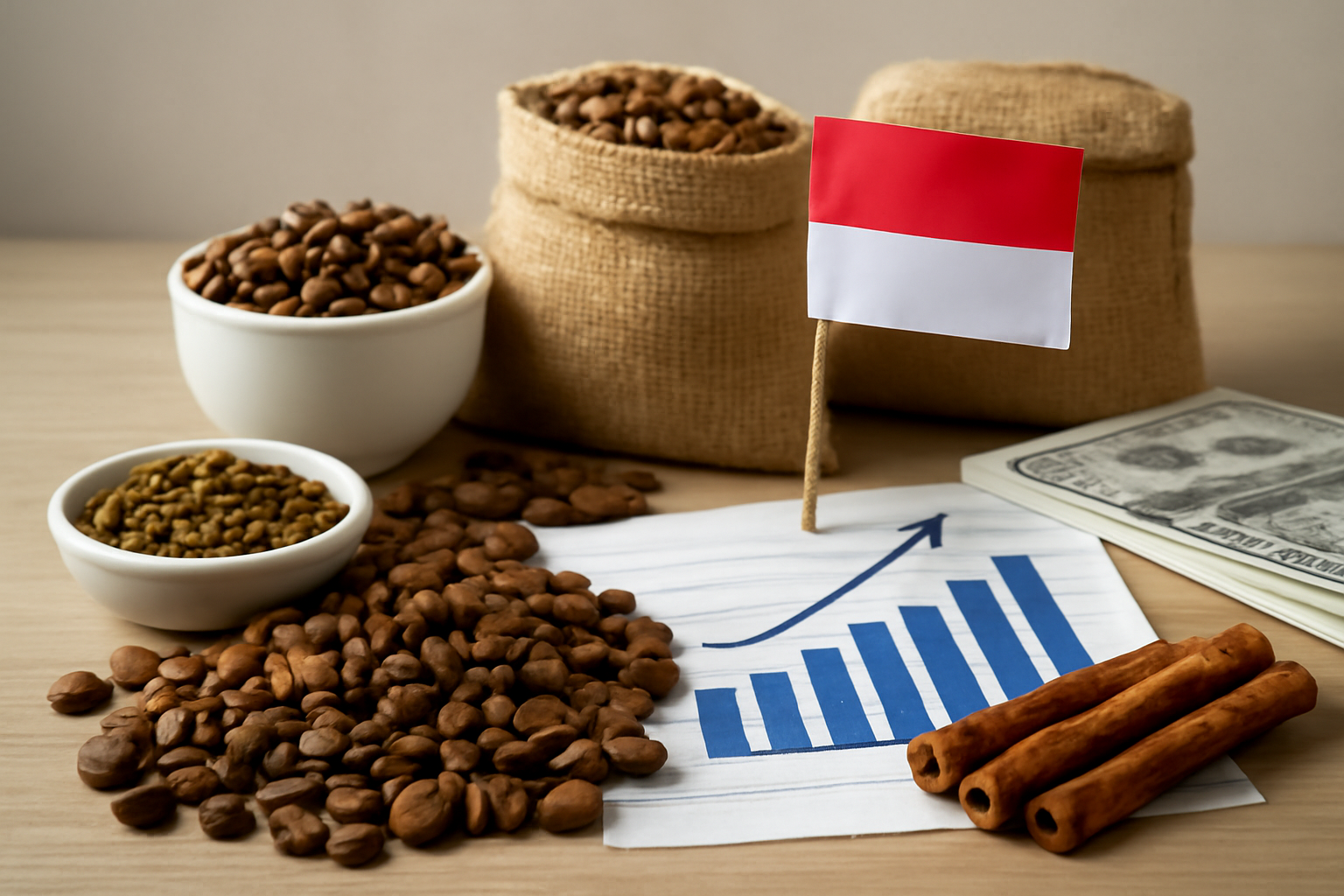
Indonesian exports of coffee, tea and spices jumped 54 percent, the business section of Kompas reported, attributing the increase to high global demand and rising prices on international markets. The report groups the three commodity categories together and does not publish a breakdown by individual product, leaving open how much of the gain came from larger shipped volumes and how much from price.
A 54 percent gain across three commodity groups
Coffee, tea and spices sit in the same statistical family in Indonesian trade reporting, but they behave as separate markets. Coffee is priced against liquid international benchmarks for arabica and robusta. Tea moves through auctions and direct contracts. Spices — among them pepper, cloves, nutmeg, cinnamon and vanilla — are thin, physically traded markets where a single harvest can swing prices sharply. An aggregate 54 percent gain therefore tells buyers that the basket repriced, not which item drove it.
The distinction matters for anyone budgeting procurement. Value-denominated export data rises when tonnage rises, when unit prices rise, or when both move together. Kompas names both demand and price as factors but does not quantify either. Without a volume series alongside the value series, it is not possible to say from this report whether Indonesia gained market share or simply sold a similar quantity into a stronger market.
Demand and prices as the stated drivers
Kompas ties the export growth to high global demand and to the rise in international prices. Both channels reward participants along the chain, though unevenly. Farmers and first-stage collectors capture more when farmgate prices follow export prices upward. Exporters holding forward-sold positions capture less, because they committed tonnage at earlier price levels. Importers and processors abroad absorb the increase at the other end of the chain.
Price-led export growth is also less durable than volume-led growth. When international prices retreat, export value falls back even if the same tonnage leaves the ports. Volume-led growth implies new buyers, new contracts or displaced competitors, and it usually persists longer. Which of the two is at work in Indonesia's case cannot be determined from the published summary.
What buyers and processors should watch
For importers, roasters, tea blenders and spice processors sourcing from Indonesia, the practical questions raised by this report are narrow and answerable once fuller data appears.
- The split between volume and unit value over the same reporting period.
- Commodity-level detail, in particular whether coffee or spices carried the aggregate.
- Destination markets, and whether the growth is broad-based or concentrated in a few buyers.
- Harvest conditions in the producing regions, which set the volume ceiling for the next cycle.
- Contract timing, since purchases made at the top of a price move carry into the next processing season.
Until that detail is published, the 54 percent figure is best read as confirmation that Indonesian soft commodities are selling into a strong international market, with the composition of that strength still undisclosed. Kompas frames the result as growth in exports of the three categories and does not report an absolute export value, a currency basis or a comparison period alongside the percentage.