Indonesia’s Rp200 Trillion Coffee Export Goal Faces Productivity and Quality Constraints
Indonesia aims to raise the value of coffee exports to Rp200 trillion, but low farm productivity and inconsistent harvest quality are limiting the plan. The government is focusing on production centers and improved seed stock to address constraints at the farm level.
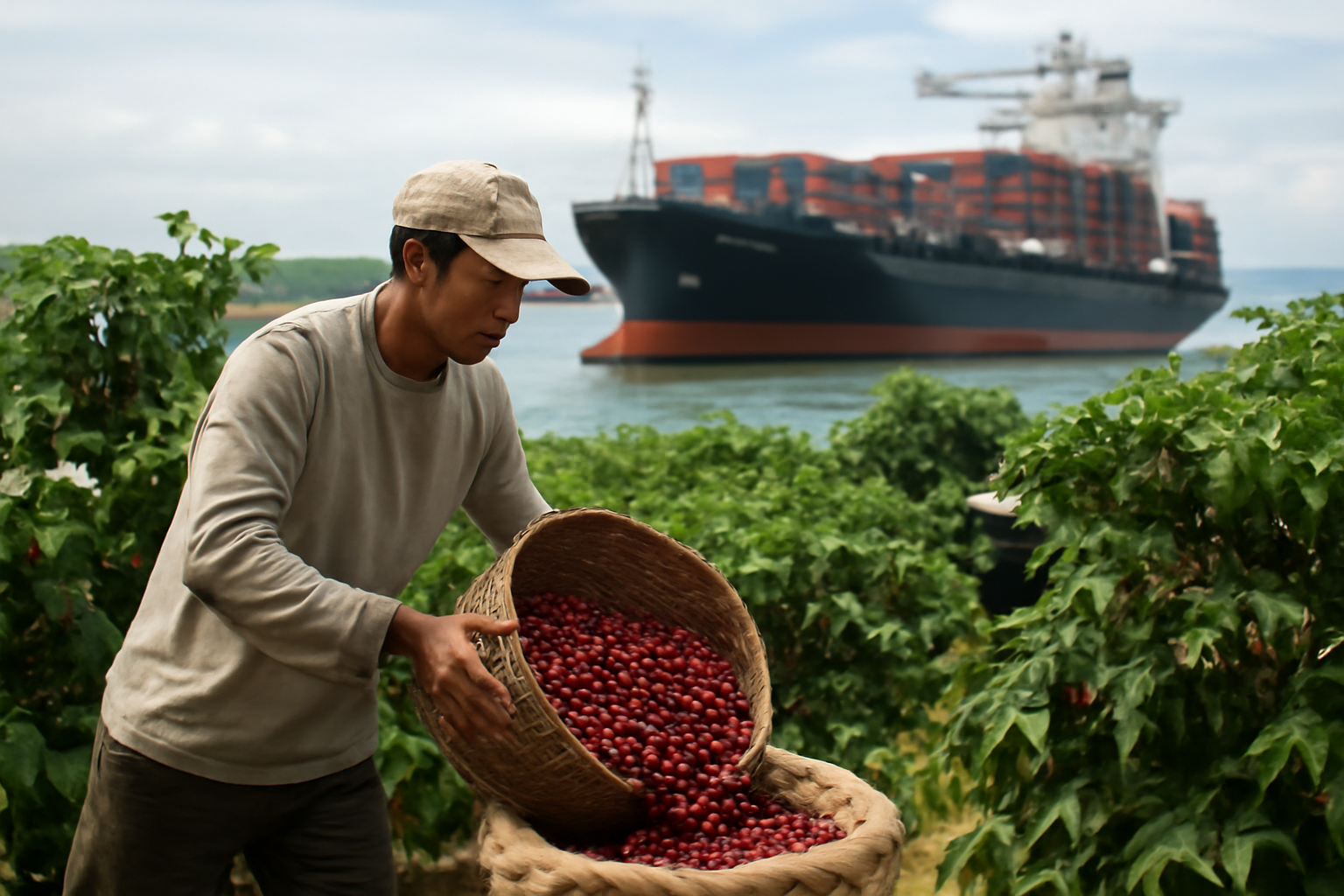
Export ambition runs into farm-level constraints
Indonesia’s ambition to increase the value of its coffee exports to Rp200 trillion is being constrained by low agricultural productivity and the quality of harvested beans, according to Bisnis.com. The gap between the export target and conditions at the farm level has put production capacity, planting material and crop quality at the center of the government’s coffee strategy.
The target expresses an ambition to capture substantially more value from coffee, one of Indonesia’s established agricultural commodities. Reaching it, however, depends on the volume and consistency that farms can supply. Low yields limit the amount available to processors and exporters, while uneven harvest quality can reduce the share of beans suitable for higher-value markets.
The available report does not specify a deadline for the Rp200 trillion target or provide a current export-value baseline. It also does not quantify national yields or the additional production required. The central constraint is nevertheless clear: export earnings cannot rise to the desired level through marketing alone if farms are unable to deliver enough coffee of consistent quality.
Production centers and improved seeds take priority
The government is responding by concentrating on the development of coffee production centers and the availability of improved seed stock, Bisnis.com reported. This approach places the initial intervention upstream, where plant genetics, cultivation conditions and farm management influence both output and bean characteristics.
Developing production centers can help concentrate access to planting material, technical support and post-harvest handling. Improved seeds can support higher productivity and more reliable crop characteristics, although their commercial effect depends on adoption by growers and subsequent farm performance. Coffee plants also require time to establish, meaning that changes to seed stock cannot translate immediately into exportable volumes.
Quality is a separate but connected challenge. Larger harvests will not automatically produce higher export value if picking, sorting, processing and storage fail to meet buyer requirements. For exporters and processors, inconsistent quality raises procurement and grading costs and makes it harder to assemble uniform lots. For growers, it can prevent better coffee from earning a premium.
Execution will determine the trade impact
The Rp200 trillion ambition therefore requires coordination across the domestic supply chain. Seed supply and production-center development must ultimately result in commercially usable beans, rather than only an increase in planted area. Processors need dependable raw material, exporters need repeatable specifications, and overseas buyers need confidence that contracted volumes can be delivered.
The policy focus also matters for investment decisions. Companies considering additional processing or export capacity will assess whether improvements in production centers can provide sufficient throughput. Traders will watch the consistency of harvests because unreliable quality can restrict access to differentiated and higher-value segments.
For Indonesian producers, the initiative offers a route to higher output and potentially better market access, but the outcome will depend on implementation at farm level. The Rp200 trillion figure is an export-value objective; productivity and quality will determine whether the physical coffee supply can support it.