Indonesia weighs turning coal into gasoline as production costs stay the obstacle
Indonesia is examining plans to convert domestically mined coal into motor gasoline as part of a fuel import-substitution push. According to tirto.id, coal-to-liquid technology makes the conversion possible, but production costs are not yet judged economic. The project's fate rests on capital cost, conversion efficiency and access to financing rather than on technical feasibility.
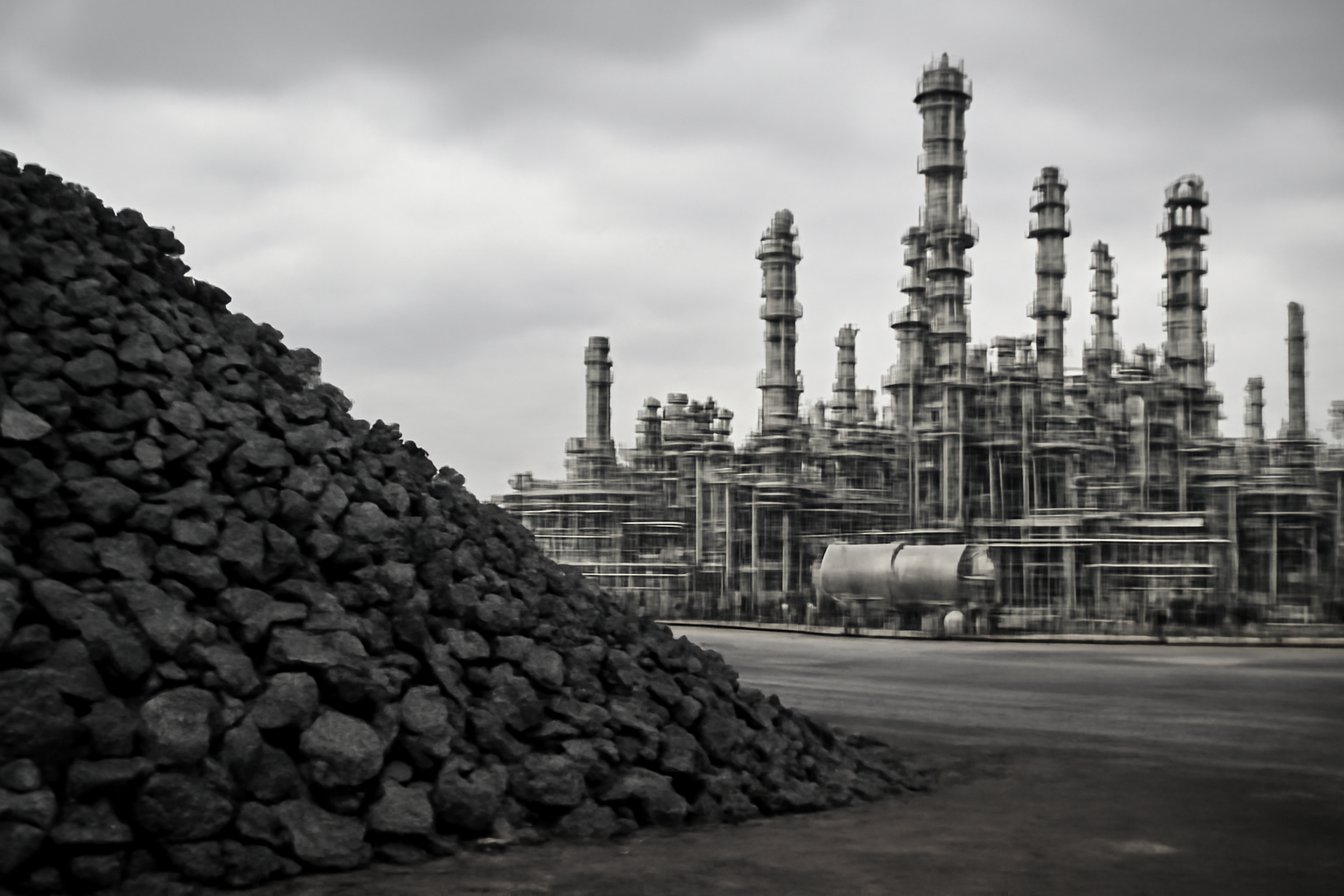
Indonesia is examining plans to convert domestically mined coal into gasoline, a project whose underlying technology is proven but whose cost base remains the central obstacle, according to a report by tirto.id.
The Indonesian outlet reported that the government intends to process coal into motor fuel using coal-to-liquid technology, and that while such a conversion is technically possible, the cost of producing fuel this way is not yet considered economic. The plan sits within a wider effort to replace imported fuel with domestically produced alternatives.
How coal becomes motor fuel
Commercial coal-to-liquids production follows two families of process. Indirect liquefaction gasifies coal with oxygen and steam to produce synthesis gas, a mixture of carbon monoxide and hydrogen. Once the gas is cleaned of sulphur compounds and particulates and its hydrogen-to-carbon ratio is adjusted, it is passed over catalysts. The Fischer-Tropsch route yields a synthetic crude that must then be hydrocracked and fractionated into diesel, naphtha and gasoline blendstock. A second indirect route converts syngas into methanol and then runs the methanol over zeolite catalysts to produce gasoline directly.
Direct liquefaction takes another path: coal is ground, mixed with a recycle solvent and reacted with hydrogen at high temperature and pressure, yielding a liquid that is subsequently hydrotreated into finished fuels. Both families require gasifiers or high-pressure reactors, an air separation unit to supply oxygen, a hydrogen source, extensive gas cleaning and large volumes of water. The resulting facility resembles a chemical complex more than an oil refinery, and it has to run close to full capacity to spread its fixed costs. Feedstock quality also matters: moisture, ash content and reactivity determine gasifier selection and the energy consumed in drying and preparing the coal before it reaches the reactor.
Why the economics remain unfavourable
The barrier identified by tirto.id, production cost, is the same one that has kept coal-to-liquids a marginal industry worldwide. A conversion plant earns the spread between the delivered cost of coal and the value of the refined products it displaces, and that value tracks international crude oil and gasoline prices. Because the capital outlay per barrel of daily capacity is far higher than for a conventional refinery, financing charges dominate the cost stack. Interest accrues through construction periods measured in years before the first litre is sold, and a fall in crude prices after commissioning cannot be offset by trimming a feedstock bill that accounts for only part of the total.
Conversion efficiency compounds the problem. A large share of the carbon entering the process leaves it as carbon dioxide rather than as fuel, which reduces saleable output per tonne of coal and pushes the emissions intensity of the finished gasoline above that of refined petroleum. That exposes any project to carbon pricing, and to the coal-exclusion policies now applied by many international lenders and export credit agencies, a financing constraint separate from and additional to the cost of the plant itself.
What is at stake for coal and fuel markets
Indonesia is the world's largest exporter of thermal coal and at the same time a net importer of gasoline, a combination that makes converting one into the other politically attractive. Routing coal into a domestic conversion plant would in principle trim fuel import volumes while adding value to a commodity that currently leaves the country largely unprocessed, the same logic already applied to Indonesian metal ores under the downstreaming agenda.
For producers and traders, the practical questions are scale and timing. A single conversion plant consumes coal at a rate that is small against Indonesia's seaborne export programme, so the near-term effect on export availability would be limited. Domestic miners would gain a captive buyer, but only if coal is supplied at a price low enough to make the plant viable, which shifts part of the burden onto the supplier. Refiners and fuel importers face no displacement of volumes until a plant is financed, built and commissioned.
The decision is therefore commercial rather than technical. As tirto.id reported, turning coal into gasoline is possible; what remains unresolved is whether the fuel can be produced at a cost the market, or the state budget, is prepared to absorb.