Indonesia Produces 423.71 Million Tonnes of Coal as Global Demand Outlook Softens
Indonesia produced 423.71 million tonnes of coal through July 2026 as the government shifted toward matching output with market demand. The energy ministry expects global coal demand to ease modestly over five years, although India and Southeast Asia may still provide growth.
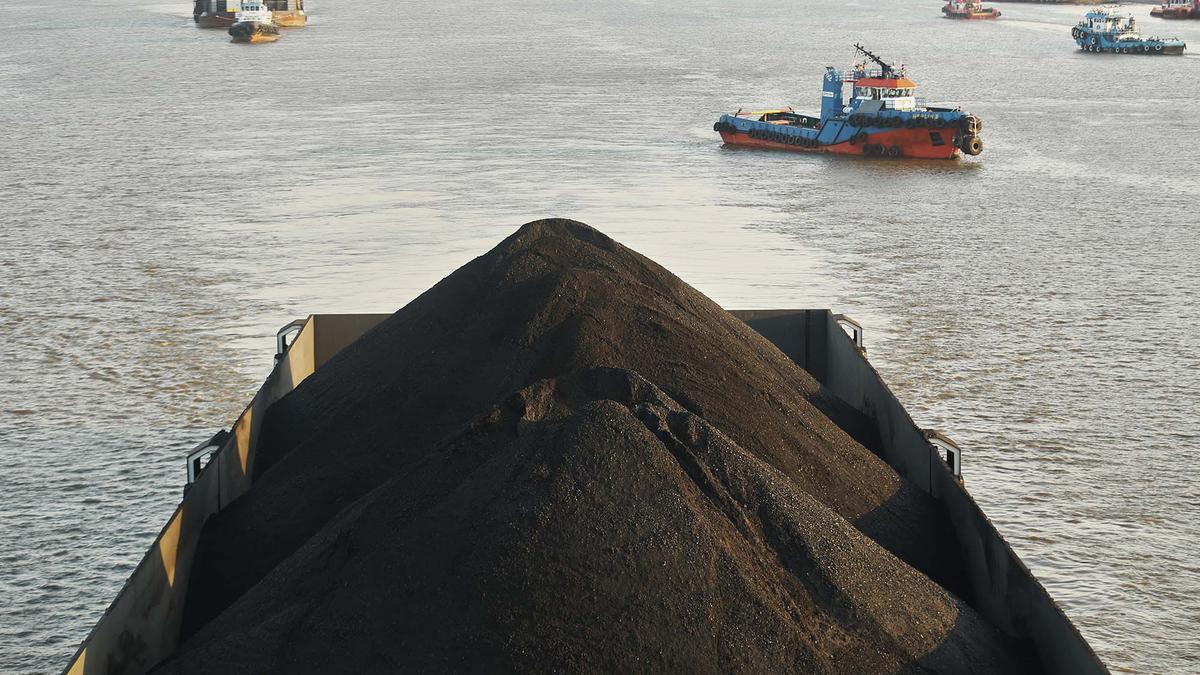
Production slows as Indonesia targets market balance
Indonesia produced 423.71 million tonnes of coal through July 2026, according to the Ministry of Energy and Mineral Resources. Tempo reported that average monthly production in 2026 was about 8 million tonnes lower than the 2025 monthly average, reflecting a government policy that places greater weight on market conditions rather than maximizing volume.
Of the coal produced through July, 63.82% was allocated for export, 26.86% for domestic consumption and 9.32% for national stocks. The comparable distribution for the 817.48 million tonnes produced in 2025 was 63.89% for export, 30.2% for the domestic market and 5.9% for inventories.
The government set a national production target of about 600 million tonnes in its 2026 Work Plan and Budget, known as the RKAB. That is substantially below actual output in 2025. Energy ministry mining director general Tri Winarno said production decisions would account for market demand, domestic market obligations, prices, logistics and the long-term availability of reserves.
Renewables weigh on the five-year outlook
Indonesia’s energy ministry expects global coal demand to decline modestly over the next five years as renewable energy use becomes more widespread. However, ANTARA reported that the ministry continues to see potential demand growth in India and Southeast Asia, including during 2027. China and India are expected to remain the principal overseas markets for Indonesian coal.
The forecast comes after Indonesian coal exports weakened in both volume and value during 2025. Data from Statistics Indonesia cited by ANTARA showed shipments falling to 390.93 million tonnes from 405.76 million tonnes in 2024. Export revenue decreased by 19.70% year on year to $24.48 billion from $30.49 billion, a steeper contraction than the decline in physical volume.
India received 100.24 million tonnes of Indonesian coal in 2025, while China bought 81.79 million tonnes. Shipments to the Philippines reached 37.70 million tonnes, followed by South Korea with 28.29 million tonnes and Japan with 27.17 million tonnes. In value terms, sales amounted to $4.97 billion to India, $4.58 billion to China, $2.86 billion to Japan, $2.20 billion to the Philippines and $1.84 billion to South Korea.
Prices and river logistics shape producer decisions
Tempo reported that Indonesia’s benchmark coal price averaged about $111.8 per tonne from January through August 2026. The HBA I benchmark for coal with a calorific value of 5,300 GAR stood at $79.3 per tonne, HBA II for 4,100 GAR at $54.2 and HBA III for 3,400 GAR at $38.3 per tonne. Tri described the broader price trend as relatively stable with a tendency to rise alongside demand from major markets.
Logistics remain a constraint on how quickly production can reach export terminals. Indonesia’s meteorological agency expects the 2026 dry season to last longer than normal. Lower rainfall in some regions could reduce water levels in the Barito and Mahakam rivers, two principal routes used to move coal to export ports.
For miners, the combination of a lower official production target and a softer long-term demand outlook increases the importance of costs, product quality and access to reliable transport. The energy ministry expects producers to improve efficiency, reduce production expenses and strengthen environmental, social and governance practices. It has also called for more downstream processing to retain additional value within Indonesia as competition for seaborne demand intensifies.