Indonesia breaks ground on 710-hectare dairy farm to reduce milk imports
PT Global Dairi Bersama has begun developing a 710-hectare integrated dairy farm in Brebes with planned annual fresh milk output of 180,000 tonnes. Indonesia’s agriculture minister said the country needs about 20 comparable farms and more productive dairy farmers to move toward milk self-sufficiency.
Brebes project targets 180,000 tonnes of milk
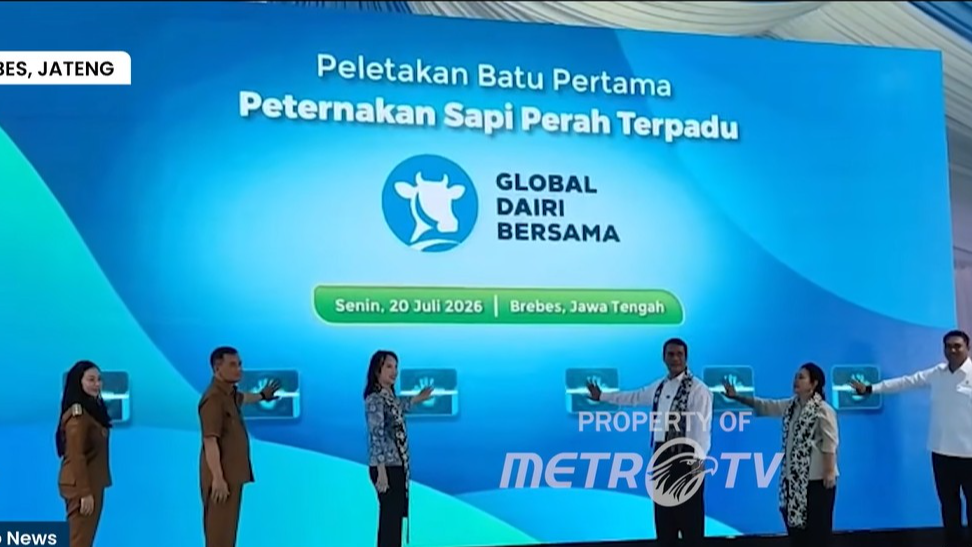
Indonesia has started construction of a large integrated dairy farm in Brebes, Central Java, as the government seeks to reduce the country’s dependence on imported milk. Agriculture Minister Andi Amran Sulaiman attended the groundbreaking for the PT Global Dairi Bersama project in Karangbale village, Larangan district, on 20 July 2026.
Metro TV reported that the development covers about 710 hectares and is designed to produce as much as 180,000 tonnes of fresh milk annually. Amran said that volume would be equivalent to 20% of current national production. Media Indonesia gave a slightly lower estimate, reporting that the farm could contribute about 18% of Indonesia’s domestic fresh milk production and more than double Central Java’s current output.
Import dependence creates room for investment
According to Media Indonesia, the country imports about 80% of its milk requirements, equal to 3.6–3.8 million tonnes per year. Amran presented that supply gap as a large and clearly defined market for domestic and foreign investors. He said Indonesia would need about 20 integrated operations comparable to the Brebes project to achieve milk self-sufficiency.
The farm is expected to hold approximately 30,000 high-quality dairy cattle, around one-third of Central Java’s dairy herd. Its operations will use digital technology based on the Internet of Things to manage productivity, efficiency and milk quality. The government has also promised to simplify and accelerate permits for investors entering the dairy sector.
Partnerships extend beyond the farm
The project’s local supply program is intended to connect the industrial farm with farmers and smaller livestock producers. Brebes Regent Paramitha Widya Kusuma said the development would partner with about 5,000 livestock farmers and 2,000 crop farmers. PT Global Dairi Bersama separately said its three partnership schemes could support at least 8,000 farmers and livestock producers in Brebes and surrounding areas.
One scheme will procure forage and shelled corn, requiring about 2,000 hectares of land annually and involving approximately 5,000 local farmers. A second will provide dairy-farming training, improved cattle genetics and guaranteed purchases of participating farmers’ fresh milk. The third covers fattening of male cattle, with capacity of around 7,000 head per year.
Technology and farmer numbers remain central
CEO of Savoria Group Ihsan Mulia Putri described the development as a long-term upstream food investment. The company plans to apply modern technology and animal-welfare and environmental standards. Its environmental program includes converting waste into biogas, using solar panels and processing manure into organic compost for use in regenerative farming around the site.
Large farms alone will not deliver the government’s target. Media Indonesia reported that Indonesia currently has about 50,000 dairy farmers and would need at least 100,000 productive farmers to reach self-sufficiency. The Brebes development therefore serves both as an industrial production project and as a test of whether a large operator can build reliable feed, cattle and milk-purchasing partnerships with local producers.