Indonesia’s Bird’s-Eye Chili Prices Reach Rp82,700 per Kilogram as Supply Tightens
Indonesia’s national reference price for red bird’s-eye chili reached Rp82,700 per kilogram, while Jakarta prices approached Rp90,000. Reduced deliveries from producing regions are tightening supply, prompting Jakarta’s government to prepare low-cost markets.
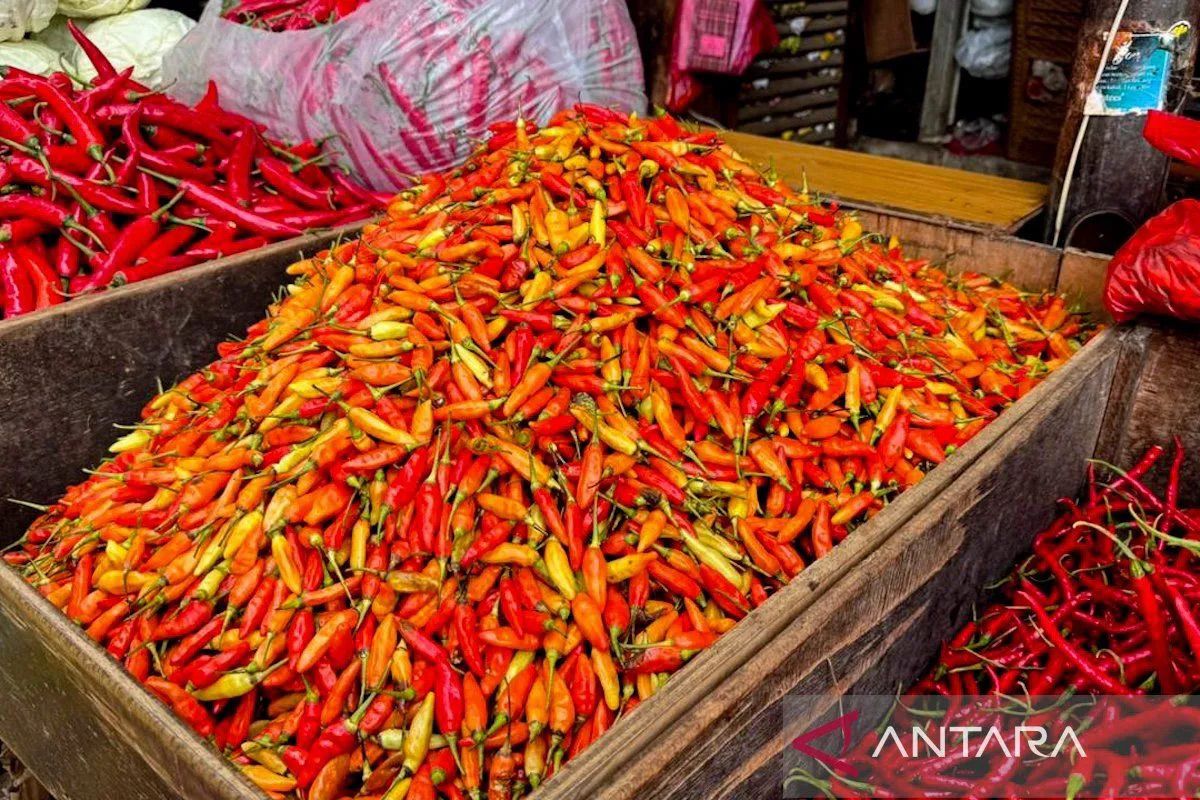
Red bird’s-eye chili leads food-price increases
Red bird’s-eye chili prices have risen sharply across Indonesia as supplies from major producing regions decline. The National Strategic Food Price Information Center, or PIHPS, recorded a national retail price of Rp82,700 per kilogram at 07:28 Central Indonesia Time on Thursday. ANTARA reported the figure from PIHPS data collected and managed by Bank Indonesia.
Jakarta prices were even higher, reaching close to Rp90,000 per kilogram, according to Kompas. The publication said the increase was caused by reduced supply from production centers rather than a policy adopted by the Jakarta provincial government. The gap between the national reading and prices in the capital highlights the additional pressure that constrained distribution can place on large urban markets.
Bisnis Indonesia reported that most food commodities monitored in traditional markets were showing an upward trend on September 3, 2026, with the largest increases concentrated in the chili category. Red bird’s-eye chili remained considerably more expensive than other varieties in the PIHPS data.
Other chili varieties remain below the peak
PIHPS placed large red chili at Rp52,200 per kilogram and curly red chili at Rp56,950 per kilogram. Green bird’s-eye chili was priced at Rp62,100 per kilogram. Red bird’s-eye chili therefore carried a premium of Rp20,600 over the green variety and was more than Rp25,000 per kilogram above curly red chili.
The differences matter for wholesalers, food processors, restaurants and household buyers because the varieties are not always interchangeable in Indonesian cooking. When the most pungent variety becomes scarce, demand can shift toward other chilies, spreading price pressure across the category. Traders also face greater working-capital requirements and a higher risk of losses because fresh chilies are perishable and prices can move quickly when deliveries fluctuate.
The current rise is principally a domestic supply and distribution issue. The supplied reports do not provide production-loss estimates, shipment volumes or import data, so the scale of the shortage cannot yet be quantified. Still, the Jakarta reading indicates that supply constraints are being amplified between producing areas and the country’s largest consumer market.
Jakarta prepares low-cost markets
The Jakarta provincial government is preparing low-cost market operations in response to prices near Rp90,000 per kilogram, Kompas reported. Such sales can provide temporary relief to consumers, although their market effect will depend on the volumes offered and whether deliveries from producing regions recover. The available reports did not specify the planned sales volume, locations or starting date.
Prices for several other staples were also elevated in the PIHPS reading. Shallots stood at Rp38,450 per kilogram and garlic at Rp39,450. Lower-quality rice ranged from Rp14,650 to Rp14,850 per kilogram, medium rice from Rp16,350 to Rp16,550, and premium rice from Rp17,300 to Rp17,800. Fresh chicken meat was Rp42,600 per kilogram, while eggs were Rp29,650.
For chili growers, high retail prices do not automatically translate into equivalent gains at the farm gate, particularly when lower output or transport bottlenecks reduce the volume available for sale. Distributors and retailers must balance scarcity against spoilage risk, while restaurants and processors may adjust purchasing or recipes. The next direction for prices will depend on the recovery of supplies from producing regions and the reach of Jakarta’s planned market intervention.