Indonesia Plans Aluminum Expansion as Iran War Disrupts Global Supply
Indonesia aims to raise aluminum output from about 1 million metric tons in 2025 to 14.5 million by 2030 as Middle Eastern supply declines. The expansion could involve 32 captive coal power projects, increasing emissions and pressure on Indonesia’s bauxite reserves.
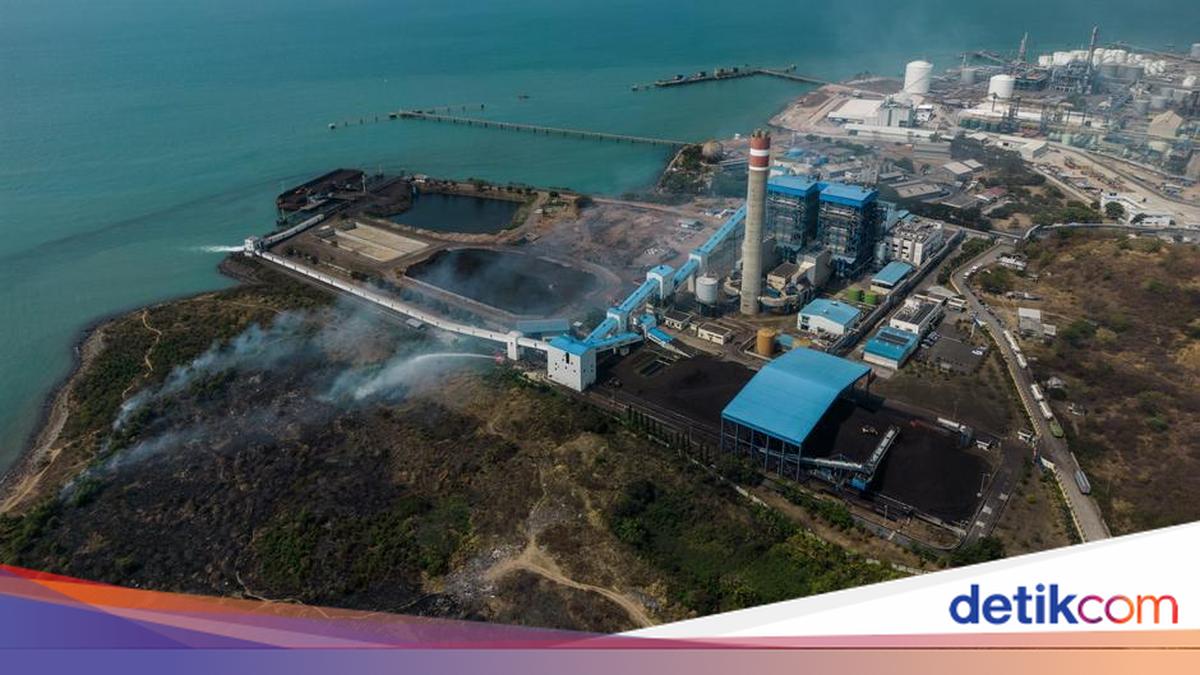
Middle East disruption lifts aluminum prices
Indonesia is seeking to expand aluminum production as the Iran war disrupts global supply and raises prices, according to a report published by detikcom. Southeast Asian producers could capture part of the market normally supplied by the Middle East, which accounts for about 9% of global aluminum output. Fastmarkets expects production in the region to fall 44% this year compared with 2025.
Energy shortages have forced Emirates Global Aluminium to cancel several agreements, while Qatar Aluminium Ltd. has reduced production. Iranian attacks also damaged facilities operated by Aluminium Bahrain. Before the war, aluminum traded at $3,150–3,250 per metric ton. It rose to $3,780 in June and is now around $3,400.
Andy Farida of Fastmarkets said uncertainty was pushing end users to seek alternative suppliers and had accelerated Indonesia’s emergence as a potential source. The opportunity is significant for smelters and investors, but realizing it would require an exceptionally rapid increase in mining, refining, power generation and primary-metal capacity.
Output targets require new power capacity
According to the Centre for Research on Energy and Clean Air, Indonesia aims to quadruple alumina production to 32.5 million metric tons by the end of the decade. Aluminum output is targeted to rise from about 1 million metric tons in 2025 to 14.5 million metric tons in 2030. The production chain begins with bauxite mining, followed by refining into alumina and smelting into aluminum, with the final stage requiring large volumes of electricity.
CREA has identified 32 off-grid coal power projects under consideration specifically to supply aluminum smelters. These captive plants could allow projects to start faster than installations based on hydropower, which Putra Adhiguna of the Energy Shift Institute said require more time and higher costs. However, the strategy conflicts with Indonesia’s commitment to reduce coal use.
Public information about emissions from captive plants remains limited, according to CREA’s Syahdiva Moezbar. The World Economic Forum estimates that the aluminum industry already generates about 2% of annual global greenhouse-gas emissions, equivalent to roughly 1.1 billion tonnes of carbon dioxide equivalent. WALHI’s Muhammad Al Amin also warned that additional captive coal generation could worsen the toxic haze affecting Southeast Asian cities, including Jakarta.
Chinese capital supports the build-out
Chinese companies have invested in about three-quarters of Indonesia’s planned aluminum projects. CREA estimates current Chinese investment in the sector at $5.5 billion–$6 billion and expects it to reach $30 billion by 2030. Adhiguna linked the movement of Chinese companies into Indonesia to restrictions on domestic aluminum production introduced in China in 2017.
Indonesia classifies aluminum and nickel as transition minerals because they can be used in technologies such as electric-vehicle batteries and solar panels. Environmental groups question that designation when processing relies on coal and when the final uses of the metals remain unclear. Resource availability is another constraint: CREA estimates that Indonesia’s bauxite reserves could be exhausted in less than 12 years if every planned aluminum project is operating by 2030. Producers and investors therefore face a trade-off between capturing a high-price supply opportunity and creating long-term exposure to fuel, emissions and raw-material risks.