Indonesia’s Agrarian Reform Law Raises Uncertainty for Malaysian Plantation Investors
Malaysian plantation companies operating in Indonesia face regulatory uncertainty as they await implementing rules on landholding limits and redistribution. The unresolved details could affect investment planning, concession management and the valuation of plantation assets.
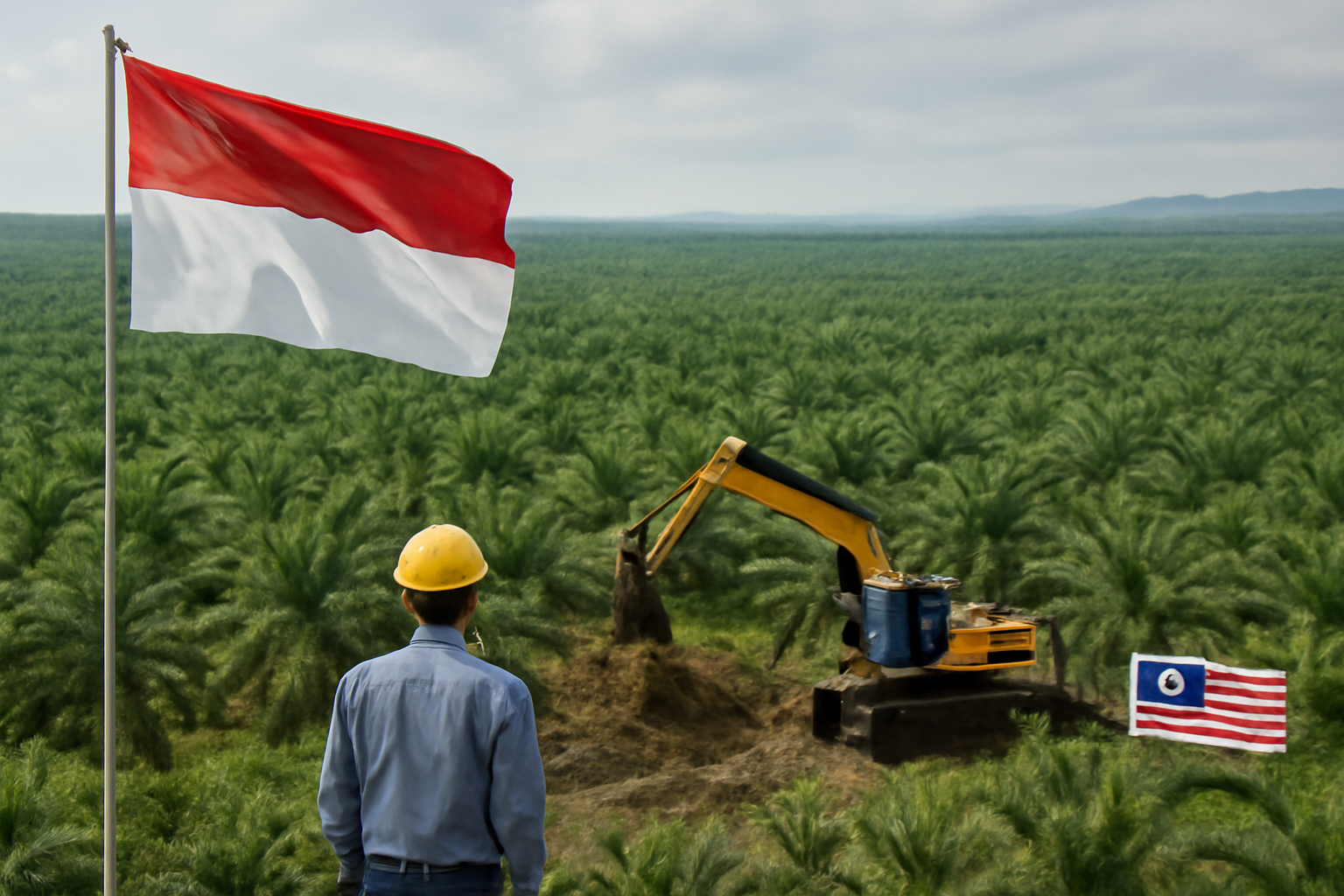
Implementing rules remain unresolved
Indonesia’s Agrarian Reform Law is creating uncertainty for Malaysian plantation companies with operations or investments in the country, according to Bisnis.com. The central issue is not simply the existence of the law, but the absence of detailed implementing rules governing landholding limits and the redistribution of land.
Until those rules are issued, plantation operators cannot fully assess how the framework may apply to their existing land portfolios. The unanswered questions concern the amount of land that companies may retain and the circumstances under which land could become subject to redistribution. The available source material does not specify the limits, the timetable for the implementing regulations or which individual companies may be affected.
That lack of detail matters in a sector where access to land underpins production capacity, long-term planting decisions and asset values. A change in the area that a company is permitted to control could influence the scale of its operations, while redistribution requirements could alter the composition of existing plantation estates.
Investment decisions face a wider range of outcomes
For Malaysian groups already operating in Indonesia, the uncertainty complicates decisions involving expansion, replanting and capital allocation. Projects tied to particular land areas may be harder to evaluate when the future status of those holdings is not yet clear. Investors must consider the possibility that the final regulations will impose constraints, while also avoiding assumptions that have not been confirmed by the Indonesian authorities.
The same problem affects transactions. Buyers and sellers of plantation assets need to establish whether land rights will remain usable under the forthcoming rules and whether any part of an estate could be included in redistribution. Without that clarity, due diligence may take longer and parties may differ more widely over valuations and contractual protections.
Financing decisions may also become more cautious. Land and the production supported by it are important elements in assessing plantation businesses. Uncertainty over the enforceability, duration or permitted scale of holdings can therefore affect how lenders and investors judge risk, even before any specific restriction takes effect.
Indonesia and Malaysia remain the central stakeholders
The issue has a cross-border dimension because the affected investors are Malaysian while the regulated land is in Indonesia. Indonesian authorities will determine the practical effect of the reform through the implementing rules. Malaysian companies, meanwhile, must assess their exposure estate by estate rather than treating the law as a uniform operational change.
For producers and processors, the immediate consequence is uncertainty rather than a confirmed reduction in output or capacity. The available reporting provides no figures for affected acreage, production volumes, investment values or the number of companies involved. It would therefore be premature to quantify the impact on plantation supply or regional commodity flows.
The next decisive development will be the publication of rules defining landholding limits and redistribution procedures. Those provisions will show whether companies need to adjust land portfolios, revise investment plans or change arrangements with local stakeholders. Until then, Malaysian plantation investors in Indonesia face a regulatory risk that can be identified but not yet measured.