Indian Tea Association seeks rescue package for Darjeeling and Dooars
The Indian Tea Association has proposed targeted measures to revive the Darjeeling and Dooars–Terai tea industries. Darjeeling production fell from 14.49 million kg in 1990 to 5.6 million kg in 2025, while differing welfare obligations are putting pressure on organised estates in Dooars and Terai.
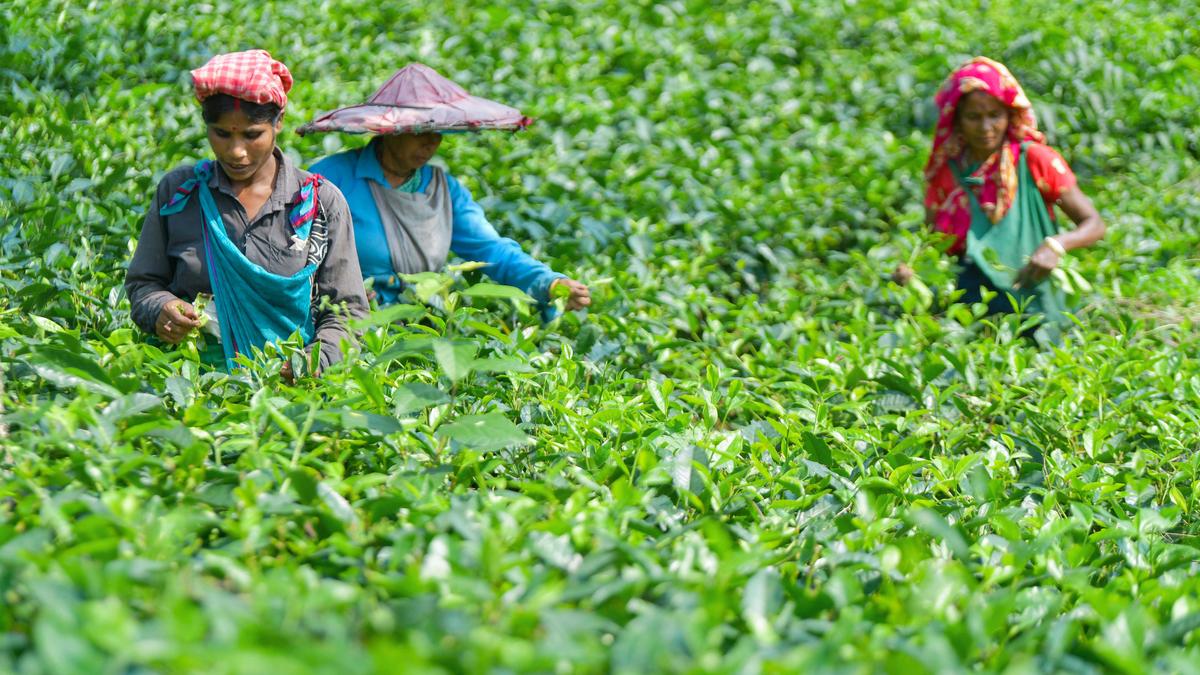
ITA sets out revival plans for North Bengal tea
The Indian Tea Association published two white papers on August 26, 2026, seeking government intervention to revive the tea industries of Darjeeling and the Dooars–Terai belt in North Bengal. The documents address production, finance, climate, labour and market pressures in two of India’s best-known tea-growing regions.
The association said its proposals were intended to restore competitiveness, protect livelihoods and encourage long-term investment. ITA representatives have met West Bengal Industry Minister Tapas Roy, Finance Minister Swapan Dasgupta and Advisor to the Chief Minister Subrata Gupta. The group expects the papers to support further discussions with the State Government and lead to coordinated measures with clear implementation deadlines.
Darjeeling output falls by more than 60%
The most immediate warning concerns Darjeeling, where annual tea production declined from 14.49 million kg in 1990 to 5.6 million kg in 2025. That represents a fall of roughly 61% over the period and reduces the volume available from a region whose tea is protected as a geographical indication.
ITA proposed an indicative annual financial package of approximately ₹113 crore for the Darjeeling industry. The requested support would cover orthodox tea production, interest on working capital, transport, mechanisation, social security, rejuvenation of plantations and factory modernisation. The breadth of the proposal shows that the association views the decline as a problem extending from field productivity and labour costs to processing capacity and access to finance.
Dooars and Terai estates face a dual-cost market
The separate white paper on Dooars and Terai focuses on what ITA describes as a market asymmetry between small growers and organised estates. Small tea growers account for 68% of West Bengal’s production but do not carry statutory welfare obligations comparable to those imposed on the estate sector. Organised gardens, by contrast, bear housing, healthcare and regulatory compliance costs.
According to the association, this creates two different cost bases for tea sold into the same market. ITA argues that the disparity depresses auction prices and threatens the survival of organised estates. The issue is not simply the expansion of small-grower production, but the absence of comparable obligations for businesses competing through the same sales channels.
Policy response will determine investment prospects
The two regions require different interventions. Darjeeling’s central challenge is the long decline in output and the need to preserve productive capacity behind a globally recognised origin. In Dooars and Terai, the immediate concern is whether estates carrying extensive welfare and compliance costs can remain viable when auction prices also reflect supplies produced under a lower-cost model.
ITA has not reported a government decision on the proposed packages. Its white papers therefore represent an industry request rather than an approved rescue programme. For producers, processors and buyers, the next material development will be whether the West Bengal government adopts time-bound support and how it allocates assistance between plantation renewal, factories, finance, labour welfare and the competing production models operating in the State.