India targets 75,000 new cooperative dairies under White Revolution 2.0
India plans to establish 75,000 cooperative dairies and strengthen 46,000 existing operations under White Revolution 2.0. The program seeks to improve milk collection, processing capacity and producer incomes as national milk output reaches about 248 million tonnes.
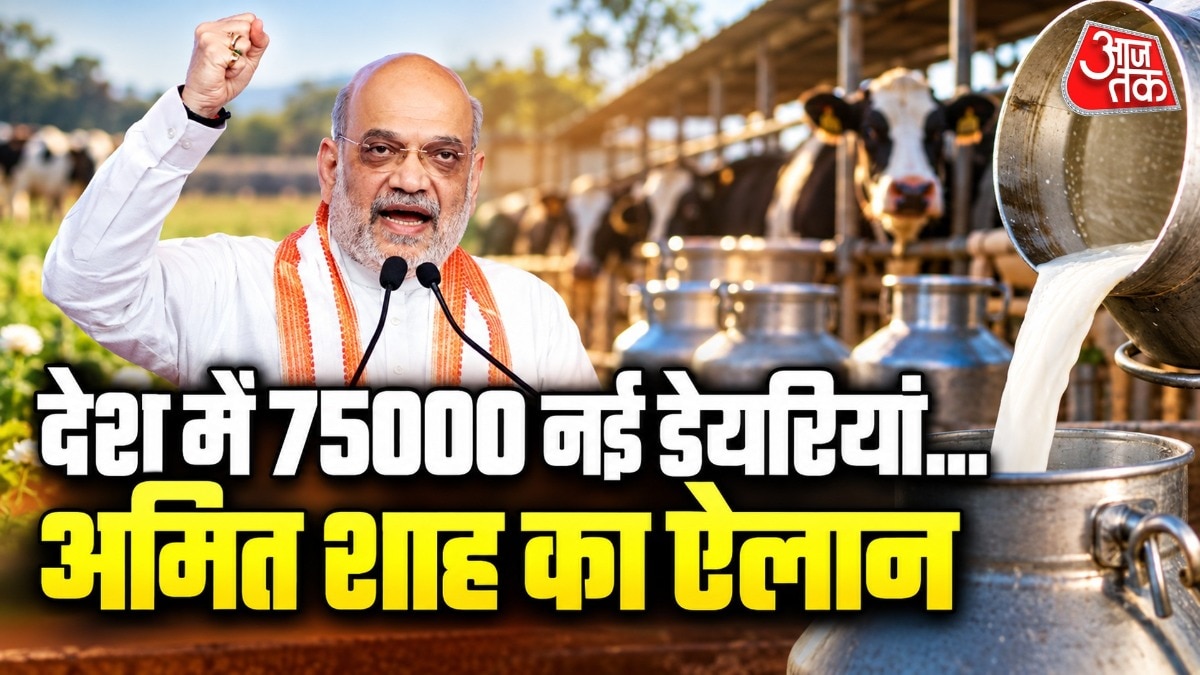
Nationwide expansion of the cooperative network
India has set a target of establishing 75,000 new cooperative dairies and strengthening 46,000 existing operations under its White Revolution 2.0 program. Announcing the targets at a livestock farmers’ conference in Bhopal, Union Home and Cooperation Minister Amit Shah said the expansion was intended to raise incomes for dairy farmers by connecting more producers with organized milk collection and processing.
Aaj Tak reported that Shah presented cooperatives as an alternative for farmers who sell milk on the open market and may receive lower prices because of intermediaries. Cooperative membership can give producers access not only to milk payments but also to revenue generated from processed products. The program’s effect on farm incomes will therefore depend on collection coverage, purchasing terms and the ability of dairies to sell higher-value goods.
Processing and breeding investment
The government is seeking to reinforce infrastructure for products including ice cream, butter, ghee, cheese and mawa. In Madhya Pradesh, Shah laid the digital foundation stone for a milk processing plant in Ujjain with daily capacity of 300,000 litres and an investment of ₹2.55 billion. He also inaugurated a 40,000-litre-per-day dairy products plant in Bhopal built for about ₹165 million, as well as a state-level central laboratory costing ₹124.2 million.
A mini dairy plant in Shivpuri was upgraded for ₹65 million. These projects illustrate the capacity needed beyond village-level milk collection: chilling, testing and processing will determine whether additional raw milk can be converted into products with longer shelf lives and wider markets. Bonuses were distributed to livestock farmers at the event, while cowsheds received financial assistance and members of dairy cooperatives received dividends.
Breeding is another part of the expansion strategy. Madhya Pradesh has given in-principle approval to provide 50 acres for programs focused on improving cattle and buffalo breeds. Shah also advocated modern breeding technologies and sex-sorted semen, which he said could support better breeds, animal health and milk production.
Milk production and export growth
According to figures presented by Shah, Indian milk production increased from about 146 million tonnes in 2014-15 to approximately 248 million tonnes. Per-capita milk availability rose from around 307 grams to 485 grams per day over the same period. He described India as the world’s largest milk producer and said exports of Indian dairy products had increased to roughly ₹46.66 billion, with products supplied to multiple countries.
The cooperative buildout could bring more of this production into formal collection channels, although the announcement did not specify a completion date, regional allocation or total nationwide investment. Execution will require enough local throughput to support the new cooperatives, alongside reliable quality control and processing capacity. For processors, the larger network could provide a broader and more consistent raw milk base; for farmers, the central issue will be whether it delivers stronger and more transparent prices.
Additional income and women’s participation
The initiative also includes potential earnings from the scientific use of cattle dung for clean energy, nutrient recycling and rural employment. Shah said cooperative dairies could strengthen women’s economic position because dairy income often goes directly to women. Female livestock farmers were honored as “Gopalak Didi” at the conference, and approval letters were distributed under the Dr. Bhimrao Ambedkar Kamdhenu Scheme. The government also linked dairy development with improved nutrition and broader rural incomes.