India sets regulated coal exchange framework, with launch targeted within a year
India’s Coal Exchange Rules, 2026 create a regulated market for delivery-based trading in coal, lignite and processed forms. Applications are now open, while CNBC-TV18 reports that the first exchange could become operational within 12 months.
India opens the way for regulated coal trading
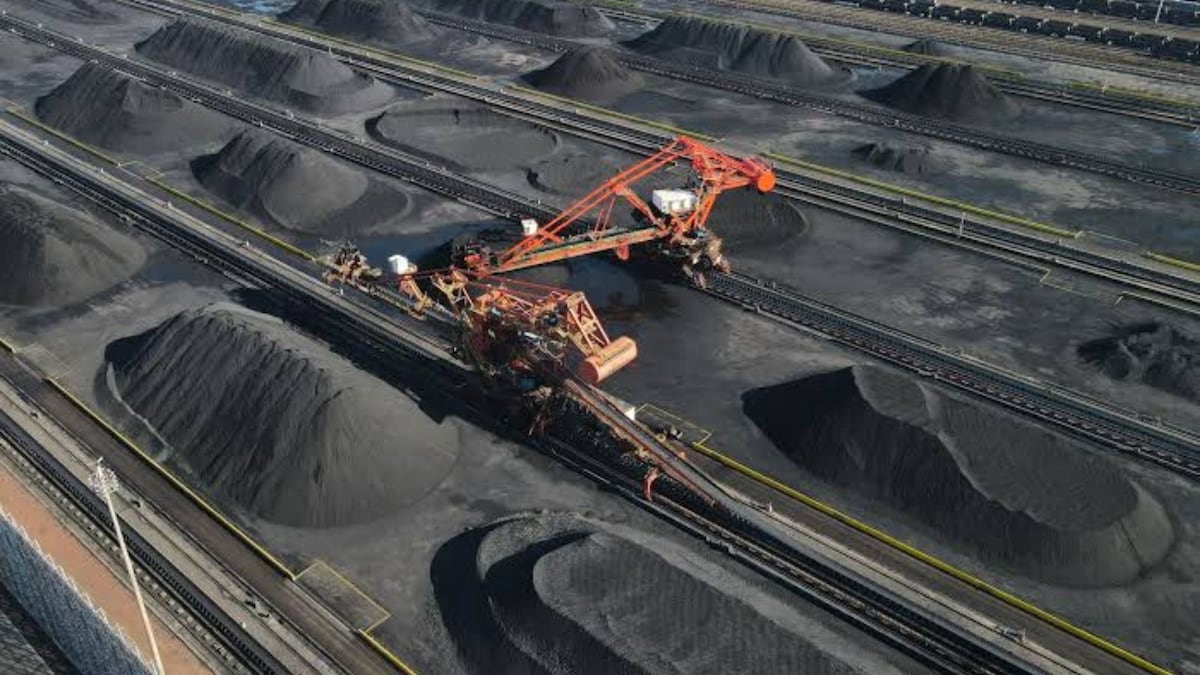
India has established a regulatory framework for coal exchanges, creating an online market where buyers and sellers can enter into delivery-based contracts for coal, lignite and their processed forms. The Ministry of Coal notified the Coal Exchange Rules, 2026 in the Official Gazette on June 4, 2026. CNBC-TV18 reports that an exchange could become operational within 12 months.
The rules follow the Mines and Minerals (Development and Regulation) Amendment Act, 2025, which introduced mineral exchanges and empowered the central government to promote transparent and efficient mineral trading. The Coal Controller Organisation, or CCO, was appointed in December 2025 to register and regulate coal exchanges. On July 15, 2026, Coal and Mines Minister G. Kishan Reddy launched an online portal through which eligible companies can apply.
Delivery contracts and quality-linked prices
Any entity, including commercial miners and operators of captive mines, may trade through an exchange. Public-sector coal companies can also use the platform. The Ministry of Coal describes the reform as a move from a one-to-many sales system toward a many-to-many market connecting a broader group of producers and buyers.
Only delivery-based contracts approved by the CCO may be offered. Each exchange must propose its bidding and price-discovery mechanism for regulatory approval. Delivery will be coordinated among sellers, buyers and other participants, while a sampling agency approved or recognised by the regulator will verify coal quality. The final price must be adjusted under the contract’s pricing formula and the agency’s quality certificate. Differences between the quantity traded and the quantity dispatched will be handled under the contract terms.
Capital, ownership and registration requirements
An applicant must be a company limited by shares under the Companies Act, 2013 and must separate ownership and management from trading rights. It must have and continuously maintain net worth of at least ₹50 crore. The non-refundable application fee is ₹3 lakh, while registration costs ₹50 lakh. The annual regulatory fee is the higher of ₹30 lakh or 0.02% of exchange trade value excluding taxes, capped at ₹5 crore.
The CCO must normally approve or reject a complete application within 90 days, although the rules allow extensions with recorded reasons. Registration lasts 25 years and may be renewed for another 25 years. Individual exchange members or clients may own no more than 5% of paid-up equity; their aggregate ownership is capped at 49%. Other shareholders must reduce individual holdings to no more than 25% within five years of registration.
Settlement protection and market surveillance
Each exchange must maintain a settlement guarantee fund to cover defaults and keep at least 50% of the fund in safe, liquid investments. Its electronic trading system must check bids against available funds or collateral and retain an automated audit trail covering bids, matching and completed transactions. Disaster-recovery and alternative trading facilities are also required.
Exchanges must publish prices, volumes, transaction fees, historical prices and aggregate supply-and-demand curves. Monthly minimum, maximum and average prices must also be disclosed. A dedicated surveillance department and a committee led by an independent director will monitor manipulation, circular trading, cartelisation, defaults and market concentration. Existing electronic coal marketplaces must obtain registration within six months after the first exchange begins operating or cease operations. For producers and industrial buyers, the practical impact will depend on liquidity, participation and whether quality certification makes exchange prices a credible benchmark for physical coal.