India Sells 4,000 Tonnes of Subsidized Onions in 17 Cities in Ten Days
India sold about 4,000 tonnes of buffer-stock onions across 17 cities during the first ten days of a price-relief program. Selected markets received onions at ₹35 per kilogram, while reported national price data gave conflicting signals about the program’s early impact.
Buffer onions reach 17 cities
India’s central government sold about 4,000 tonnes of onions from its buffer stock in 17 cities during the first ten days of a subsidized retail program intended to curb high prices. Consumer Affairs Secretary Nidhi Khare said the onions were offered at ₹35 per kilogram in selected price-sensitive cities. The intervention is being implemented through the National Cooperative Consumers’ Federation of India, or NCCF, and the National Agricultural Cooperative Marketing Federation of India, or NAFED.
The government accumulated approximately 121,000 tonnes of onions for its 2026 buffer. The volume sold during the first ten days therefore represented about 3.3% of that stock. The agencies are moving onions in bulk from producing states to major consumption centers by truck and special rail services known as the Kanda Express. Large consignments have already reached Delhi and Chennai, while a third shipment was being loaded for Guwahati, according to Aaj Tak and Business Standard Hindi.
Retail channels broaden distribution
NCCF Managing Director Anice Joseph Chandra said the federation had sold 1,500 tonnes of buffer onions at the fixed retail price of ₹35 per kilogram. NCCF has also made arrangements with several state governments to distribute the product through its stores, mobile vans, cooperative societies and other outlets identified by local administrations. Business Standard Hindi reported that NCCF retail sales were operating in areas including Delhi-NCR, Tamil Nadu, Uttar Pradesh, Kerala, Rajasthan, Punjab and Odisha.
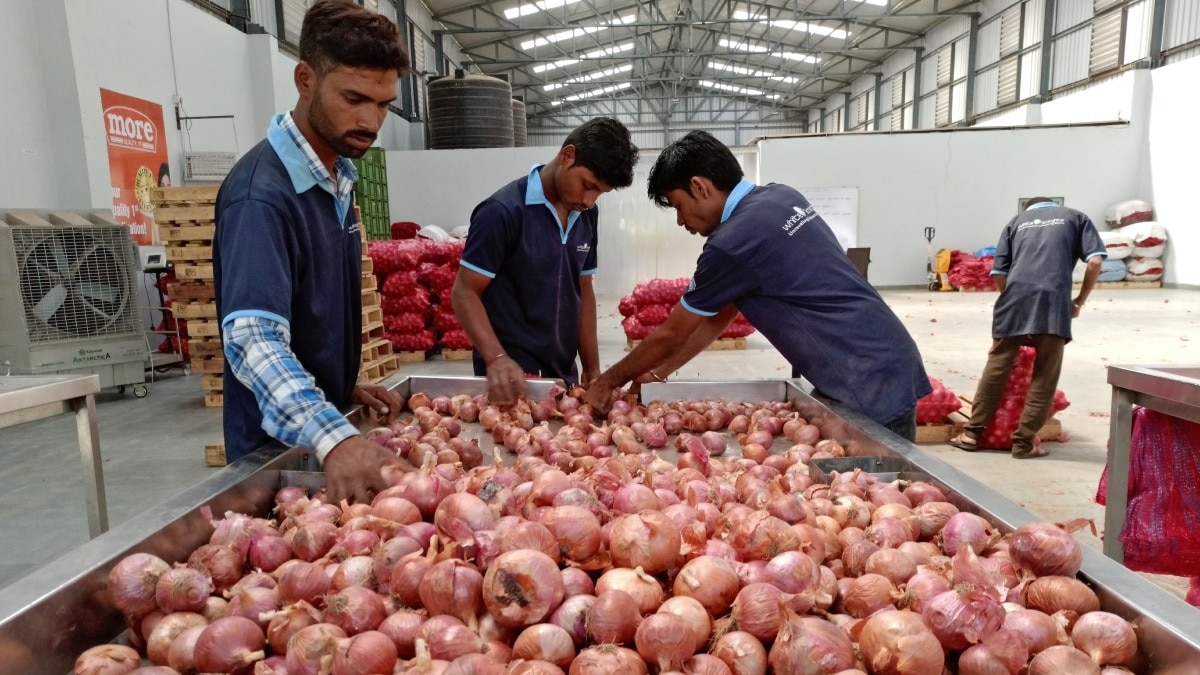
Before distribution, the Central Warehousing Corporation is responsible for sorting, grading and packing the onions. Officials said the size and quality of the buffer product were comparable with onions sold by private traders. These controls matter because the program’s effect depends not only on the headline discount but also on whether sufficient marketable stock reaches consumers through accessible retail points.
Price data show a mixed early result
Reports offered differing accounts of the initial price movement. Aaj Tak said Department of Consumer Affairs data showed the all-India average retail price falling from ₹50.79 per kilogram before the release to ₹48.50 on August 28. Business Standard Hindi and ABP Live, however, reported the figures in the opposite chronological order: ₹48.50 per kilogram on August 28, when the scheme began, and ₹50.79 on September 5. NCCF separately estimated that market prices had declined by approximately ₹2-3 per kilogram following the start of subsidized sales.
Prices also remained substantially above the subsidized rate in several large cities on September 5. Onions were quoted at ₹58 per kilogram in Delhi, ₹53 in Mumbai, ₹63 in Chennai and ₹40 in Ranchi, while the national average wholesale price was ₹42.79 per kilogram. Business Standard Hindi said the next major supply change could come from the new kharif crop, expected to begin reaching markets in mid-October. Availability from that harvest may ease pressure, although the preceding rabi crop was affected to some extent by unseasonal rain during harvesting. Until fresh supplies arrive, the buffer program gives the government a direct tool to serve consumers and challenge elevated retail quotations, but its reach will depend on the pace and geographic concentration of releases.