India rules out minimum support price for milk
India’s central government told the Lok Sabha that it currently has no proposal to introduce a minimum support price for milk. Prices will continue to be determined by cooperative dairies and private dairy companies.
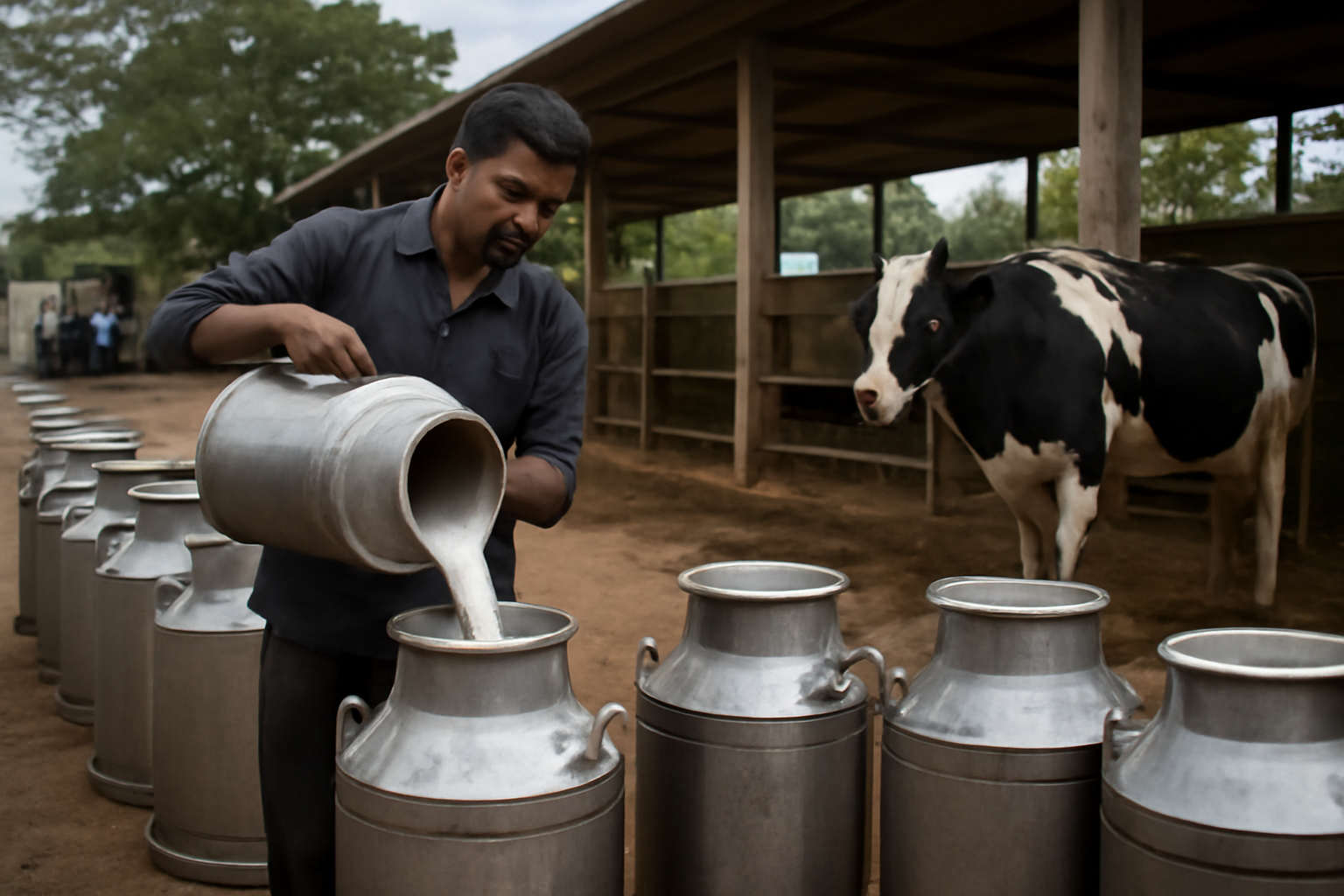
No proposal for a milk price floor
India’s central government has told the Lok Sabha that it currently has no proposal to introduce a minimum support price, or MSP, for milk. The statement rules out, for now, a centrally administered price floor comparable to the support-price mechanism used for selected agricultural commodities.
The decision means that milk procurement prices will continue to be set by cooperative dairies and private dairy companies. These buyers, rather than the central government, will remain responsible for determining what farmers receive for milk supplied to their collection networks and processing plants.
Pricing remains with dairy buyers
For dairy farmers, the government’s position leaves income protection dependent on the purchasing policies of individual cooperatives and companies. Procurement terms can therefore continue to differ between buyers and production areas. The parliamentary statement does not create a single national benchmark that every dairy processor must pay.
The absence of an MSP also preserves commercial flexibility for processors. Cooperative and private dairies can continue setting procurement prices according to their own operating conditions instead of buying at a centrally fixed minimum. That distinction matters for companies managing milk collection, processing and sales, as well as for farmers choosing between available buyers.
Unlike a crop that can be stored after harvest, milk requires regular collection and timely processing. Farmers consequently depend on functioning local procurement networks, while dairies must balance incoming supplies with processing capacity and demand. With no national support price planned, the commercial relationship between producers and buyers remains the main channel through which price signals reach the farm.
Policy debate will continue
The government’s answer gives the dairy industry clarity on the immediate policy direction, but it does not end the wider debate over producer returns. Supporters of an MSP may continue to argue that farmers need a guaranteed floor, while dairies must consider the effect of procurement costs on processing and downstream sales. The supplied material does not specify any alternative national pricing formula or a timetable for reconsidering the issue.
For cooperatives, the decision preserves their established role in linking farmers to the market and determining procurement terms. Private dairy companies retain the same responsibility within their supply chains. Producers, meanwhile, remain exposed to the price offered by accessible buyers rather than a uniform government-backed minimum.
Industry participants will now focus on the prices announced by major cooperative and private purchasers. Changes in those offers will directly affect farm revenue and can influence which buyer receives available milk. The central government’s statement makes clear that, at present, those commercial decisions will not be replaced by a national MSP for milk.