India Frees Roughly 350,000 Tonnes of Export Sugar for Domestic Sale as Prices Rise
India's government has allowed about 350,000 tonnes of refined sugar reserved for export to be sold on the domestic market instead, News18 Hindi reported. The stated aim is to raise local availability and restrain rising sugar prices. The tonnage is a reallocation of existing stock, not new production.
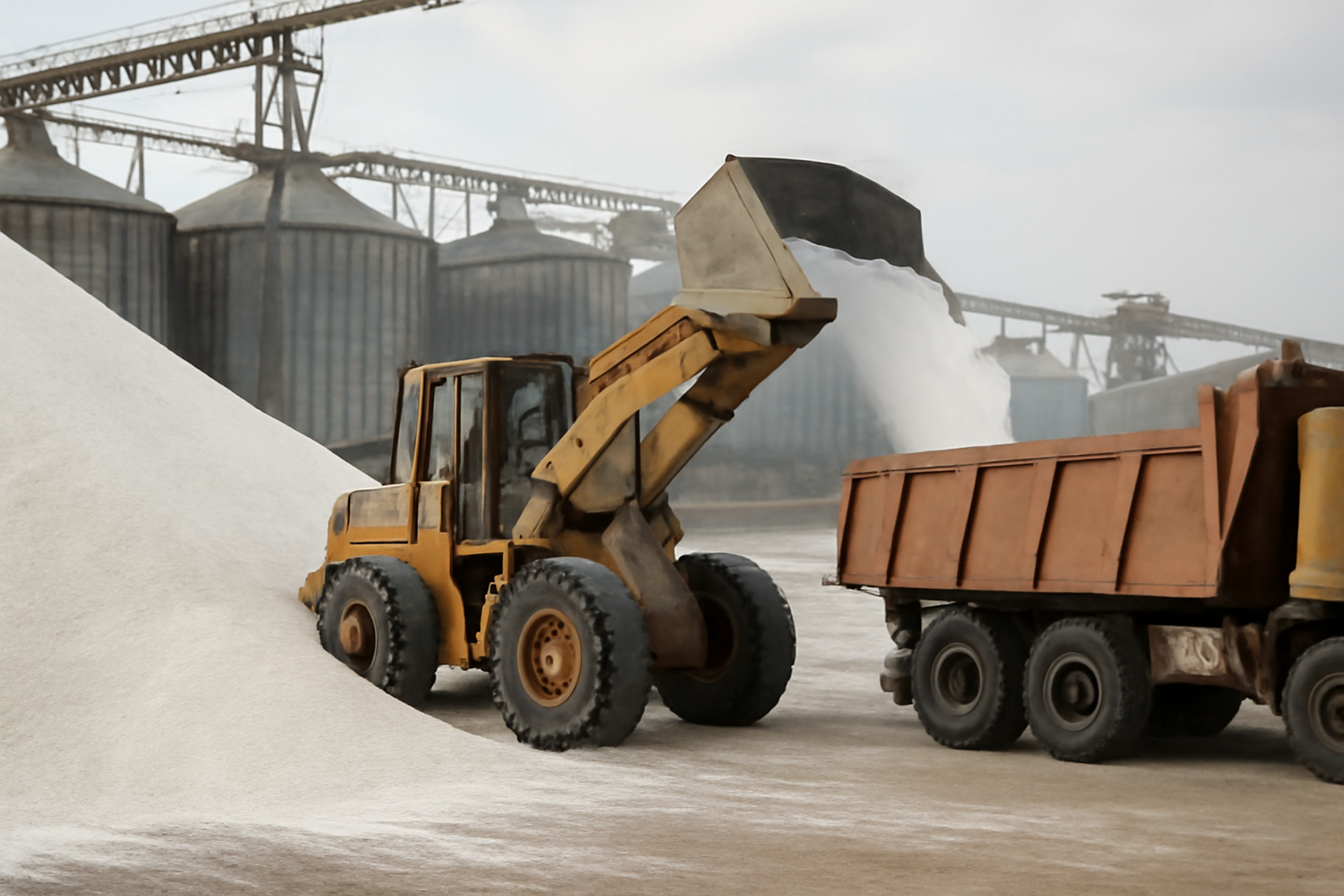
India's government has allowed roughly 350,000 tonnes of refined sugar that had been set aside for export to be sold instead on the domestic market, according to News18 Hindi. The stated purpose is to increase the volume of sugar available to buyers inside the country and to restrain the rise in prices.
The report frames the decision as a response to climbing sugar prices in India. Rather than authorising fresh imports or counting on additional output, the government is moving tonnage that already exists inside the system: sugar processed to refined grade and earmarked for shipment abroad is being released for sale at home.
A reallocation, not new supply
The distinction matters for anyone modelling the balance sheet. The 350,000 tonnes are not incremental production. The sugar has already been made and refined; only its destination changes. For the domestic market the effect is an immediate addition to sellable stock, and for the export ledger it is a subtraction of exactly the same size. Nothing in the measure alters how much sugar India produces this season.
News18 Hindi did not specify a timetable for the sales, which mills hold the reallocated volume, or whether the overall export ceiling is being revised as a consequence. Those parameters decide how quickly the tonnage actually reaches wholesale and retail channels, and therefore how much of a price effect it can have.
Why price is the trigger
India administers its sugar trade rather than leaving it to open arbitrage, and export entitlements are distributed to mills in defined quantities. That makes the export allocation the fastest lever available when domestic prices move: it can be redirected without new legislation, without customs changes and without waiting for a harvest. The immediate consequences run in three directions.
- Domestic availability rises by the redirected volume once mills begin placing it with local buyers.
- Mills that had planned export shipments must instead find domestic offtake at prevailing local prices.
- The exportable surplus available to foreign buyers falls by the same 350,000 tonnes.
What it means for mills and buyers
For producers, the economics turn on the gap between the export realisation they had expected and the price they can obtain at home. Where the domestic market is running hot enough to have prompted government action, that gap may be narrow or even favourable in the short term. The trade-off is control: domestic sales in India are administered rather than free-flowing, so the pace at which this tonnage is absorbed is a policy variable as much as a commercial one, and mills carry the working-capital cost of holding sugar until it can be released.
For industrial buyers the grade matters. Refined sugar is the quality used by beverage bottlers, confectionery manufacturers, bakeries and dairy processors, which are the users most exposed to price spikes and least able to substitute. Adding refined tonnage specifically, rather than raw or mill-white sugar, targets that part of demand directly.
For international counterparties the signal is directional. India's exportable volumes are being managed against domestic price conditions first, and the reallocation shows that tonnage already committed to the export channel can be pulled back. Buyers holding Indian origin in their books face timing risk alongside volume risk, since the report gives no delivery schedule for the redirected sugar. Until the government clarifies whether the export ceiling itself is reduced, the size of India's residual exportable surplus stays an open question for the world market.