India’s Record 4.5 Million-Tonne Pulse Buffer Cushions Crop Risk
India’s government pulse stocks have reached a record 4.5 million tonnes, exceeding the prescribed buffer benchmark of 3.5 million tonnes. The additional supply gives authorities room to intervene if kharif output falls or the subsequent rabi crop disappoints.
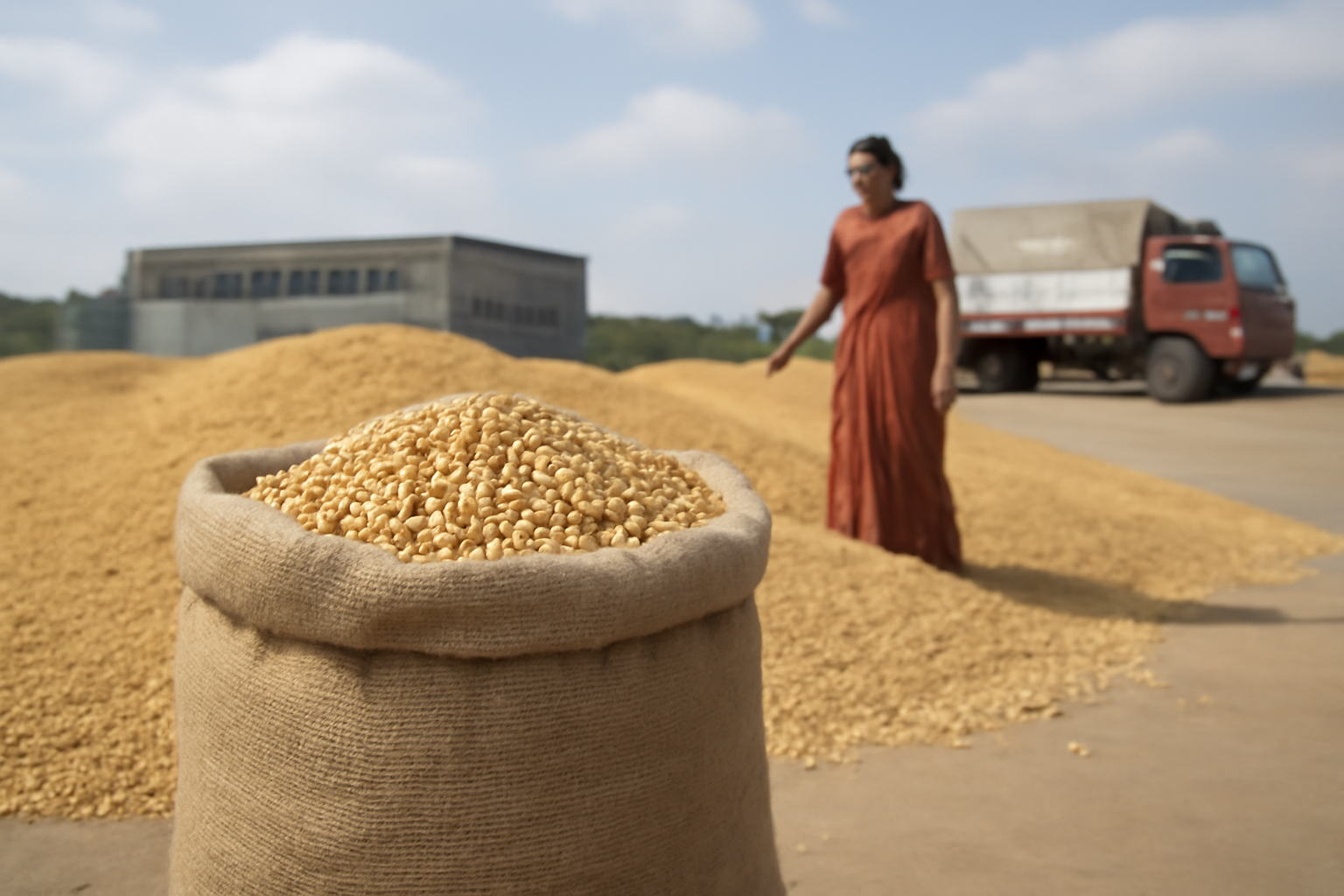
Government stocks exceed the buffer benchmark
India’s government pulse buffer has reached a record 4.5 million tonnes, placing the country in a stronger position to manage potential crop shortfalls. The stockpile is 1 million tonnes above the prescribed buffer benchmark of 3.5 million tonnes.
The size of the reserve matters because pulses are a central part of India’s food market. A production setback can tighten available supply and put upward pressure on prices. With stocks already above the official benchmark, the government has more material available for release if domestic availability deteriorates.
Two harvests remain under scrutiny
The immediate risk concerns the kharif pulse crop. If its output declines, the buffer can supplement market supply and limit the effect of the shortfall. The reserve also provides protection against a second risk: weaker production from the subsequent rabi crop.
These risks are linked. A poor kharif result would make the market more dependent on the rabi harvest, while another disappointing crop would extend supply pressure. The record reserve therefore offers coverage across more than one harvest period rather than serving only as a response to a single seasonal disruption.
Releases could moderate price pressure
A buffer stock does not remove production risk, but it gives the government a direct instrument for addressing shortages. Releasing pulses from the reserve would add physical supply to the market. That could contain price increases and reduce the need for buyers to compete aggressively for limited commercial stocks.
The effect will depend on how much is released and when it reaches the market. Early intervention can address expectations of scarcity, while delayed releases may have less influence once prices have already adjusted to a smaller crop. The 4.5-million-tonne holding gives authorities greater flexibility than the 3.5-million-tonne benchmark alone would provide.
Market participants gain a larger safety margin
For processors and traders, the reserve lowers the immediate risk that one weak crop will translate directly into an acute physical shortage. It may also temper speculative stockholding if market participants expect the government to release supplies when prices rise. Producers, however, will continue to respond to actual crop conditions and market prices, making the timing and scale of any intervention important.
The stockpile should be viewed as a cushion rather than a substitute for production. A shortfall in both the kharif and rabi crops would still tighten the underlying balance and require careful management of the reserve. For now, the record 4.5 million tonnes gives India an unusually large buffer against harvest uncertainty and a practical means of containing price pressure if output disappoints.