India’s onion losses and delayed kharif crop tighten supplies as retail prices rise
About 30% of India’s 120,000-tonne summer onion buffer has already spoiled or sprouted, while kharif planting in Nashik is far behind its usual pace. The government is moving onions by dedicated trains and trucks as retail prices reach ₹50-65 per kilogram in several cities and shallots exceed ₹100 in Madurai.
Buffer losses reduce available supply
India’s onion market is tightening after unusually high losses in government stocks and a delay to the next kharif crop. Jagran reported that about 30% of the 120,000 tonnes of summer onions purchased this year has already been damaged by rotting or sprouting. A senior National Agricultural Cooperative Marketing Federation of India, or NAFED, official said losses, normally around 20% annually, could reach 40% this year.
The official attributed the deterioration to unseasonal rain during harvesting, which reduced onion quality and shelf life. The government had targeted purchases of 200,000 tonnes during the summer, but NAFED and the National Cooperative Consumers’ Federation, or NCCF, jointly procured only 120,000 tonnes. More than 90% of this year’s buffer is expected to come from the Nashik area, compared with its usual share of more than 80%.
Planting delays raise autumn shortage risk
Markets currently depend mainly on summer onions harvested in March and April. These onions normally remain usable for six to seven months and are stored by farmers for staggered sales. However, farmers began releasing stocks in June and July this year to avoid spoilage, while stronger wholesale prices also encouraged them to sell into the market rather than to government agencies.
Nashik district has storage capacity for about 2.4 million tonnes of onions, but agricultural officials said farmers now retain only 25% of total stocks in their own warehouses. The next crop is also late: just 370 hectares of kharif onions had been planted against an average district area of about 30,000 hectares. Planting would normally be roughly halfway complete at this stage, but progress was reported at only 1% because of weak rainfall during the sowing period.
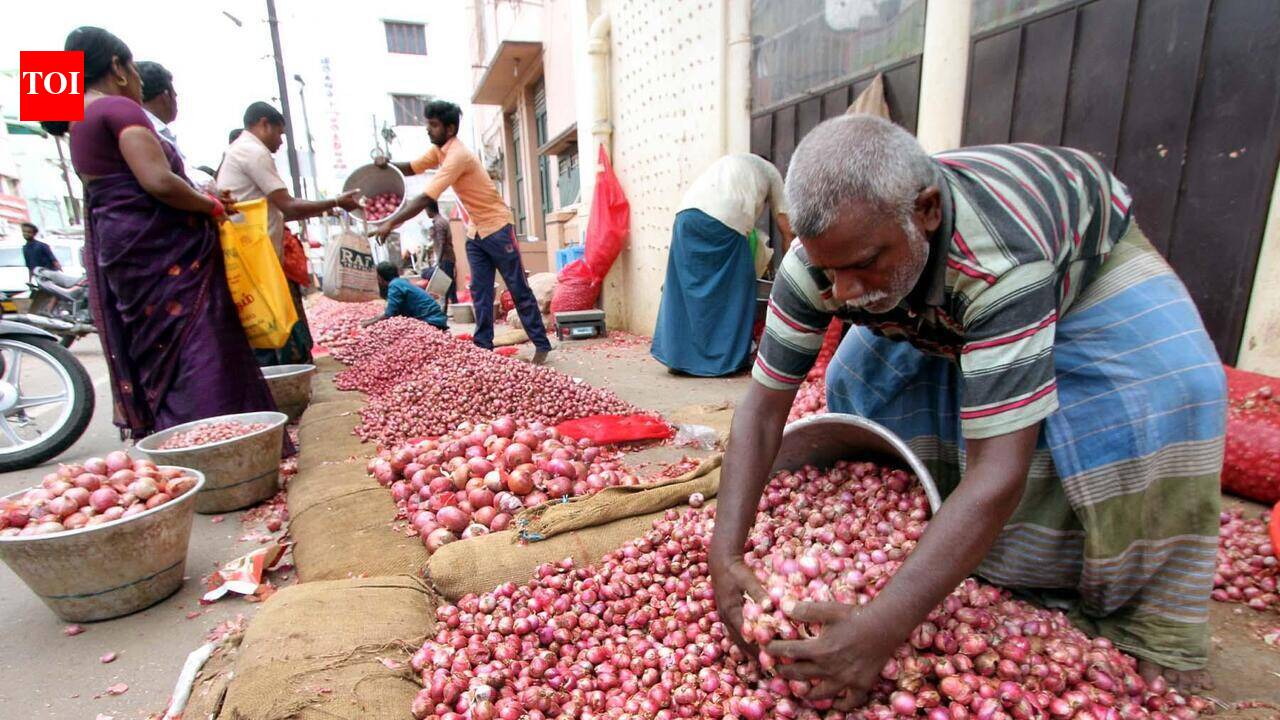
New kharif onions are not expected to reach markets until mid-November, with regular arrivals likely from early December. Traders therefore anticipate a supply gap in October, while agricultural officials warn that shortages could emerge in September and October if stored inventories continue to decline. Retail onion prices have already reached ₹50-65 per kilogram in several cities. In Madurai, The Times of India reported that shallots had crossed ₹100 per kilogram, while large onions were selling for about ₹60.
Dedicated trains target large consumption centres
The government has begun using the Kanda Express to move buffer onions to major urban markets. A train carrying about 500 tonnes left Lasalgaon for Delhi after a roughly 24-hour delay caused by grading and sorting, with arrival expected within 24 hours. NAFED also sent 30 tonnes to Delhi by truck, followed by another 30-tonne NCCF shipment. The onions transported under the initiative are to be sold in Delhi through NAFED, NCCF and Kendriya Bhandar outlets at a subsidised ₹35 per kilogram. Similar rail services are planned for Kolkata and Chennai, while future shipments have also been announced for Chennai, Ernakulam, Madurai and Guwahati. The deliveries can add supply in consumption centres, but their effect will depend on whether remaining stored onions last until regular kharif arrivals begin.