India refuses to open agriculture and dairy, stalling free trade talks with New Zealand
India has told New Zealand it will negotiate every part of a free trade agreement except farmers and the dairy sector, according to News18 Hindi. The exclusion removes New Zealand's largest commercial interest from the table and has pushed Wellington to rethink its negotiating strategy.
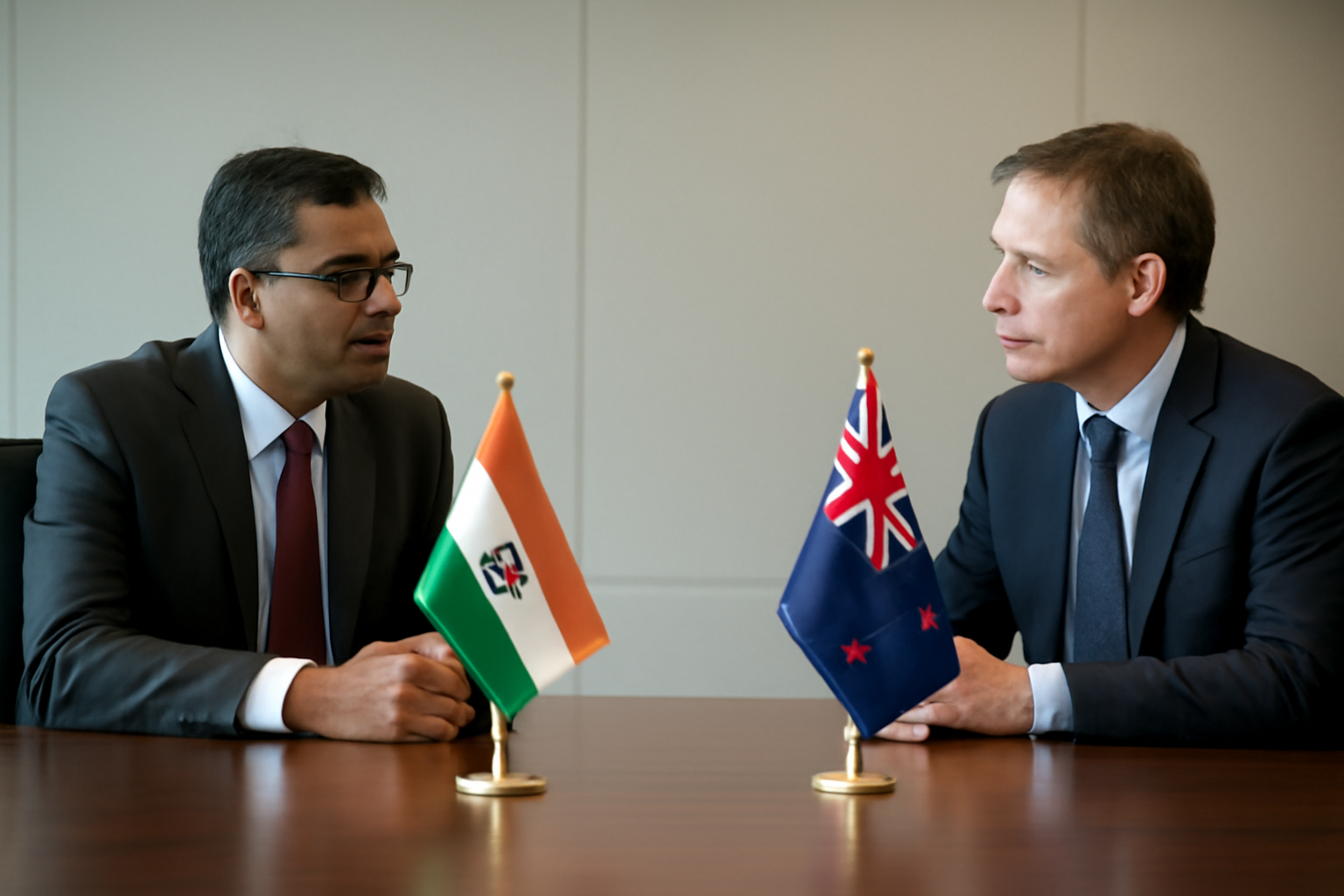
India has refused to place agriculture and the dairy sector on the negotiating table in its free trade agreement talks with New Zealand, leaving the process without a route through the chapters Wellington treats as decisive. According to News18 Hindi, Indian negotiators made clear they were ready to discuss every other element of the agreement, but that farmers and dairy would not be opened. The report says the outcome has forced New Zealand to reconsider its approach to the negotiation.
India draws a line around farmers and dairy
The position described by News18 Hindi is consistent with the way India has handled trade negotiations for years. Dairy and sensitive farm products are treated less as tariff lines than as a question of rural livelihoods, resting on a vast base of smallholder producers who keep a handful of animals each and supply cooperative and private processors. Opening that segment to competitive imports carries direct political consequences in rural constituencies, and successive Indian governments have declined to take the risk.
What India did offer, according to the same report, was flexibility on the rest of the agreement. That leaves industrial goods, services, investment rules and mobility inside the negotiating perimeter, while the chapters New Zealand most wanted stay outside it. The distinction matters: this is not a disagreement over the level of tariff cuts or the length of a transition period, but a refusal to discuss the sector at all.
Why dairy decides the deal for New Zealand
New Zealand's goods export base is unusually concentrated in dairy, and market access for milk products is the commercial core of almost any trade agreement it signs. An agreement with India that carves out dairy changes the character of the deal for New Zealand exporters and processors, leaving the following picture:
- Milk powders, the backbone of New Zealand's dairy export mix, remain outside the negotiation
- Butter and milk fat products stay subject to India's existing import regime
- Cheese and other processed dairy lines are excluded from any tariff schedule
- Sheep meat, wool, horticulture, wine and forestry products sit outside the red line and remain negotiable, along with services
Wellington reassesses its options
With the dairy chapter closed, New Zealand faces a narrower set of choices. One is to pursue a slimmer agreement built on non-agricultural goods, services, education and investment, banking value where India is willing to move. A second is to keep dairy formally in the text but push the substance into long transition periods or quota mechanisms, an approach India has so far resisted. A third is to slow the process and wait for a more favourable political window in New Delhi.
None of these restores the original commercial case for the agreement. A deal without dairy would still deliver gains for meat, horticulture, wood and services exporters, but it would not deliver the volume-driven revenue that makes the Indian market attractive to New Zealand's dairy industry in the first place. That is the calculation behind the change of strategy described in the News18 Hindi report.
What it means for exporters
For New Zealand dairy processors, the practical consequence is continuity rather than disruption: export flows stay pointed at their established destinations in Asia and the Middle East, and India remains a market approached through ingredients, partnerships and local operations rather than tariff concessions. For Indian dairy cooperatives and processors, the protection of the domestic market holds, removing the near-term prospect of low-cost imported milk powder and butterfat competing on price. Indian exporters of manufactured goods retain an interest in concluding an agreement, which suggests the talks are more likely to continue in reduced form than to collapse outright.