India–New Zealand FTA Could Take Effect on October 19, Opening Duty-Free Access
The India–New Zealand free trade agreement could take effect on October 19, giving all Indian exports duty-free access across more than 8,200 tariff lines. India will liberalize about 70% of its tariff lines while excluding dairy and selected agricultural products.
Implementation expected in October
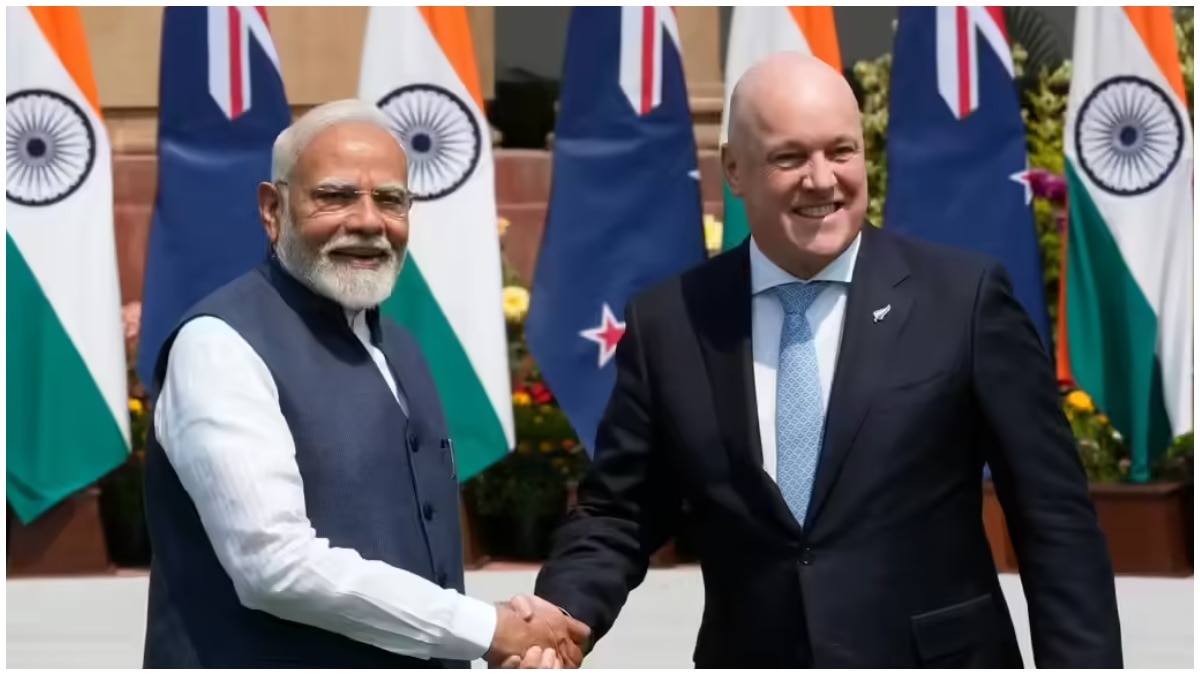
The India–New Zealand free trade agreement could take effect on October 19, according to Aaj Tak. The accord will enter into force on a date agreed by both governments. It was signed on April 27 at Bharat Mandapam in New Delhi by Indian Commerce and Industry Minister Piyush Goyal and New Zealand Trade and Investment Minister Todd McClay, in the presence of New Zealand Prime Minister Christopher Luxon.
The agreement is intended to expand bilateral trade in goods and services and encourage investment. Negotiations began in 2010, were restarted in March 2025 and concluded in December 2025 after five formal rounds. The deal forms part of India’s broader expansion of trade partnerships, following agreements with Mauritius, the United Arab Emirates, Australia, the European Free Trade Association bloc and the United Kingdom.
Indian exports gain full duty-free coverage
Once the accord takes effect, New Zealand will provide duty-free entry to 100% of Indian exports, covering more than 8,200 tariff lines. The principal beneficiary sectors include textile, apparel, leather, footwear, engineering goods, processed food and pharmaceutical products. New Zealand currently applies tariffs of as much as 10% to some Indian products, including ceramic goods, carpet, automobile and automotive component shipments.
Removing those duties should improve the price competitiveness of affected Indian products in the New Zealand market. The commercial effect will depend on whether exporters can convert the tariff advantage into distribution agreements and larger orders. The changes are particularly relevant to manufacturers competing in product categories where a tariff of up to 10% has directly raised landed costs.
India protects dairy while opening most trade
India will liberalize about 70% of its tariff lines, covering approximately 95% of New Zealand exports by value. Around 57% of tariff lines will become duty-free immediately, while reductions for the remaining covered products will be phased in. India has excluded dairy and selected agricultural products from its commitments, limiting exposure in politically sensitive domestic sectors.
New Zealand suppliers of wool, wine, coal, sheep meat, forestry and wood products are expected to gain improved access to India. Kiwifruit, apple, avocado and blueberry shipments may also benefit. The countries plan agricultural cooperation, including technical and other support for Indian farmers cultivating crops such as kiwifruit and apple.
The agreement also provides a quota of 5,000 visas for temporary employment by Indian professionals and includes measures supporting student and professional mobility. New Zealand has committed to $20 billion in foreign direct investment in India over the next 15 years. The countries aim to double bilateral trade to $5 billion within five years. Merchandise trade stood at about $1.3 billion in 2024-25, while total trade was approximately $2.4 billion in 2024, according to Aaj Tak.