India-Nepal Farm Trade Restrictions Deepen Bilateral Friction
Nepal reportedly lost 10 billion rupees from trade with India over one year as tighter Indian import controls weighed on bilateral flows. India, meanwhile, is seeking easier access to Nepal for its agricultural and dairy products.
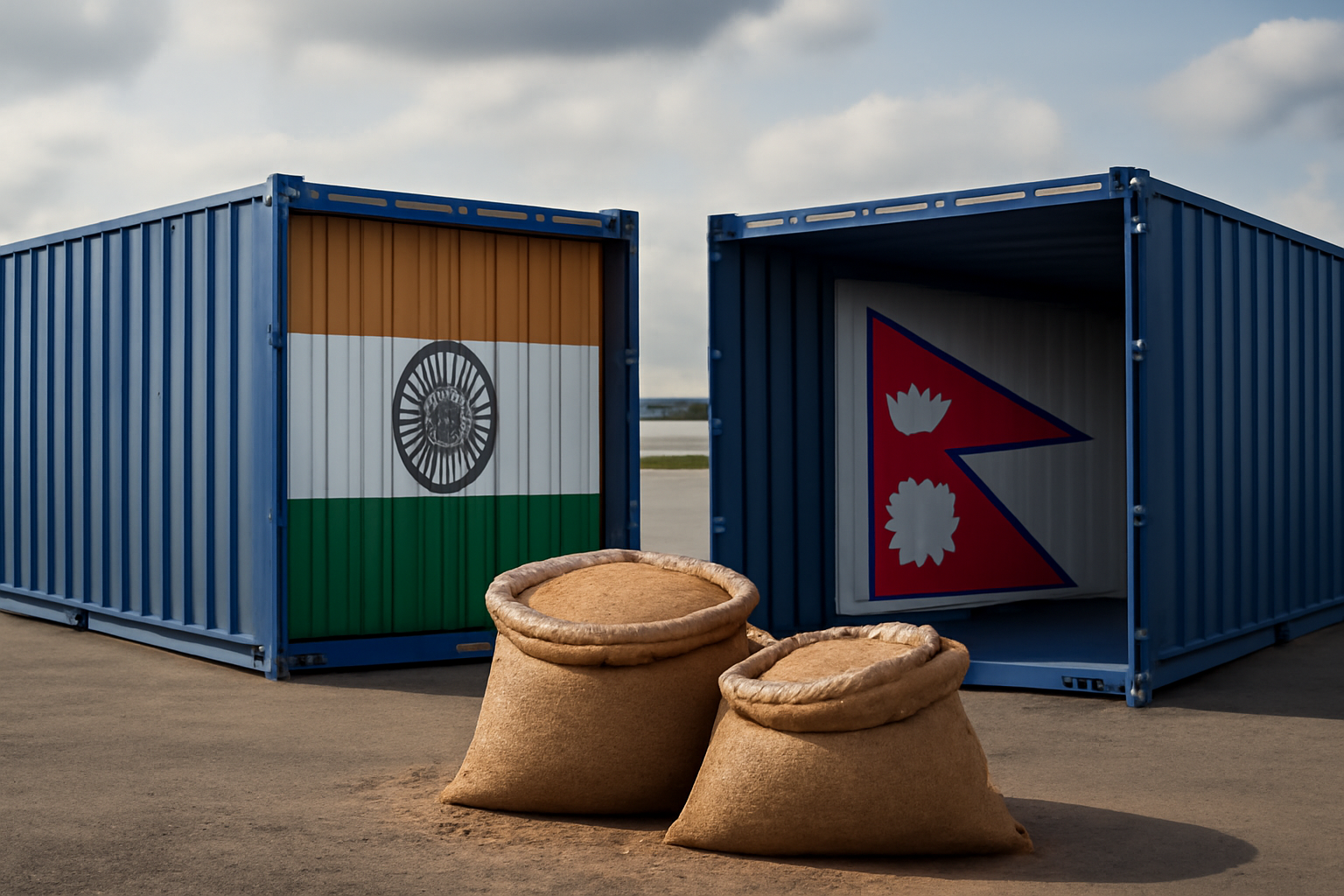
Nepal reports a 10-billion-rupee loss
Trade tensions between India and Nepal are increasing as restrictions affect agricultural and dairy products moving across their shared market. According to the report provided for this article, Nepal suffered a trade loss of 10 billion rupees in one year following tighter Indian controls on imports from the country. The available material does not specify the products responsible for the loss, the period covered or whether the figure is denominated in Indian or Nepalese rupees.
The reported loss highlights Nepal’s exposure to changes in Indian import policy. For Nepalese producers, processors and exporters, access to the neighboring Indian market is commercially important because restrictions can interrupt established sales channels. The source material does not identify the measures imposed by India, their effective dates or the companies and producing regions most affected.
India seeks access for farm and dairy goods
At the same time, India has asked Nepal to make market access easier for Indian agricultural and dairy products, which currently face restrictions in Nepal. No detailed list of affected goods was included in the supplied report. It also did not state whether India is seeking the complete removal of the restrictions, larger quotas, changes to licensing rules or another form of regulatory relief.
The two issues place reciprocal market access at the center of the dispute. Nepal is facing reported losses associated with tighter Indian import treatment, while India argues that its own farm and dairy suppliers encounter barriers in Nepal. The information provided does not indicate whether the two governments have proposed a timetable for negotiations or linked concessions in one product category to access in another.
Uncertainty for producers and traders
Until the restrictions are clarified, agricultural businesses on both sides face uncertainty over permitted volumes and market availability. Nepalese exporters need predictable Indian entry conditions, while Indian producers and dairy processors are seeking fewer obstacles in Nepal. Importers and traders also need clear product coverage, documentation requirements and implementation dates before they can assess the commercial effect of any policy change.
The reported 10-billion-rupee loss gives the dispute a measurable economic dimension, but the limited disclosure prevents a detailed assessment of prices, volumes or individual commodities. The next material development would be a formal explanation of India’s import controls, Nepal’s restrictions on Indian goods and any bilateral arrangement to restore or expand access. Without those details, the immediate issue remains an imbalance in how each side views access to the other’s agricultural market.