India's Millet Harvest Runs More Than 10% Above 2016 as Government Push Meets Health Demand
India's 2025 millet harvest came in more than 10% above 2016 levels, according to Nikkei, driven by a government campaign to widen cultivation and consumption. Rising health-driven demand is expanding the domestic market for a grain group that needs less water than rice and tolerates drought and heat.
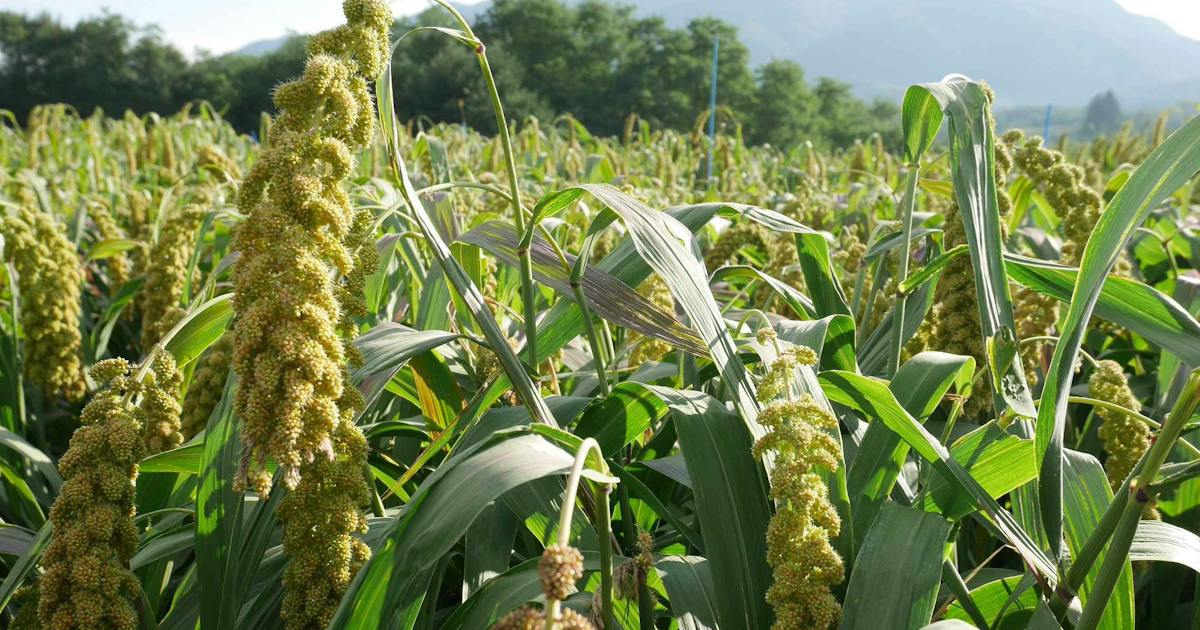
Millets are moving from subsistence staple to commercial crop in India. The 2025 harvest in the country came in more than 10% above 2016 levels, according to Nikkei, which attributes the increase to a government drive to spread cultivation and consumption alongside health-driven demand that is widening the domestic market for the grain group.
Low water use is the commercial argument
Millets — a family of small-grained cereals that includes barnyard, foxtail and proso varieties — grow on less water than rice and withstand drought and high temperatures, Nikkei reports. That profile is the core of the current interest. Where paddy depends on reliable irrigation or monsoon timing, millets can be planted in semi-arid districts and on land that would otherwise deliver an unreliable rice or wheat crop. The relevance has grown as growers worldwide stay on alert for abnormal weather, including El Nino episodes, which can disrupt yields across several producing regions in the same season.
For producers, the trade-off is familiar: lower input requirements against thinner established markets. Millets have none of the procurement, milling and distribution scale built around rice and wheat over decades, which is why area expansion tends to track policy support and offtake commitments rather than price signals alone.
Government promotion sets the baseline
The Indian government is actively promoting millets, Nikkei reports, and that policy push is the most important variable behind the harvest increase. Public demand changes the risk calculus for farmers: a crop with assured institutional buyers can be rotated into fields previously planted to cereals with deeper markets. It also pulls in processors, because consistent volumes are the precondition for investment in dehulling, milling and packaging lines sized for small grains rather than for rice.
The reverse risk is equally clear. If promotion slows before private demand is self-sustaining, area gains can unwind quickly, since millets compete for the same land and labour as better-established crops.
Health demand is expanding the market
On the consumer side, Nikkei links the expansion in market size to rising health consciousness among Indian buyers. That shifts millets out of the bulk commodity channel and into branded food categories — flours, mixes, breakfast products and snacks — where margins are set by processing and shelf positioning rather than by wholesale grain prices. For food manufacturers, the implication is that the Indian millet opportunity sits mainly downstream: the value added after the grain leaves the farm gate exceeds the value of the grain itself.
The same logic applies to investors looking at the sector. Capacity in cleaning, sorting and milling for small grains is the bottleneck in most origins, and it is where margin accrues if volumes hold.
Beyond India
Millets are not new to Asian food systems. They were cultivated in Japan from the Jomon period and were established there before wheat and rice spread, Nikkei notes — a reminder that the grains were displaced by crops with higher yields and easier processing, not by any lack of agronomic fit. A climate-driven reassessment puts that history back in play, particularly for importers looking for cereals that can be grown in water-constrained regions.
For buyers outside India, the practical takeaway is supply optionality. A producing country that has added more than 10% to its millet harvest since 2016 becomes a credible sourcing origin for processors seeking drought-tolerant grains, though the scale of any exportable surplus depends on how much of the additional volume domestic health-food demand absorbs first.