India may release buffer-stock onions in September as prices rise
India’s government may begin releasing onions from its buffer stock in September to contain rising market prices. The prospective intervention comes ahead of the country’s festive and wedding season, when household and catering demand could strengthen.
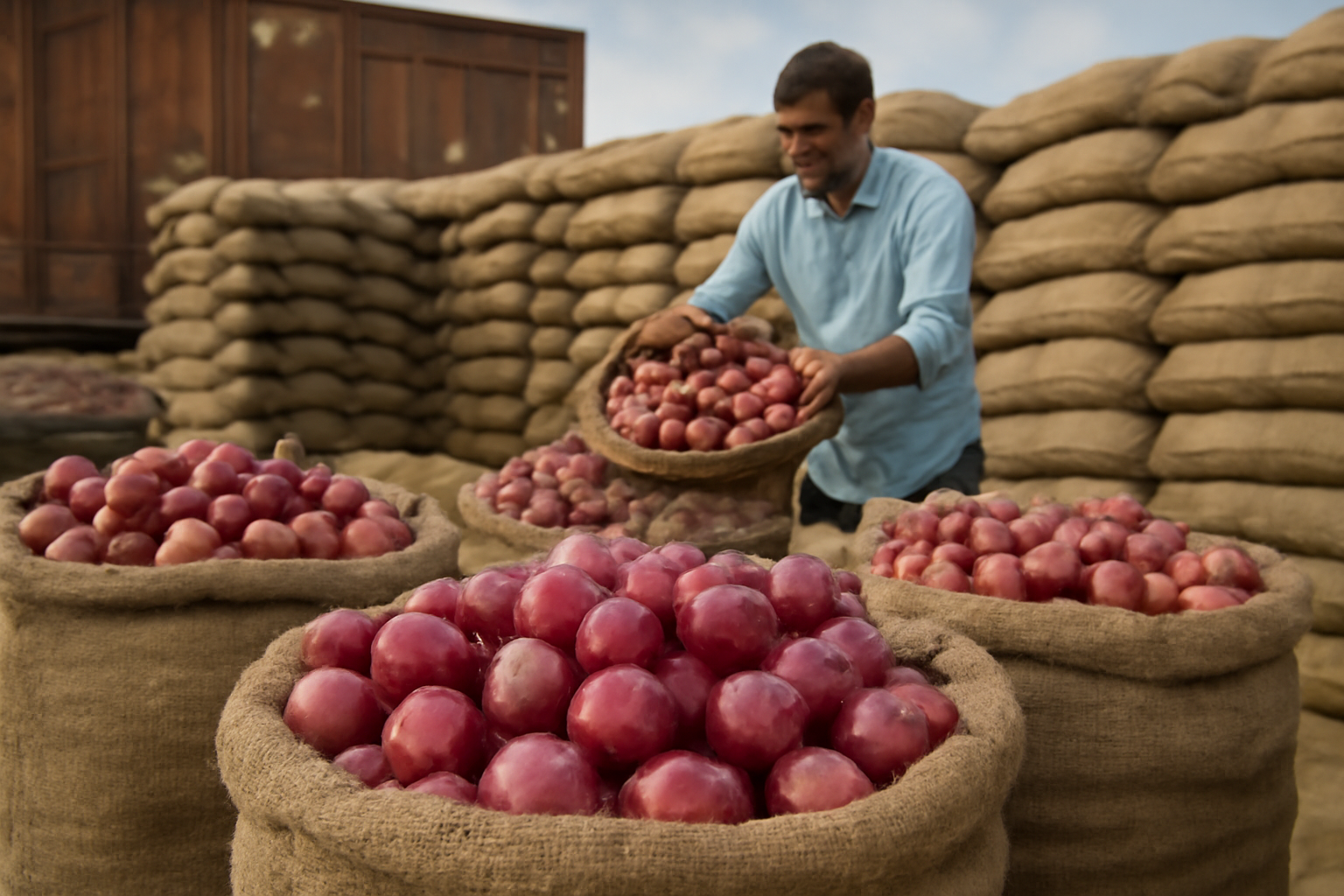
Government considers market intervention
India’s government may release onions from its buffer stock into the domestic market from September as prices begin to rise. The measure is intended to limit food inflation and provide relief to consumers ahead of the festive and wedding season, a period that can bring stronger demand from households, caterers and food-service businesses.
The available report does not specify the volume of onions that could be released, the size of the government’s current inventories or the locations where sales may take place. It also provides no current wholesale or retail price. The timing and scale of any intervention will therefore determine how strongly the measure affects markets in producing regions and major consumption centres.
Buffer sales could increase near-term supply
A buffer-stock release adds government-held onions to commercial supply without waiting for the next harvest to reach the market. If implemented in September, the sales could give wholesalers and retailers an additional source of produce during the run-up to seasonal celebrations. The resulting price effect would depend on the quantity offered, the pace of distribution and prevailing availability from farmers and private stocks.
For traders, the prospect of government sales introduces uncertainty over near-term prices. Businesses holding inventories may face pressure to sell before additional onions enter the market, while buyers could delay purchases if they expect cheaper supplies. Producers could also be affected if intervention lowers wholesale prices, although the report does not provide farmgate-price data or details of the procurement terms used to build the buffer.
Execution will shape the impact
Distribution is central to the effectiveness of the plan. Releases concentrated in areas experiencing the sharpest increases could have a more direct effect on consumer prices than sales spread across markets with different supply conditions. Storage quality and the speed at which onions move through wholesale and retail channels will also influence how much of the buffer reaches consumers.
The government’s stated objective is to keep onions affordable during the coming festival and wedding period. These events matter for the market because onions are a widely used food ingredient and demand extends beyond household purchases to restaurants, caterers and other commercial kitchens. A timely release could reduce the risk of a seasonal price surge, but a limited or delayed programme may have less influence.
Trade implications remain unclear
The report focuses on domestic buffer stocks and does not mention changes to onion imports, exports or trade policy. Market participants will nevertheless watch whether the intervention is sufficient to stabilise domestic availability. If buffer sales materially expand supply, they could reduce the need for additional measures; if prices continue to climb, pressure for further government action may increase.
Until the authorities announce volumes, sales channels and a firm timetable, the proposal remains a signal rather than a fully defined market programme. Producers, wholesalers, retailers and food-service buyers will be looking for those operational details as September approaches. They will also assess whether rising prices reflect a temporary supply gap or a broader shortage that buffer inventories alone may not resolve.