India offers ₹10,000 per hectare to expand pulses cultivation under 2025-2031 mission
India is offering farmers ₹10,000 per hectare to encourage pulses cultivation under its National Pulses Self-Sufficiency Mission. The 2025-2031 programme aims to narrow the gap between domestic production and consumption and reduce reliance on imported pulses.
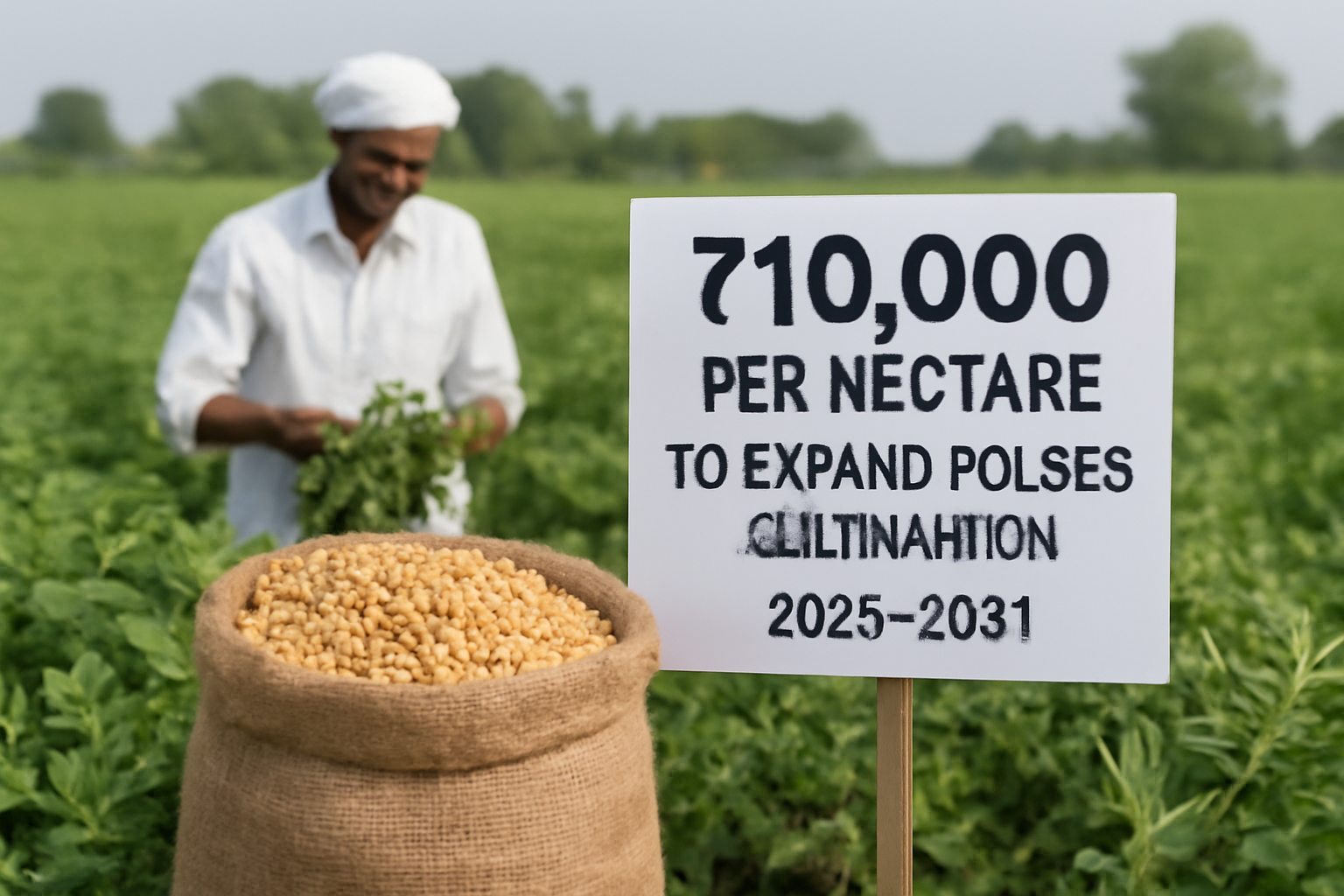
Cash support targets the production deficit
India is offering farmers an incentive of ₹10,000 per hectare to cultivate pulses as part of the central government's National Pulses Self-Sufficiency Mission. The programme is scheduled to run from 2025 to 2031 and is intended to increase domestic output in a market where production remains substantially below consumption.
The shortfall means India must import large quantities of pulses every year. Expanding the planted area could therefore affect farmers, domestic processors and traders as well as overseas suppliers serving the Indian market. The incentive gives growers a direct financial reason to allocate more land to pulses, although the available source material does not specify which pulse crops qualify or whether the payment applies uniformly across producing regions.
At ₹10,000 per hectare, the measure addresses cultivation economics at farm level. Its eventual effect will depend on how many farmers participate and how much additional land is brought under pulses. No target for participating hectares, incremental production or import reduction was provided in the available information.
A mission extending through 2031
The 2025-2031 timeframe gives the government several crop cycles in which to pursue higher output. Pulses are a broad agricultural category, and production outcomes can vary by crop, region and season. The source material does not provide a crop-by-crop implementation schedule, annual funding allocation or details of how farmers will register and receive payments.
Those missing operational details will be important for producers deciding whether to change planting plans. A per-hectare payment can reduce part of the financial risk associated with allocating land to pulses, but growers will also consider expected yields, production costs and the returns available from competing crops. The mission's practical reach will depend on whether the incentive is accessible in the main cultivation areas and delivered in time to influence sowing decisions.
For processors, a sustained increase in domestic harvests could improve access to locally produced raw material. Traders and importers will be watching whether additional acreage translates into marketable supply rather than merely shifting land between pulse crops. The information released so far does not establish the expected timing or scale of any resulting change in procurement.
Imports remain central to the market outlook
India's continuing production deficit is the commercial rationale for the programme. When domestic output does not meet consumption, imports fill part of the gap. A successful expansion of cultivation could reduce that requirement, but the size of any reduction cannot be calculated without official acreage, yield and production targets.
Overseas suppliers should consequently treat the mission as a medium-term policy signal rather than evidence of an immediate contraction in trade. The programme runs until 2031, while harvest volumes will still depend on farmer participation and crop performance. Import demand may remain necessary whenever domestic supply falls short of consumption.
The first indicators of effectiveness will be the number of hectares enrolled, the geographical distribution of participating farms and the additional volume harvested. Until those figures are available, the confirmed elements are limited but significant: farmers are being offered ₹10,000 per hectare, the mission covers 2025-2031, and its stated direction is to strengthen domestic pulses production and reduce India's dependence on foreign supply.