India Looks to Heavier Buffaloes to Expand Its Share of a $5 Billion Meat Export Trade
India's meat exports have crossed $5 billion, and a proposal under discussion would raise the country's share of global trade by increasing the body weight of buffaloes rather than the number of animals processed. The same discussion points to organic meat, a global market that has reached 800 billion rupees and is expected to grow quickly. No timetable, target weight or volume goal has been disclosed.
Weight, not headcount
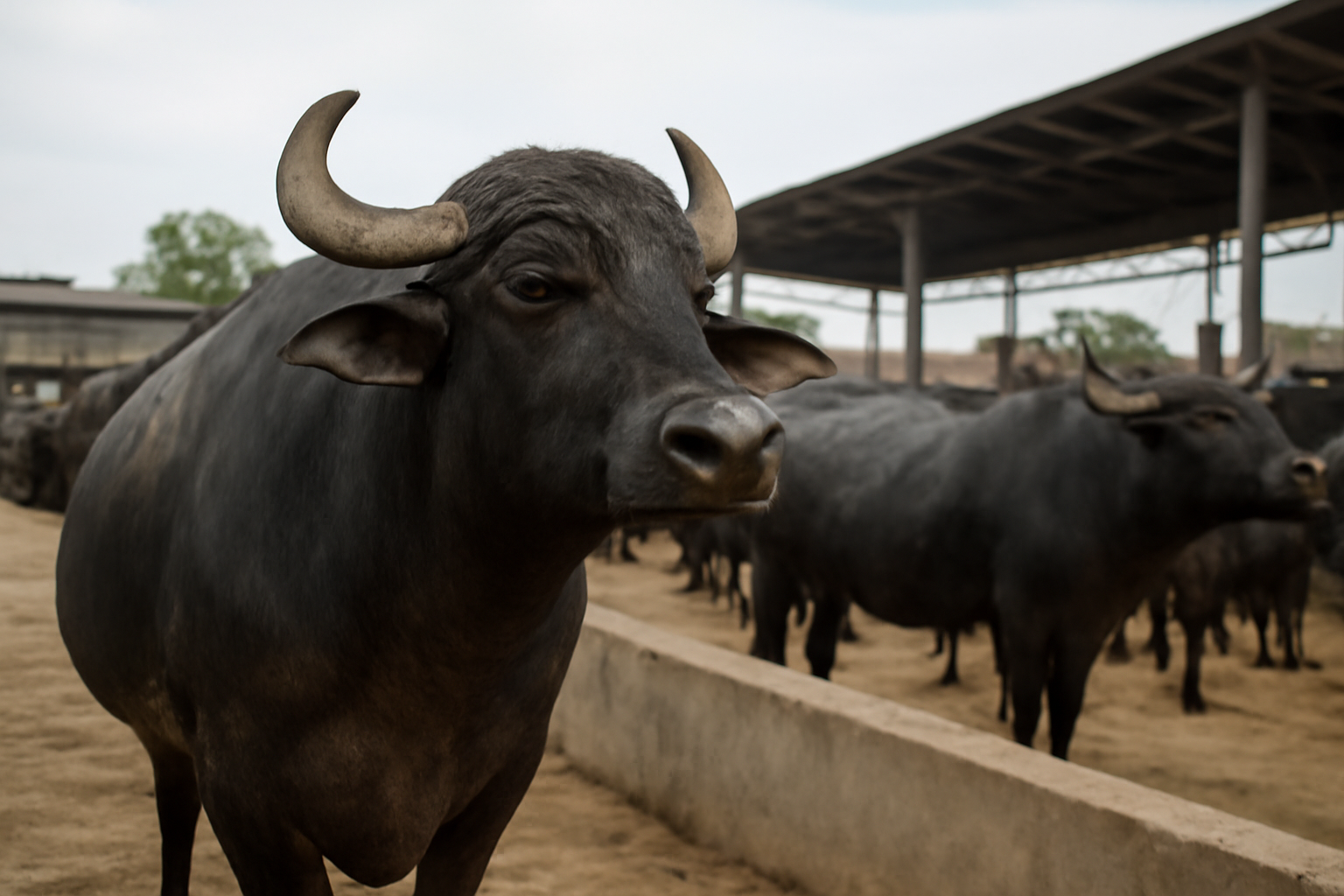
India's meat exports have crossed $5 billion, and a proposal now under discussion would expand the country's share of global meat trade by increasing the body weight of buffaloes. The reasoning is arithmetic rather than agricultural expansion: a heavier animal yields more meat per head, so the same herd, the same slaughter capacity and the same veterinary and certification overhead deliver more export tonnage.
Buffalo meat is the product at the centre of the proposal. Average carcass weight is one of the few variables in the chain that can be moved without new plants or new licences. Feeding, breeding and animal health programmes act on the animal base that already exists, while capacity expansion requires capital, land, effluent treatment and export approvals that take years to secure. That difference in lead time is what makes weight the first lever rather than the last.
What heavier animals change downstream
Raising average weights touches every stage of the chain, from the village to the port:
- Higher yield per head spreads fixed slaughter, chilling and freezing costs over more kilograms, lowering the unit cost of processing.
- Farmers capture more value per animal sold, which changes the economics of raising male buffaloes and of selling culled dairy stock.
- Exporters gain volume without adding animals, which matters where herd growth is slow or constrained.
The organic meat opening
The same discussion identifies organic meat as a second lever. The global organic meat market has reached 800 billion rupees and is expected to expand rapidly. Organic supply is a different business from commodity buffalo meat: it depends on certified feed, documented veterinary practice and traceability that holds from the farm through the processing plant, and it is audited by the buyer rather than assumed.
For Indian suppliers, the attraction is price rather than volume. Certified organic product sells into a narrower set of buyers at a premium, so even a modest share of shipments moving into that category lifts the average value per tonne more than an equivalent gain in raw tonnage would. Building that share, however, requires investment at farm level, where record-keeping and input control are hardest to enforce.
What to watch
Two questions determine whether the proposal shows up in trade statistics. The first is reach: animals are held largely by smallholders, so feeding and breeding programmes only translate into carcass weight if they extend to that base rather than to a small set of organised suppliers. The second is acceptance, since heavier animals and organic claims both have to satisfy the sanitary and documentation requirements of destination markets before they translate into shipments.
For importers, the near-term implication is supply-side. More meat per animal means more availability without waiting for herd expansion, and lower processing cost per kilogram gives Indian exporters room on price. For competing suppliers, a heavier Indian carcass mix is primarily a cost story. Nothing in the material sets a timetable, a target weight or an export volume goal, so the scale and pace of any change remain open.