India’s floriculture output reaches 4.882 million tonnes in 2025-26
India’s flower production reached 4.882 million tonnes across about 410,000 hectares, according to the third advance estimates for 2025-26. Andhra Pradesh accounted for approximately 31% of national output, while demand from religious events, decoration, fragrances, cosmetics and medicinal products supported the sector’s expansion.
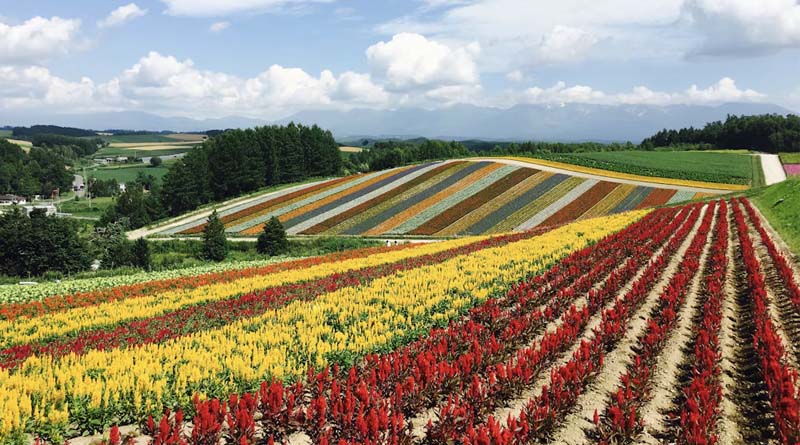
Flower output reaches 4.882 million tonnes
India’s commercial floriculture sector produced 4.882 million tonnes of flowers in 2025-26, according to third advance estimates from the Ministry of Agriculture and Farmers Welfare reported by Krishak Jagat. The area under flower cultivation reached approximately 410,000 hectares, demonstrating the scale that the industry has attained across the country’s diverse agricultural regions.
Loose flowers represented the largest part of production at 3.653 million tonnes, while cut-flower output stood at 1.229 million tonnes. Loose flowers therefore accounted for about three-quarters of the reported volume. This segment serves large domestic markets linked to religious ceremonies, festivals and decoration, while cut flowers are more closely associated with organized retail, hospitality, events and potential export channels.
Five states dominate national production
Production is concentrated in a relatively small group of states. Andhra Pradesh contributed approximately 31% of India’s total flower output, making it the largest producing state. Tamil Nadu followed with 14%, while Madhya Pradesh accounted for 11%, Karnataka for 10% and West Bengal for 8%. Together, these five states represented roughly 74% of national production.
Cultivation patterns vary according to local climate and market access. Roses are prominent in Karnataka and Maharashtra, while marigold production is important in Tamil Nadu and Madhya Pradesh. India’s range of agro-climatic conditions also supports jasmine, chrysanthemum, gerbera and orchids. In the northeast, Sikkim and Mizoram have potential for lilies and orchids, while floriculture is also being promoted in Assam and Nagaland. The northeastern states currently contribute about 4% of national output.
Domestic demand anchors commercial expansion
Krishak Jagat linked the expansion of floriculture to rising demand from religious events, decoration, perfumes, cosmetics and medicinal products. These uses give growers access to several markets rather than a single end-user industry. They also create distinct supply chains: loose flowers often move rapidly through local wholesale markets, while cut flowers require closer control over grading, handling, packaging and delivery times.
Controlled-environment production is expanding the range of commercially cultivated flowers, including gerbera, carnation and chrysanthemum. Such cultivation can help suppliers serve higher-value market segments, but it also requires more sophisticated production and post-harvest management than open-field growing. The reported output and acreage show that floriculture is already a substantial agricultural activity, although future commercial opportunities will depend on quality consistency, efficient logistics and growers’ ability to connect production with reliable buyers. Strong domestic consumption remains the sector’s main foundation, while the growing cut-flower segment and specialized production in different states provide potential routes into export markets.