India’s ethanol program increasingly shifts from sugarcane to grain
India’s ethanol production is relying increasingly on grain feedstock, particularly corn, after years of sugarcane dominance. Data through June 2026 indicate a change with consequences for feedstock procurement, grain demand and the sugar industry.
Grain gains ground in ethanol production
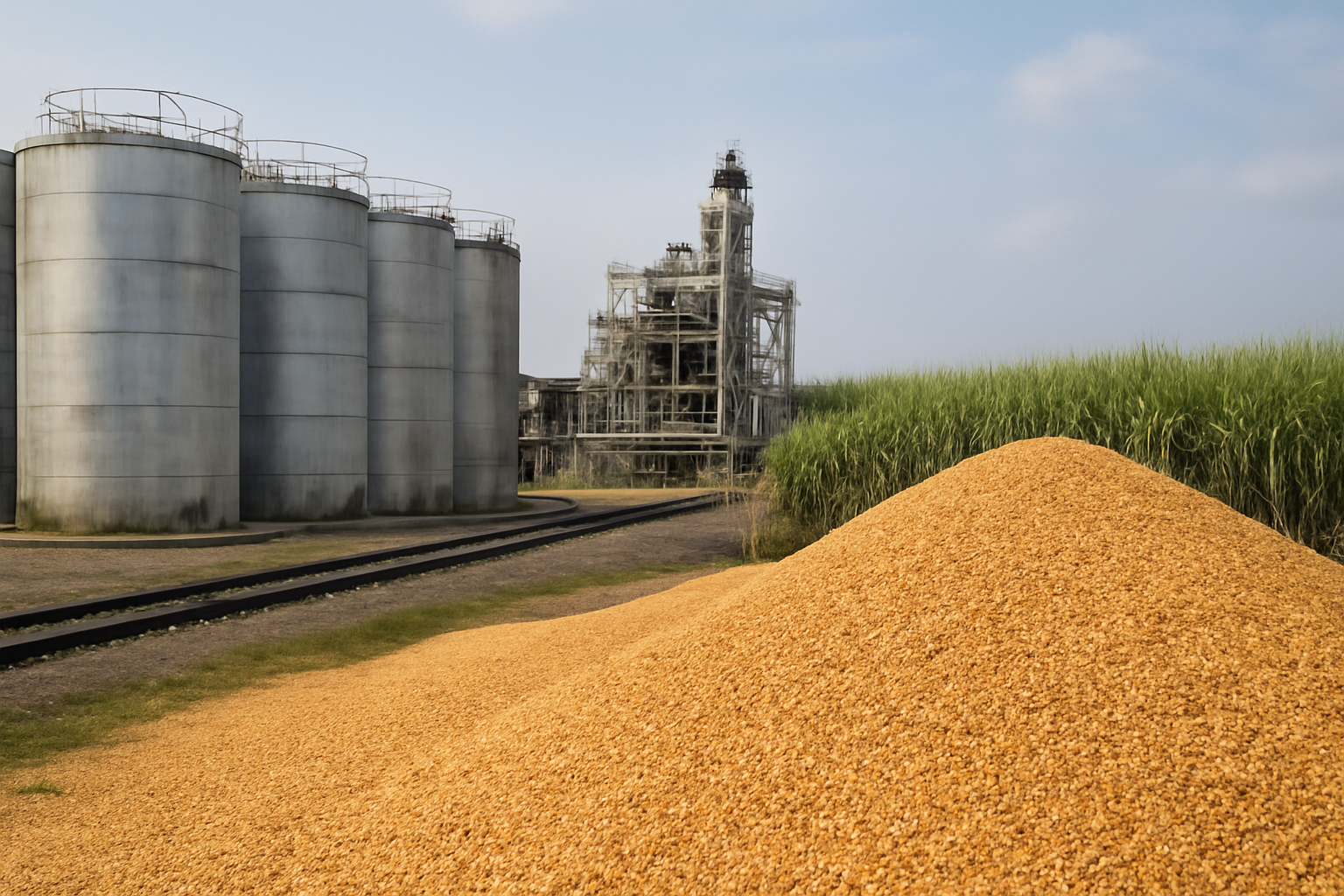
India’s ethanol program is becoming less dependent on sugarcane as grain-based production expands rapidly. Sugarcane and its derivatives once dominated the country’s ethanol supply, but data through June 2026 show that grain has taken a larger role. Corn has emerged as a particularly important feedstock in this change.
The development alters the balance between two agricultural supply chains serving the same fuel market. Sugar mills have traditionally supplied ethanol made from sugarcane-derived materials. Grain-based distilleries can instead procure corn and other eligible crops, giving the blending program a broader feedstock base. This reduces its reliance on the output and processing economics of a single crop.
The available source material does not provide production volumes, blending rates, feedstock shares or prices. It therefore does not establish the precise scale of corn use or quantify how much sugarcane-based ethanol has been displaced. It does, however, identify a clear direction: grain-based ethanol has grown quickly over recent years and is becoming more important within the program.
Demand implications extend beyond fuel
Greater use of corn for ethanol creates another source of industrial demand for India’s grain market. Ethanol producers must compete for feedstock with existing buyers, including processors and users in food and animal-feed supply chains. The effect on prices and availability will depend on harvest volumes, procurement conditions and the pace at which grain-based capacity operates. None of those variables is quantified in the supplied material, so a direct price impact cannot yet be established.
For sugar producers, the shift means that future ethanol demand may be shared more widely with grain processors. Sugarcane-derived ethanol remains part of the program, but its historical dominance can no longer be assumed if grain output continues to rise. Mills and distilleries will need to compare feedstock availability, processing yields and commercial terms when deciding how to supply the fuel market.
The change may also affect investment decisions. A broader feedstock mix can support facilities designed around grain and encourage procurement networks connecting distilleries with corn-producing areas. At the same time, operators face agricultural supply risk: grain availability varies with harvest conditions, while demand from food and feed users does not disappear when fuel demand rises.
Market participants need fuller data
For producers, traders and investors, the next indicators will be the respective shares of grain- and sugarcane-based ethanol, the volume of corn directed to distilleries and the utilization of processing capacity. Corn prices and procurement patterns will help show whether fuel demand is materially tightening the domestic grain balance.
Data through June 2026 establish the direction of travel but not its final outcome. India is broadening the agricultural base of its ethanol program, with corn gaining importance alongside sugarcane. The commercial consequences will depend on how quickly production expands and whether domestic grain supply can accommodate fuel demand without creating sustained pressure on other users.