India’s Ethanol Overcapacity Puts ₹1 Trillion in Bank Loans at Risk
India’s ethanol capacity could reach 24 billion litres a year, compared with effective demand of about 15.5 billion litres. The widening surplus is increasing pressure on producers and exposing roughly ₹1 trillion in bank lending to the sector.
Capacity races ahead of consumption
India’s rapid expansion of ethanol production has created a widening gap between installed capacity and demand, raising concerns about plant utilisation and the security of roughly ₹1 trillion in bank lending to the sector. Jagran reports that the country has about 478 plants and annual installed capacity of between 20 billion and 20.19 billion litres, led by Maharashtra, Uttar Pradesh and Karnataka.
The expansion is continuing despite the surplus. According to a CARE Edge Ratings report cited by Jagran, another 4 billion litres of annual capacity could be added during the current financial year, taking the total to around 24 billion litres. That would be more than four times the approximately 4.21 billion litres recorded in 2014. Industry participants also say projects representing another 7 billion to 8 billion litres a year are being prepared.
Demand is growing much more slowly. India is expected to require about 12 billion litres for E20 petrol blending during the current financial year. Industrial, pharmaceutical and chemical users may consume no more than another 3.5 billion litres, putting total effective demand at approximately 15.5 billion litres. If capacity reaches 24 billion litres, the gap would therefore be about 8.5 billion litres before differences in feedstock, location and plant economics are considered.
E20 policy limits the immediate downside
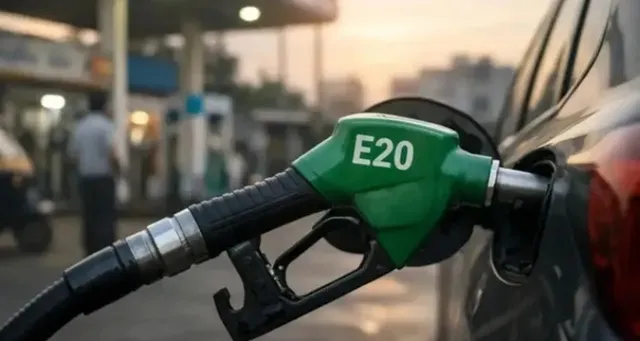
E20 petrol has been sold continuously across India since December 2025, according to Jagran, but even nationwide use has not absorbed available production capacity. The excess helps explain why the government has rejected proposals to restore E0 petrol or E10, which contains 10% ethanol. Lower blending would reduce ethanol purchases and could put thousands of crores of rupees in loans and investment at risk.
The policy debate nevertheless remains open. The petroleum ministry has ruled out a return to E10 or E0, while Chief Economic Adviser V. Anantha Nageswaran has recommended making both grades available again. Following the West Asia conflict, the central government indicated in April 2026 that blending volumes would rise. The petroleum ministry also said E85, containing 85% ethanol, would be introduced at 500 filling stations by December 2026, although the subsequent controversy over E20 appears to have slowed preparations.
Industry sources cited by Jagran argue that existing capacity can be fully used only if India moves to E30 or higher blends. Current projections point to ethanol demand of just 16 billion litres by 2029-30, and that increase would occur gradually. On those figures, demand at the end of the decade would still remain well below the potential capacity expected in the current financial year.
Exports offer only a narrow outlet
Exports could relieve some pressure, but policy restrictions and limited overseas sales currently make them an insufficient solution. India prohibits exports of ethanol produced from sugar cane, maize and grain. Exports of ethanol made from agricultural residue and biomass have been permitted since September 2025, but Jagran reports little progress under that channel.
Shipments to Tanzania, Angola, Kenya, Iraq and Nepal have totalled only around 100 million litres, a small amount compared with the domestic capacity surplus. Industry representatives are asking the government to explore opportunities through discussions with markets including Nepal and Indonesia. Without faster domestic adoption of higher blends or a broader export route, underused plants may face weaker cash generation, while banks remain exposed to borrowers whose investment plans assumed stronger ethanol offtake.