India’s Supreme Court Says Mature Brown Coconuts Do Not Qualify as Tax-Exempt Fresh Fruit
India’s Supreme Court has held that mature brown coconuts cannot be treated as green or fresh fruit for the relevant tax exemption. The decision applies the meaning used by consumers and traders rather than a botanical definition, leaving the product subject to tax.
Commercial meaning determines tax treatment
India’s Supreme Court has ruled that a mature brown coconut does not qualify as green or fresh fruit for the purpose of a tax exemption. The decision means traders cannot rely on the coconut’s botanical classification as a fruit to place the mature product in the exempt category. Instead, its tax status must reflect how consumers, dealers and markets ordinarily identify it.
Navbharat Times reported that the court preferred the common-parlance test to a scientific definition. Under that approach, words used in tax schedules are interpreted according to their normal commercial meaning when the legislation does not supply a specific definition. A product can therefore be a fruit in botanical terms without being regarded as fresh fruit in everyday trade.
Different coconut forms remain commercially distinct
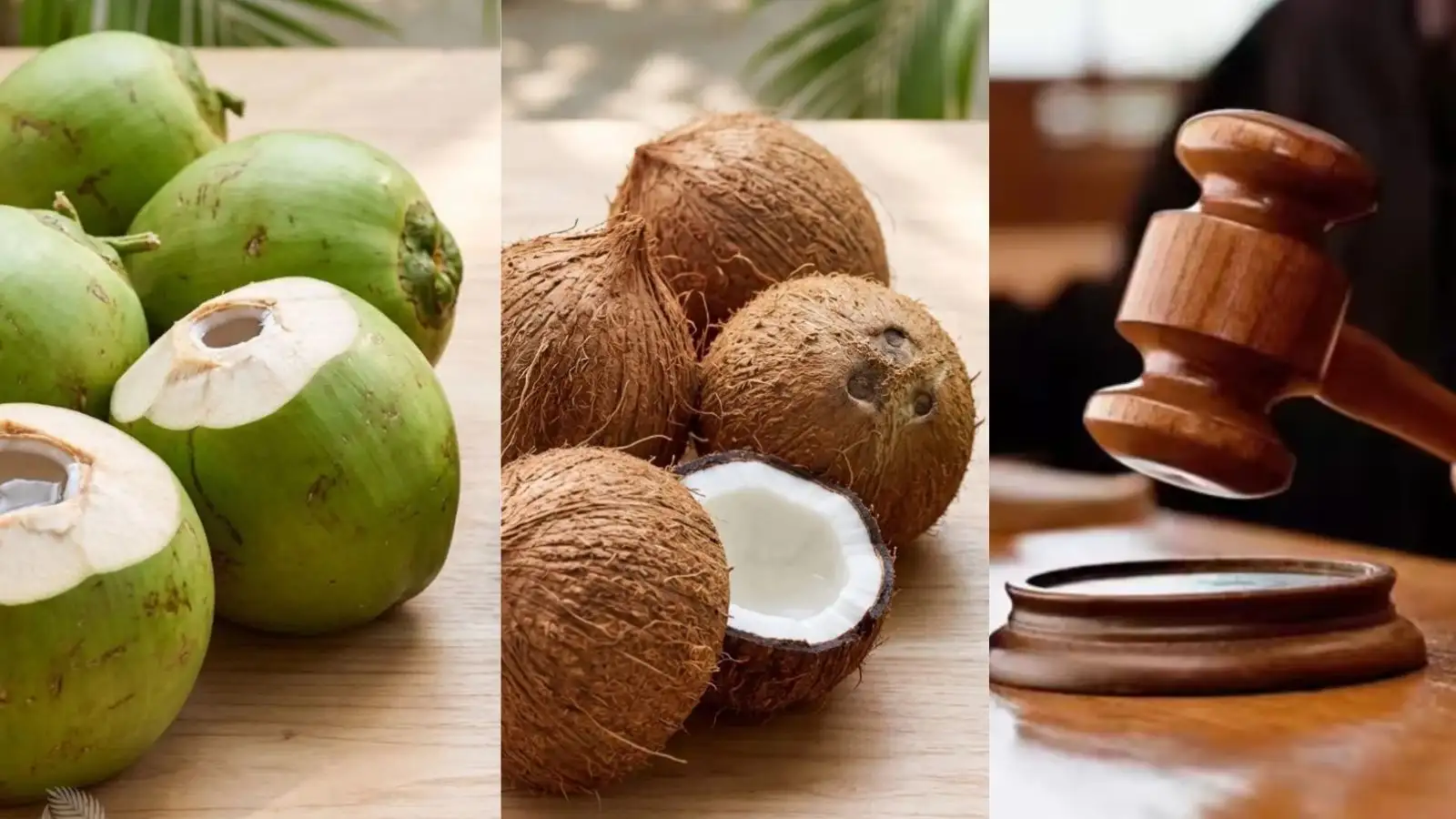
The ruling draws a practical distinction between tender green coconuts and mature brown coconuts. A tender coconut is generally sold for its water while its kernel is still at an early stage of development. A mature brown or watery coconut reaches the market after ripening, often after removal of its fibrous outer covering; its water may be consumed, while the developed kernel is commonly used in cooking.
The court’s reasoning also separates a mature brown coconut from dried fruit. The product is not moved into an exempt category merely because it has matured or lost its green exterior. Its identity is determined by the form in which it is bought and sold. This avoids treating every botanical fruit as commercially equivalent despite differences in maturity, preparation and use.
Traders must classify products at the point of sale
For coconut wholesalers and retailers, the decision makes product condition central to tax documentation. Invoices, inventory records and exemption claims must distinguish tender green coconuts from mature brown coconuts rather than using coconut as a single undifferentiated description. Businesses claiming an exemption bear the practical risk if the goods supplied do not match the market meaning of the exempt item.
The judgment has broader relevance for produce markets because it confirms that scientific terminology does not automatically control commodity classification under tax law. Where a schedule uses familiar product descriptions without defining them, authorities and courts may look to the language of buyers and sellers. For processors, distributors and traders, commercial presentation and customary use can consequently affect tax liability even when the underlying agricultural product comes from the same plant. The immediate effect is narrower exemption coverage for mature brown coconuts and clearer separation between coconut categories in commercial records.