India’s coconut product exports rise 62% as value-added goods gain share
India’s coconut product exports increased by 62%, with value-added products accounting for a substantial part of overseas sales. The available source material does not specify the reporting period, export value, shipment volume or leading destinations.
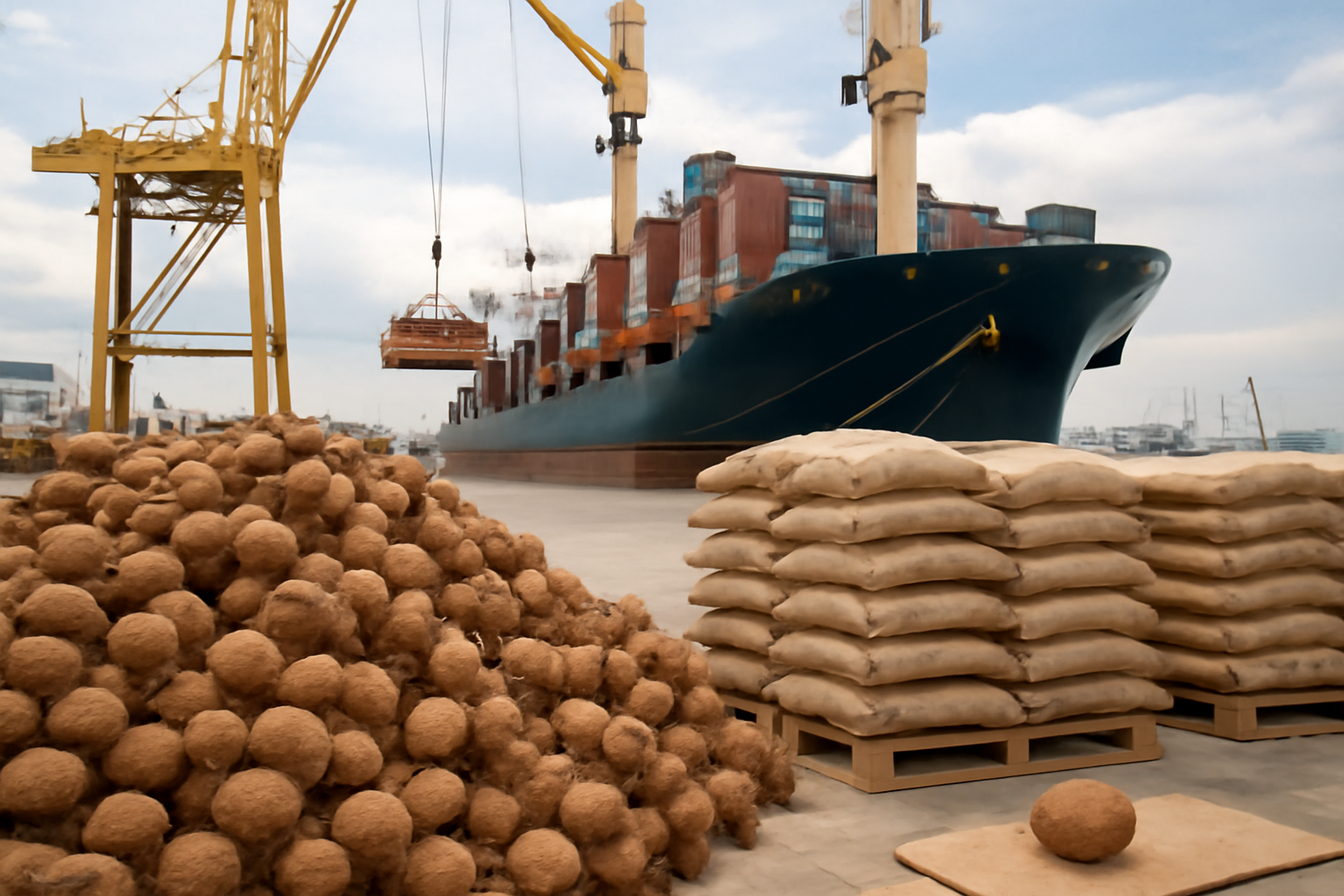
Exports record a 62% increase
India’s coconut product exports rose by 62%, according to the supplied report. The increase points to stronger overseas sales from the country’s coconut industry, but the available source material does not identify the period covered by the comparison. It also provides no export value, shipment volume or breakdown between individual product categories.
The limited disclosure means the 62% figure cannot yet be separated into the effects of higher physical shipments, changes in product mix or movements in export prices. No comparison base is given, making it impossible to determine the absolute scale of the increase from the available information. The report also does not name the principal destination markets or indicate whether growth was concentrated in a small group of buyers.
Processed products form a substantial share
The report emphasizes that Indian coconut exports should not be viewed simply as shipments of raw nuts. Value-added coconut products account for a substantial part of the country’s total coconut exports. This places processing, product differentiation and downstream manufacturing at the center of India’s overseas coconut business.
That distinction matters for producers, processors and traders. Raw coconut shipments mainly reflect agricultural output and basic handling, while processed products require additional manufacturing capacity, quality control and market-specific preparation. A larger contribution from value-added goods can allow more of the product’s commercial value to remain with processors and other participants in the domestic supply chain.
The source excerpt does not list the processed products included in the export total or quantify their respective shares. It therefore does not establish which categories drove the reported increase. It also gives no information on processing capacity, company-level shipments, contracts or new facilities. Those details would be necessary to assess whether the growth was broad-based across the industry.
Industry needs fuller trade data
For exporters and investors, the next important indicators are the value and volume of shipments, the reporting period and the distribution of sales by product and destination. Without those figures, the 62% increase is a strong headline measure but not a complete guide to underlying market conditions. Volume data would show whether India placed substantially more coconut goods abroad, while unit values would help identify the role of pricing and the shift toward more processed products.
Destination-level data would also clarify where demand is expanding and whether exporters face concentration risk. Product-level figures would show which processing segments are capturing overseas orders and where additional capacity might be required. Neither set of information is included in the supplied material.
The reported rise nevertheless highlights the role of processing in India’s coconut export sector. For growers, stronger demand from domestic processors can widen the market beyond raw-nut sales. For manufacturers and traders, the opportunity depends on maintaining export specifications and matching products to overseas demand. The durability and commercial scale of the increase will become clearer only when detailed trade values, volumes, categories and destination data are available.