India’s buffalo-meat exports top $5.1 billion as prices and market reach rise
India’s buffalo-meat exports increased 25.6% to a record $5.1 billion in 2025-26, supported by higher unit values and a broader range of buyers. The industry is also creating a market for low-yield dairy animals, although processors are seeking greater regulatory predictability.
Export earnings pass $5 billion
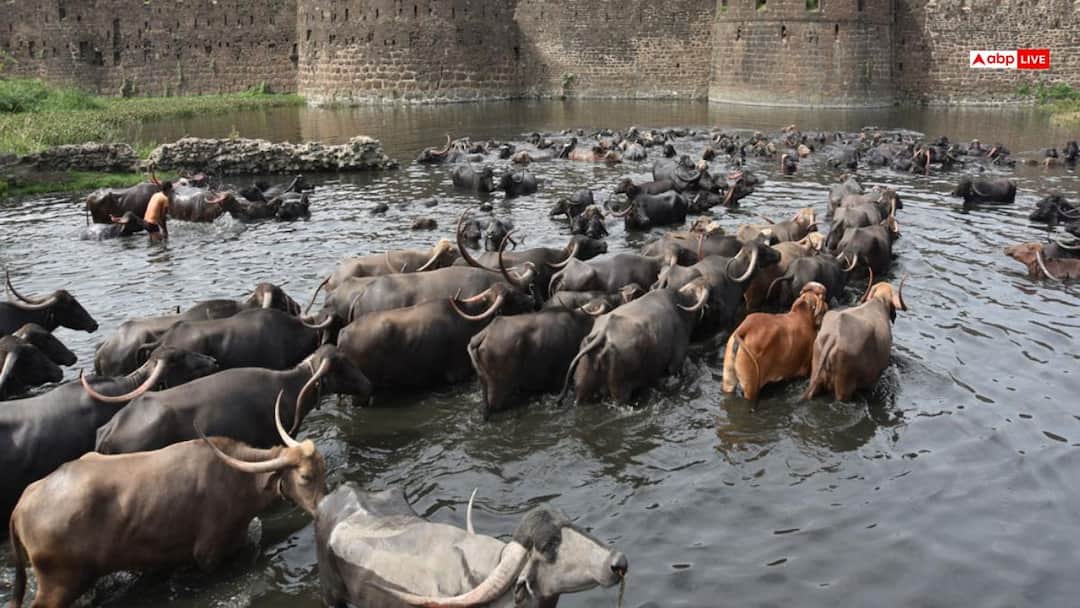
India’s buffalo-meat exports rose 25.6% to a record $5.1 billion in the 2025-26 financial year, ABP Live reported, citing trade data and officials from the Commerce Ministry. Momentum continued into 2026-27: exports reached about $1.5 billion in April-June 2026, up 66.6% from $896.8 million in the corresponding period of 2025. A ministry official said exports could exceed $6 billion in the current financial year.
The increase reflects higher returns as well as shipment growth. India exported 1.48 million tonnes worth about $4.8 billion in 2014-15, at an average $3,240 per tonne. The average subsequently remained around $2,700-$3,000 before recovering to $3,236 in 2024-25, $3,591 in 2025-26 and $4,392 during April-June 2026. Fauzan Alavi of the All India Buffalo and Sheep Meat Exporters Association said the price gap between Indian buffalo meat and Brazilian beef had narrowed from roughly $2,000 per tonne to about $500-$700.
Buyer base becomes more diversified
Vietnam remained India’s largest market in 2025-26, purchasing $933.9 million, followed by Egypt at $725 million, Malaysia at $654.1 million, the United Arab Emirates at $444.2 million and Saudi Arabia at $359.3 million. Uzbekistan also developed into a substantial destination, while Indonesia, Iraq and the Philippines ranked among the main buyers. Shipments to Russia reached $97.5 million, with Georgia at $70.5 million, Oman at $82.7 million and Senegal at $70.9 million.
This is a broader customer base than in 2014-15, when Vietnam alone accounted for $2.2 billion of India’s $4.8 billion in exports. Indian carabeef is commonly used in sausages, burger patties, nuggets, canned products and ready-to-eat foods. Exporters now want to move beyond frozen blocks weighing 20-30 kilograms toward packs of one kilogram or less, seeking higher returns from consumer retail channels.
Processing standards and the dairy link
Only plants registered with the Agricultural and Processed Food Products Export Development Authority can export, subject to safety, hygiene and infrastructure requirements and periodic inspections. India has 83 APEDA-approved integrated slaughterhouse and meat-processing plants, each able to handle 500-2,000 buffaloes daily, plus five standalone slaughterhouses and 10 registered processing plants. US Department of Agriculture data cited in the report ranks India as the third-largest bovine-meat exporter, with 2026 shipments forecast at about 1.7 million tonnes, behind Brazil at 4.28 million tonnes and Australia at 2.16 million tonnes.
The trade also supports livestock replacement in India’s dairy sector because buffaloes are generally not raised specifically for meat. Older, infertile or low-yield animals and male buffaloes supply processors. A 400-kilogram animal can yield about 125 kilograms of meat. At prevailing Uttar Pradesh carcass prices of 300-320 rupees per kilogram, such an animal could return roughly 57,000-60,800 rupees to a farmer. A young buffalo capable of producing at least 2,000 litres of milk annually costs about 125,000-150,000 rupees, meaning proceeds from an older animal can finance at least one-third of its replacement. Exporters nevertheless want stable enforcement, after five plants in Uttar Pradesh were closed despite industry claims that they complied with APEDA rules.