India Commits ₹75,000 Crore to Become a Petrol and Diesel Export Powerhouse
India, which imports close to 90% of its crude oil, is investing roughly ₹75,000 crore (about $9 billion) to expand refined-product capacity. The stated goal is record exports of petrol, diesel and other petroleum products and a move toward global leadership in fuel exports.
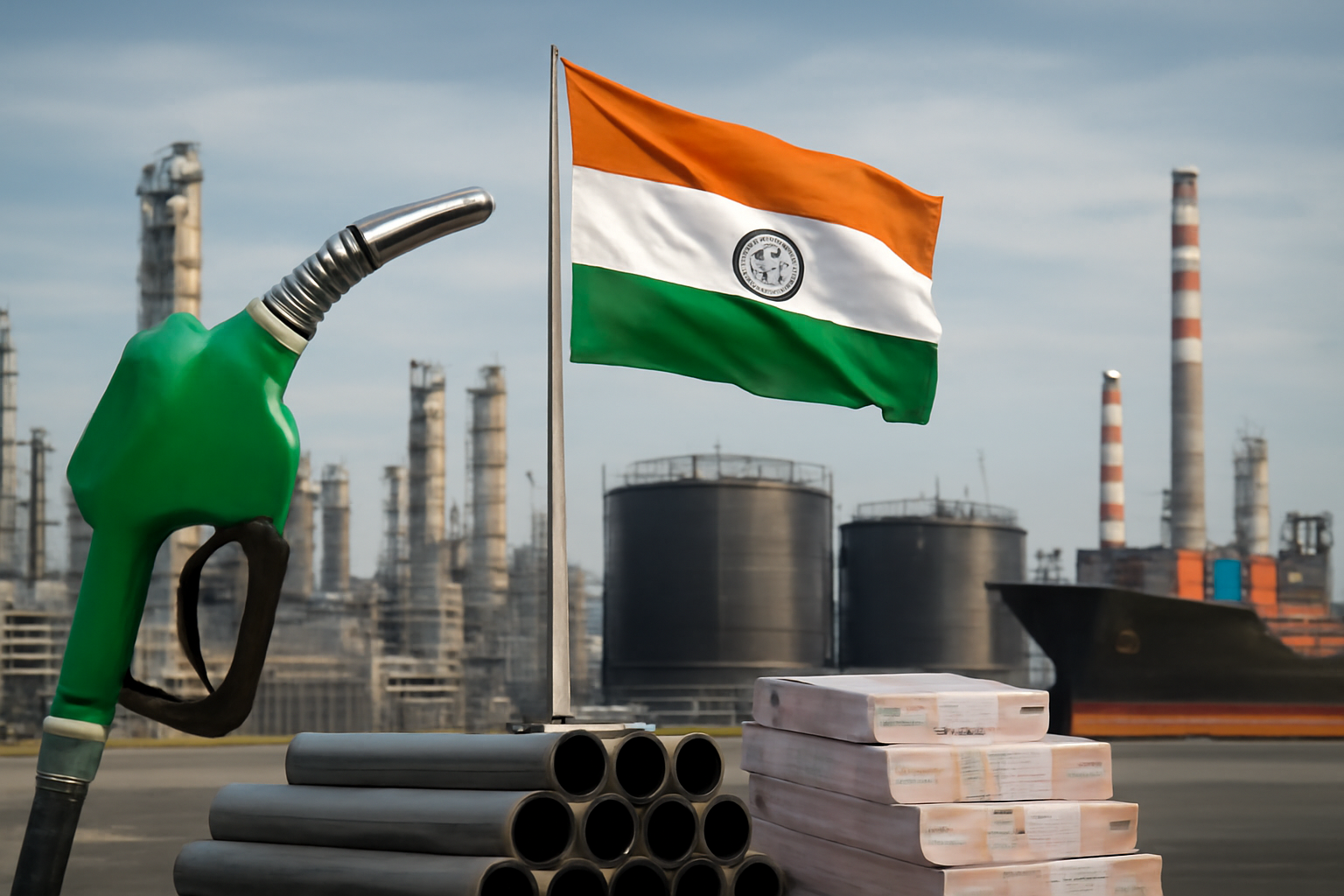
India targets fuel-export leadership with a ₹75,000 crore push
India, which imports close to 90% of the crude oil it consumes, is preparing to enlarge its role as an exporter of refined fuels. The country is committing roughly ₹75,000 crore — about $9 billion — to expand capacity for producing and shipping petrol, diesel and other petroleum products, with the stated aim of moving toward global leadership in fuel exports and setting new export records.
Import-dependent, export-ambitious
The plan rests on a structural feature of India's energy economy: the difference between crude oil and finished fuels. Although the country buys the overwhelming majority of its crude abroad, its refineries process more than domestic demand requires, allowing the surplus to be sold internationally as higher-value refined products. The new spending is designed to widen that surplus, converting a large and persistent crude-import bill into a growing stream of fuel-export revenue.
What the ₹75,000 crore buys
The investment is directed at the refining and export side of the chain rather than at reducing crude dependence. In practice, that means additional throughput and the logistics needed to move product to international buyers. The core elements of the strategy are straightforward:
- Investment of roughly ₹75,000 crore, or about $9 billion, in refined-product and export capacity.
- Continued reliance on imports for close to 90% of India's crude oil needs.
- A stated target of record exports of petrol, diesel and petroleum products.
What it means for trade flows
For importers of gasoline and diesel across Europe, Africa and the wider Asian market, expanded Indian capacity points to another large, competitively priced source of refined fuel. For crude producers, it signals that India will remain a heavy long-term buyer of oil even as it scales up sales of finished products. The economics turn on the spread between the crude India purchases and the fuels it sells: as long as refining margins hold, added capacity lets the country capture more value from each imported barrel. The ambition described in Indian coverage is explicit — to turn a country defined by its crude imports into a leading exporter of the fuels made from that crude.
The scale of the commitment underscores how central refined-product trade has become to India's external accounts. Rather than trying to close the crude gap, the country is choosing to build on top of it, positioning refining as an export industry in its own right. For market analysts, the figure to watch is the balance between rising import volumes of crude and the export volumes of petrol and diesel that the new capacity is meant to unlock.