India Readies $1 Billion Footwear Package to Offset 50% US Tariffs
India is preparing a US$1 billion support package for its footwear manufacturing sector after the United States imposed a 50% tariff on Indian footwear shipments. The scheme covers the full value chain, from raw materials to finished goods, and aims to lift both exports and domestic consumption.
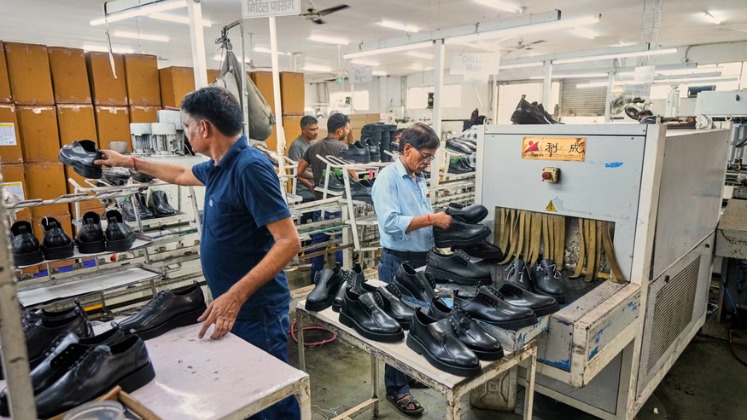
India is preparing a US$1 billion support package to strengthen its footwear manufacturing sector as exporters absorb the impact of a 50% tariff imposed by the United States on Indian footwear shipments, according to Apparel Resources, The Economic Times and The Times of India.
The package has not yet received formal approval, but discussions are reported to be at an advanced stage, with an announcement expected in the near term. Officials have designed the scheme to cover the entire footwear value chain, from raw materials and components to finished products, offering incentives to investors in what is considered a highly labour-intensive industry.
From a shelved PLI to a full value-chain scheme
The initiative follows an earlier plan by the Department for Promotion of Industry and Internal Trade to introduce a production-linked incentive scheme for footwear, which was shelved after a broader revamp of government incentive policies. Officials then developed a more comprehensive package. Industry executives note the government has used a similar end-to-end approach in electronics, where incentive packages covered both finished goods and components.
India is the world's second-largest footwear producer and was once a major exporter of leather footwear. Global demand has since shifted towards sports shoes and athleisure, a segment dominated by China, with Vietnam emerging as another key manufacturing hub through large-scale facilities.
Structural weaknesses in the supply chain
Although several Indian manufacturers have positioned themselves as contract manufacturers for foreign companies, particularly from Taiwan, the US tariffs have disrupted investment plans. Domestic manufacturers point to limited capacity for producing critical inputs, which are largely imported from China. High import duties on raw materials used for soles and other components have further eroded competitiveness and increased reliance on imports.
The footwear scheme is intended to lift domestic consumption as well as exports, and to strengthen India's role in global footwear supply chains. Consumption at home remains low: the average Indian buys around two pairs of footwear per year, against an international average of six to seven pairs.
Tariffs, trade deals and tax
The package aligns with India's push to expand free trade agreements. Negotiations with the European Union and the United Kingdom are expected to conclude in the coming period, potentially offering duty concessions for Indian goods and helping absorb additional footwear capacity.
Recent changes to the goods and services tax have reshaped pricing. Footwear priced below Rs 1,000 continues to attract 12% GST, while footwear above Rs 1,000 remains taxed at 18%. In apparel, products priced between Rs 1,000 and Rs 2,500 are now taxed at 5%, while garments above Rs 2,500 attract 18% GST, up from 12% previously.
- India's exports to the United States total about US$87.4 billion, roughly 2% of overall economic output.
- Private consumption accounts for around 61% of GDP, according to the Ministry of Commerce, limiting exposure to external shocks.
- BMI, a Fitch Solutions company, expects Indian GDP growth to stay above 6% even as US tariffs weigh on export momentum.
For exporters, the 50% tariff sharply raises the cost of shipping to the US market, while the proposed package and pending trade deals with the EU and UK offer alternative channels to place production. For importers of Indian footwear components and finished goods, the reliance on Chinese inputs and high domestic duties on raw materials remain the key structural constraints the scheme aims to address.