Imported UHT milk gains ground in South Korea, but cafes remain cautious
Imported UHT milk is expanding its presence in South Korea because of lower prices, a longer shelf life and easier inventory management. Cafes remain reluctant to replace domestic fresh milk, citing noticeable differences in taste and aroma.
Price advantage broadens imported milk’s appeal
Imported ultra-high-temperature milk is becoming more visible in South Korea as buyers look for lower-cost alternatives to domestically produced milk. The product is being offered at prices described as roughly half those of local milk, giving it a clear advantage for households and businesses under pressure to control food costs.
Price is not the only factor supporting demand. UHT treatment gives imported milk a longer shelf life, making storage and inventory management easier. Buyers can hold the product for longer periods and face less risk of stock expiring before use. That combination of affordability and operational convenience is helping imported milk establish a larger presence in the Korean market.
Long shelf life changes purchasing economics
The storage benefit is particularly relevant for businesses whose milk consumption varies from day to day. Longer-lasting supplies can reduce the need for frequent replenishment and provide more flexibility when planning purchases. Importers and distributors may also find it easier to manage products that can remain saleable for longer than conventional fresh milk.
These advantages create room for imported UHT milk in retail and in food-service applications where milk is used primarily as an ingredient. However, a lower purchase price does not automatically translate into broad substitution. Milk is also a central part of the flavor and texture of many beverages, making quality perceptions commercially important.
Cafes focus on taste and aroma
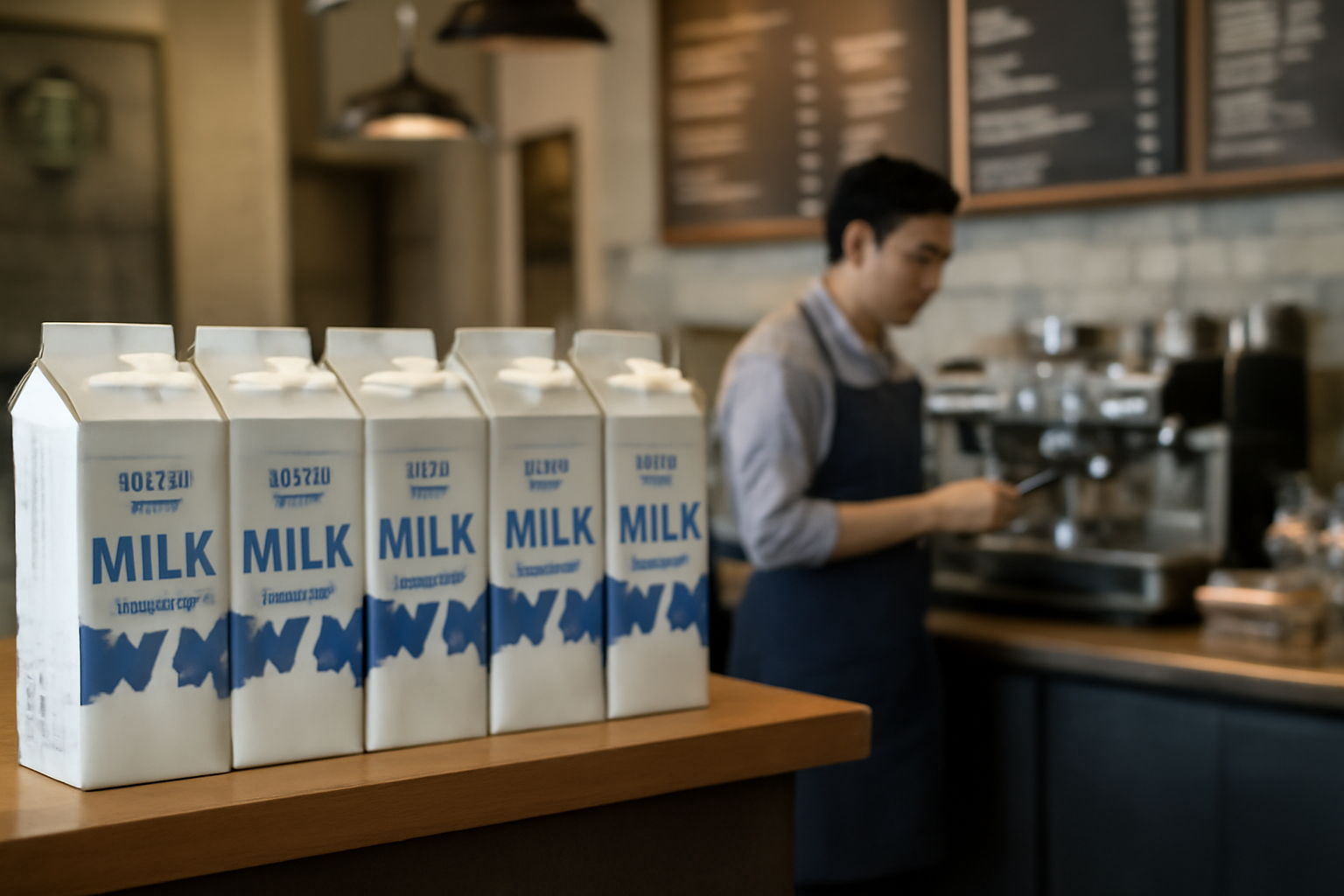
South Korean cafe operators remain cautious about replacing domestic milk with imported UHT products. Their main concern is the distinctive taste and aroma created by sterilization. The difference can be noticeable even to ordinary consumers, according to the supplied market account, raising the risk that customers will detect a change in familiar drinks.
This matters in a cafe market where milk is prominent in products such as lattes and other milk-based beverages. A cheaper input could lower ingredient costs, but any deterioration in perceived taste could affect repeat purchases and brand reputation. Operators must therefore weigh the saving on each package against the possibility of weakening the customer experience.
Growth may remain channel-specific
The contrasting considerations suggest that imported UHT milk may advance unevenly across South Korea’s dairy market. Price-sensitive consumers and businesses that value shelf stability are more likely to adopt it. Cafes whose menus depend heavily on the sensory qualities of milk have stronger reasons to retain domestic products, even when those products cost more.
For domestic dairy producers, the immediate competitive pressure is strongest in market segments where price and storage outweigh taste. Importers, meanwhile, need to demonstrate that their products can perform consistently in beverages if they want to move beyond retail and cost-focused food service. Longer shelf life can solve a logistics problem, but it does not remove the need to meet local flavor expectations.
The result is a market in which imported UHT milk can continue expanding without fully displacing domestic milk. Its lower price creates an entry point, while its storage characteristics support distribution and inventory control. In the cafe channel, however, taste remains the main barrier to widespread substitution.