Imported cocoa underpins Malaysia’s RM18.33 billion export industry
Malaysia exported RM18.33 billion of cocoa and chocolate products in 2025. Its processing industry relies heavily on imported cocoa beans because domestic production supplies only a fraction of its requirements.
Exports reach RM18.33 billion
Malaysia generated RM18.33 billion from exports of cocoa and chocolate products in 2025, highlighting the scale of an industry that remains less visible internationally than the country’s headline export value suggests. The total covers cocoa and chocolate products, placing both industrial ingredients and finished or semi-finished goods at the centre of Malaysia’s cocoa economy.
The export figure reflects a business built primarily around processing rather than domestic cultivation. Malaysian facilities convert cocoa beans into ingredients used by chocolate manufacturers in international markets. This gives the country a role in the middle of the value chain: it purchases agricultural raw material, processes it and supplies downstream users.
Imported beans support processing
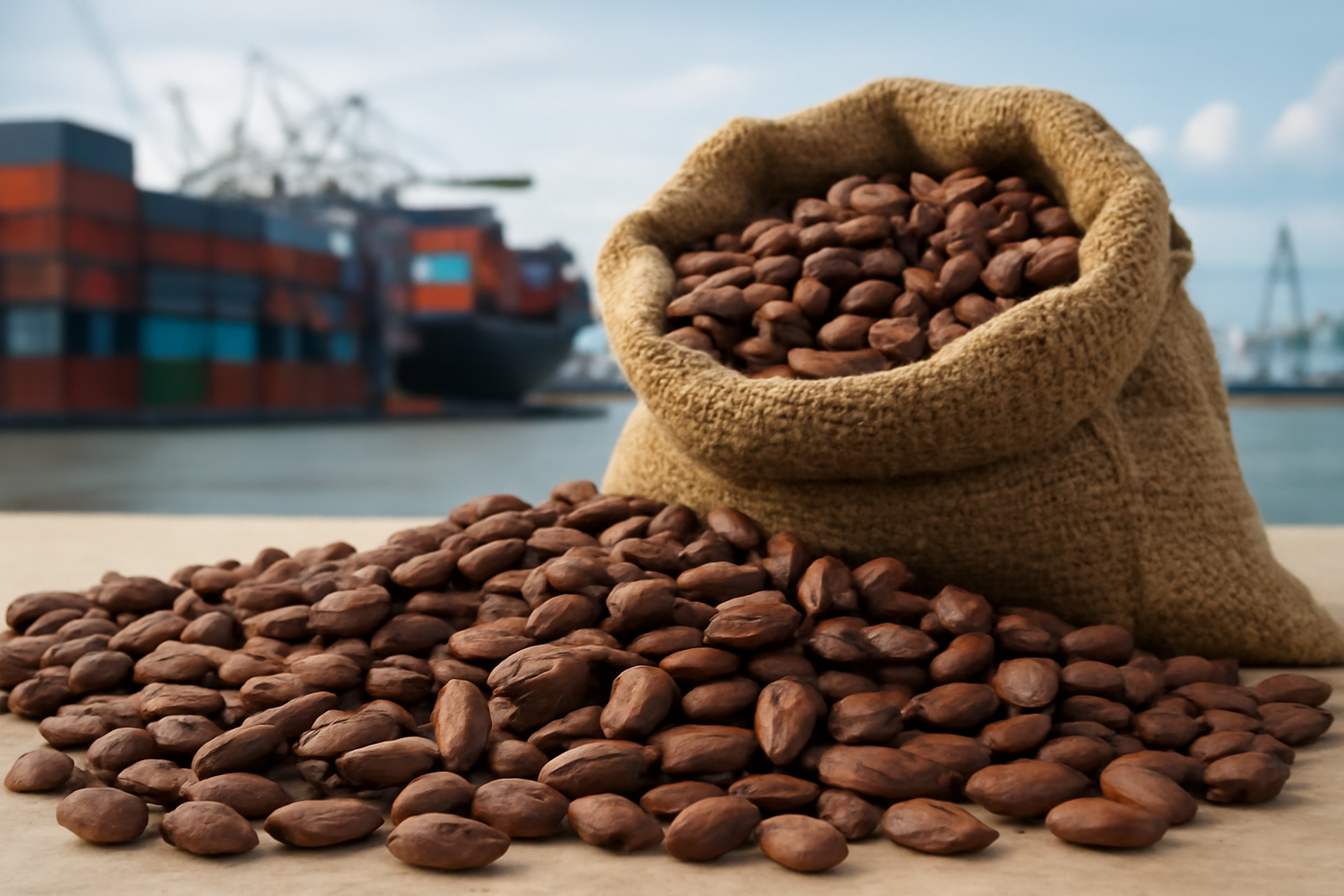
Domestic cocoa production meets only a fraction of Malaysia’s processing requirements. Imported beans therefore provide the essential feedstock for the country’s factories and underpin the value of its cocoa and chocolate exports. Malaysia’s manufacturing capacity is much larger than the volume supported by its own farms.
This dependence ties Malaysian processors directly to global cocoa flows. Access to imported beans determines how fully factories can operate, while the availability and cost of raw cocoa influence processors’ commercial position. The model also separates the location of cultivation from the location where more downstream value is created.
Malaysia’s industry previously centred more heavily on large-scale cocoa cultivation but shifted towards downstream processing. That transition allowed the country to remain commercially important in cocoa even though its domestic harvest now covers only a limited share of industrial demand. Its competitive position rests on converting imported agricultural output into products for chocolate makers rather than supplying those factories mainly from local plantations.
A manufacturing hub in a global supply chain
The structure has implications beyond Malaysia. Bean-producing countries supply the raw material, Malaysian plants perform processing, and chocolate manufacturers elsewhere use the resulting ingredients. The RM18.33 billion export total shows how substantial a downstream cocoa industry can become without a matching domestic supply of beans.
For producers and traders, Malaysia represents demand for cocoa beans rather than simply another origin competing to sell them. For processors, reliable access to imported feedstock is central to maintaining throughput and customer supply. For chocolate manufacturers, the country functions as an ingredient source within a geographically dispersed production chain. The available information does not identify bean origins, processing volumes, individual export markets or the division between cocoa ingredients and finished chocolate, but it establishes the defining feature of the sector: Malaysia’s export strength depends on combining imported cocoa with domestic processing capacity.