Imported bananas widen their lead over Canary Islands fruit in Spain
Spain’s imported banana volumes rose 14.5% to 241,582 tonnes in the first half of 2026, outpacing sales of Canary Islands bananas. Low farmgate prices and rising import penetration are intensifying pressure on island growers.
Imports reach 241,582 tonnes
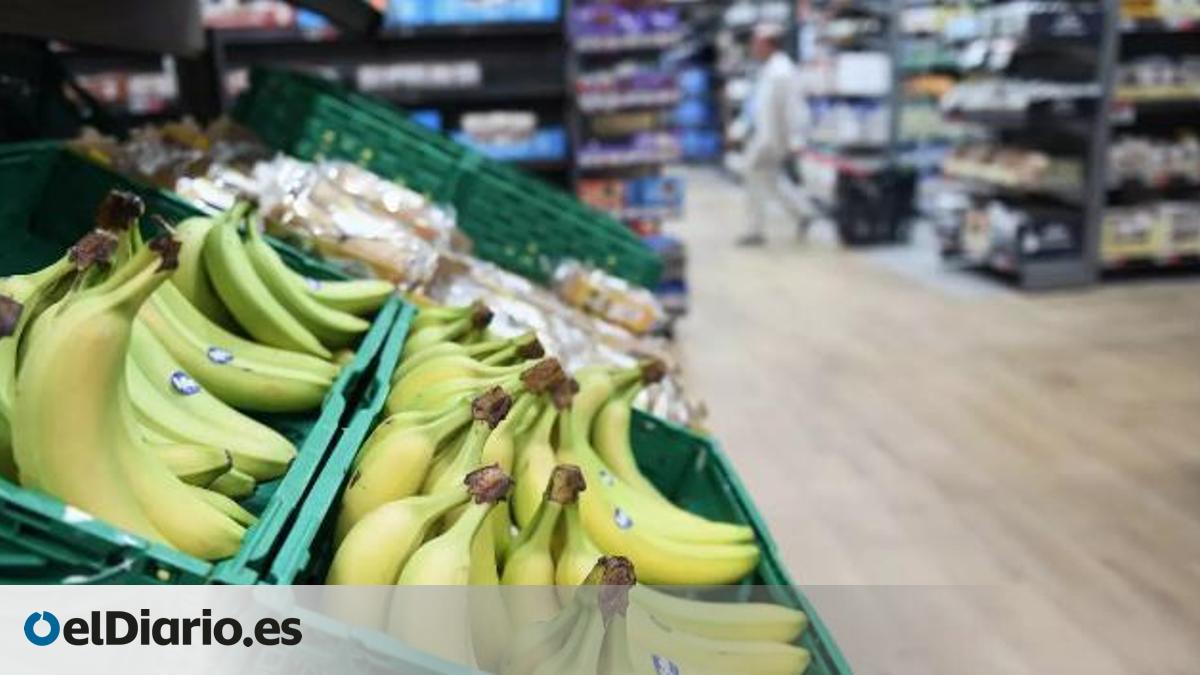
Imported bananas strengthened their position in mainland Spain and the Balearic Islands during the first half of 2026, increasing the pressure on Canary Islands growers in their principal external market. According to elDiario.es, citing figures from Spain’s Directorate-General of Customs, imported volumes reached 241,582 tonnes through June. That was 30,541 tonnes more than in the same period of 2025, an increase of 14.5%.
The imported fruit, sourced mainly from Latin America and parts of Africa, accounted for between 54% and 64% of the mainland market, depending on the calculation of available supply. Imported bananas do not enter the Canary Islands because of phytosanitary barriers. The competitive impact is therefore concentrated in mainland Spain and the Balearic Islands, the destination for 90% of the Canary crop sold outside the archipelago.
Canary Islands fruit loses market share
Canary Islands suppliers placed 178,689 tonnes on the market in the same six-month period. This represented growth of 9.15%, or almost 15,000 tonnes, but the increase was insufficient to match the faster expansion of imports. The Canary Islands product consequently represented between 36% and 46% of supply in its core external market, a weaker result than that recorded through May.
The shift is substantial compared with the sector’s position until a few years ago, when Canary Islands bananas normally supplied around 70% to 75% of the Spanish market. The islands had exclusive access to the national market before their full integration into the then European Economic Community and the creation of the banana Common Market Organisation in 1993. Bananas were incorporated into the current Posei programme in 2006, with dedicated support totalling €141.1 million.
Farm prices remain below production costs
Market-share losses coincide with severe pressure on grower returns. elDiario.es reports that anticipated producer settlements during the summer are around €0.37 per kilogram, even for extra-quality fruit. Estimated agricultural production costs stand between €0.70 and €0.80 per kilogram and are due to be revised upward. Posei support currently contributes €0.32 per kilogram, but the combined farmgate return and subsidy still offers little or no margin at the reported cost range.
Production has also declined since the record crop of 2023. The Canary Islands produced 440 million kilograms, or 440,000 tonnes, that year amid very low prices. Marketed supply fell to 425 million kilograms in 2024 and declined again to 375 million kilograms in 2025. To limit volumes during the current period of weak farmgate prices, producer association Asprocan, with authorization from the regional agriculture department, ordered 630,000 kilograms of fruit withdrawn in week 34. A further 700,000 kilograms was ordered for week 35 after the shipment target was raised from 6.4 million to 6.5 million kilograms. Similar withdrawals reached 26 million kilograms in 2023.