Illegal tobacco trade remains a major problem for the EU
From unlicensed production lines inside the bloc to smuggling across its external borders, the illegal tobacco trade continues to weigh on EU finances, public health and security. The two supply channels require different enforcement responses, and both converge on a market where product is sold without excise duty or VAT.
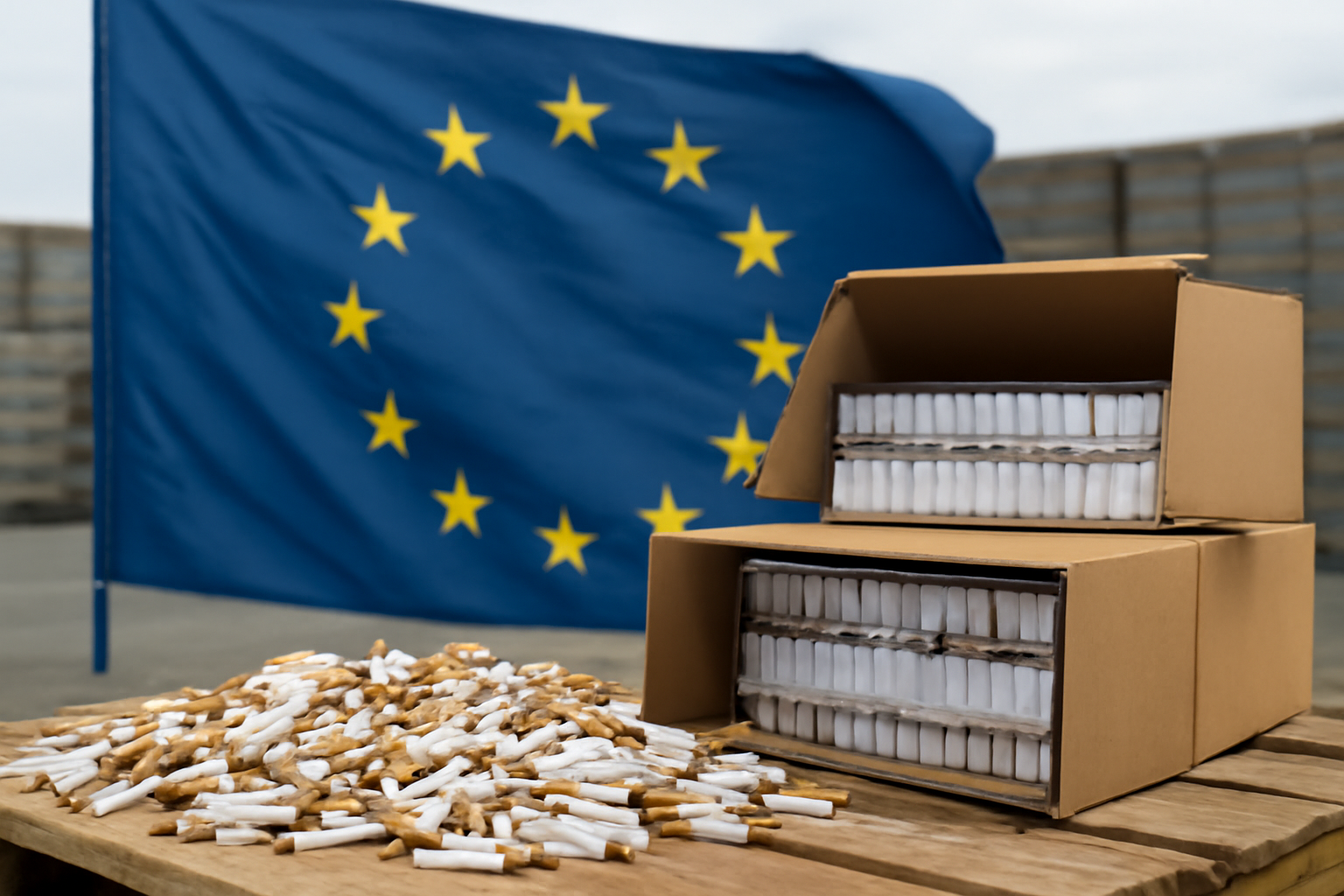
From unlicensed factories to cross-border smuggling
The illegal tobacco trade remains a serious problem for the European Union, running from illicit production through to smuggling and weighing on the bloc's finances, public health and security. The supply behind it has two distinct legs, and each calls for a different enforcement response. Neither is a new phenomenon, and neither has been eliminated by successive rounds of regulation.
The first is unlicensed manufacturing. Production lines can be set up inside the EU itself, close to the consumer markets they serve, which removes any need to move finished goods across the bloc's external frontier. Such sites are found by police and tax investigators rather than by customs officers at a border post. Leaf tobacco, filters, paper and machinery still have to reach the site, which makes the inputs a practical control point.
The second is smuggling in the classic sense: product made outside the EU and brought in through ports, land crossings, parcel traffic and passenger flows, then pushed into informal retail. Both legs converge on the same end market — cigarettes and other tobacco products sold without excise duty or VAT, outside every labelling, ingredient and traceability rule that applies to the legal trade. The end buyer is often unaware of, or indifferent to, the origin of the pack.
The fiscal cost
Tobacco is among the most heavily taxed consumer goods in the European Union, so each unit sold illegally is a direct loss to the public purse. Excise duty and VAT accrue to national treasuries, while customs duties on imported goods form part of the EU budget's own resources. Revenue foregone at national level also complicates the fiscal arithmetic behind tobacco taxation itself: governments raise rates both to cut consumption and to raise money, and an expanding illicit market undermines both objectives at once.
- Excise duty and VAT that member states never collect.
- Licensed manufacturers, distributors and retailers losing volume to a product that competes on price alone.
- Tax policy losing force as an instrument for managing demand.
- Proceeds flowing to the organised networks that run the supply.
Public health and product control
Illegal product sits outside the control framework built around the legal one. It carries no verified health warnings, meets no ingredient or packaging requirements, and cannot be traced or recalled. There is no registered producer to act on a recall in any case, and buyers have no way of knowing what has gone into what they are smoking.
The draw is price. Untaxed product undercuts the legal shelf price, which blunts taxation as a public health instrument — the main lever governments use to hold down consumption. Where the illicit share is significant, official sales and import statistics also understate how much tobacco is actually being consumed.
Security and enforcement
The security dimension follows the money. Illicit tobacco is profitable and handled by organised networks that reuse the same routes, logistics and contacts as other trafficking lines. Revenue from it funds activity well beyond the tobacco market, which is why customs and police treat it as more than a tax matter, even as enforcement resources compete with other priorities.
Closing the gap means coordinated work between customs services, tax administrations and police forces across member states, and with neighbouring countries along the transit routes. For the legal chain — leaf growers, manufacturers, wholesalers and retailers — the practical question is whether enforcement keeps pace with tax policy, because every step up in excise widens the price gap the illegal product exploits.