Illegal tobacco costs EU budgets €13 billion a year as clandestine production moves inside bloc
Illegal tobacco deprives EU and national budgets of about €13 billion annually, the European Court of Auditors estimates. Auditors say fragmented enforcement, uneven penalties and slow information-sharing have helped criminal groups move production closer to consumers inside the EU.
Illegal market erodes tax revenue and health policy
Illegal tobacco trade costs the budgets of the European Union and its member states about €13 billion in annual revenue through evaded customs duties, value-added tax and excise duties, according to a European Court of Auditors report covered by elDiario.es and 20minutos. The auditors describe the bloc’s response as fragmented, with persistent gaps that organized crime can exploit across national borders.
Illicit products accounted for 8.8% of total cigarette consumption in the EU in 2023, elDiario.es reported. The problem also extends beyond conventional cigarettes: the illegal market for products including electronic cigarettes and heated tobacco amounts to almost 21,000 tonnes in the EU. New tobacco products already represent 13% of the market value of tobacco products sold in the bloc and are particularly attractive to younger consumers.
Production shifts closer to EU consumers
Organized criminal groups have strategically relocated production from Ukraine into the EU to shorten supply chains and gain more direct access to consumers, according to the audit. Definitions of smuggling and illegal manufacturing, as well as penalties for those offenses, vary sharply among member states. The auditors warn that these differences encourage networks to place operations in jurisdictions where sanctions are less severe.
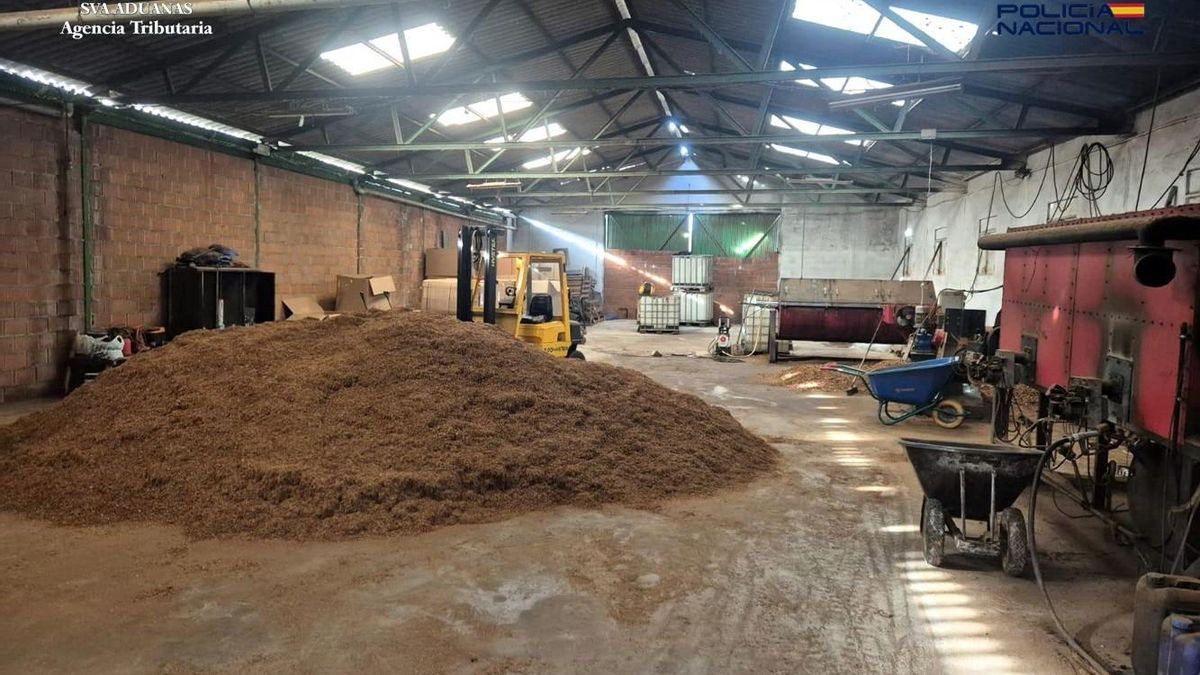
A 2023 operation illustrates the industrial scale of the market. Spanish authorities, working with the European Anti-Fraud Office, dismantled the largest illegal cigarette factory detected in Spain to date. The transnational network also operated in Poland, Ukraine, Romania, Greece, Slovakia and Italy. Authorities arrested 20 people and seized approximately 31 tonnes of raw tobacco valued at €5 million, as well as nearly three million packs of counterfeit cigarettes with a market value of €15 million.
Separate OLAF figures cited by elDiario.es show seizures of more than 427 million illegal cigarettes worldwide, including 219 million at the EU’s external borders. Authorities also confiscated 411 kilograms of raw tobacco and 53.6 kilograms of water-pipe tobacco, preventing more than €178 million in losses to public budgets.
Fragmented powers create enforcement gaps
The audit examined Belgium, Spain, Poland and Romania because of their relevance to seizures, illegal factory detections, trafficking routes and geography, while surveying the other 23 EU member states. Customs authorities in Belgium, Spain and Poland have broad powers to lead criminal investigations and raids. Romania’s customs authority is limited to administrative investigations and depends on law-enforcement bodies for criminal cases. Poland alone has a national strategy dedicated specifically to illegal tobacco trade; the other three use broader frameworks.
Spain nevertheless received positive marks for specialized controls. According to 20minutos, the auditors identified its permanent operational cooperation center, working 24 hours a day and 7 days a week, as good practice. Spanish customs can coordinate tactical operations and lead criminal investigations, while national rules also regulate raw tobacco and production machinery to varying degrees.
Cross-border intelligence remains slow or incomplete. In samples of ten seizures from each audited state, information was shared with the competent authority in another member state in only two to five cases, depending on the country. Responsibility is also divided among OLAF, Europol, DG TAXUD, DG SANTE, EMPACT and LEWP-C, with no single body providing clear leadership or centralized coordination.
Rules for seized machinery expose another gap. Poland permits the immediate destruction of some equipment, while legal obstacles elsewhere require costly long-term storage. Romanian law allows seized machinery to be auctioned without effective controls to prevent its return to illegal production. Auditors also questioned confidential voluntary agreements between tobacco companies and about half of EU member states. OLAF’s binding agreements with British American Tobacco and Imperial Tobacco Limited, signed in 2010 and valid until 2030, have not been updated despite changes in the market.