Eight truck and energy groups launch German hydrogen ecosystem for heavy trucks by 2030
Daimler Truck, Volvo Group, Toyota, Bosch, Air Liquide, TotalEnergies, MB Energy and TEAL Mobility presented a joint hydrogen ecosystem for heavy-duty road transport at IAA Transportation 2026 in Hanover, targeting scalable hydrogen truck operations in Germany by 2030. Germany's transport ministry received 526 funding applications worth €455 million against a budget of €220 million. The partners want the German model extended across Europe by national governments and the European Commission.
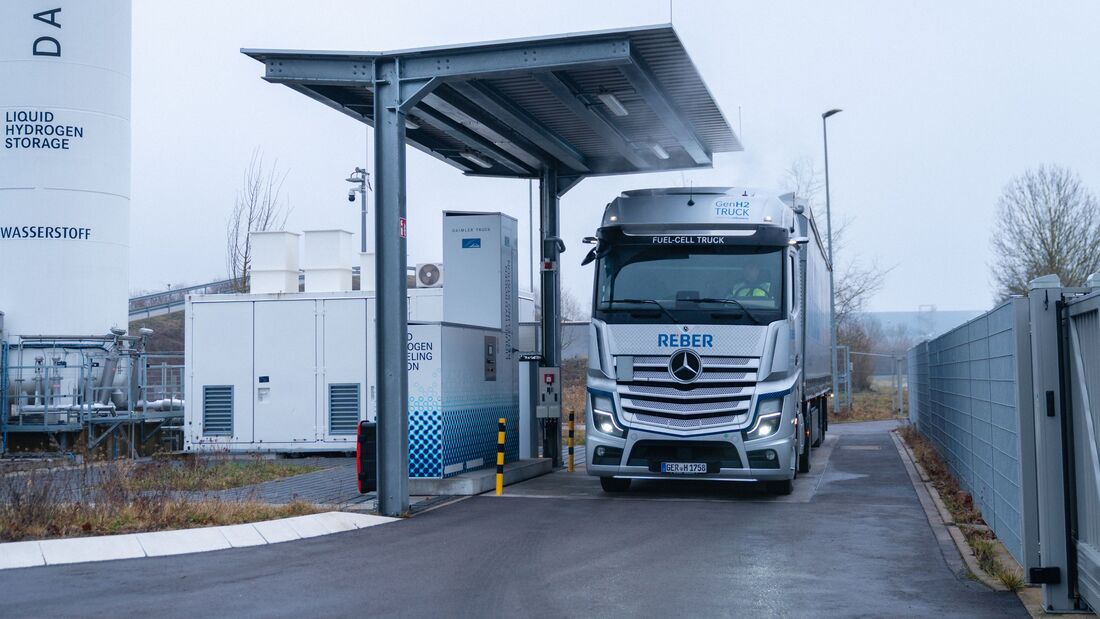
Eight industrial groups used the opening of IAA Transportation 2026 in Hanover to announce a joint hydrogen ecosystem for heavy-duty road transport in Germany, with the declared aim of creating the conditions for scalable deployment of hydrogen trucks by 2030. The partners are truckmakers Daimler Truck, Volvo Group and Toyota Motor Corporation, automotive supplier Bosch, and the energy and infrastructure companies Air Liquide, TotalEnergies, MB Energy and TEAL Mobility, according to eurotransport.de and Allgemeine Bauzeitung.
The companies describe the German scheme as the first in Europe to bring together all the preconditions for scalable hydrogen truck use along the entire value chain, backed by political support. They are calling for coordinated action by national governments and the European Commission to establish the model Europe-wide. In their joint statement, hydrogen is "an important complement to battery-electric vehicles" for meeting EU decarbonisation targets, especially in operations that require long range, high payloads, short refuelling times and flexibility.
Federal funding heavily oversubscribed
Steffen Bilger, Federal Minister for Transport, attended the joint press conference ahead of the show's official opening and welcomed the plan. "A hydrogen vehicle alone is not enough. We need filling stations and hydrogen in sufficient quantity — and companies that invest in hydrogen," he said, as reported by eurotransport.de.
Response to the transport ministry's funding call earlier this year was strong, according to Bilger. By the application deadline on 30 June, 526 applications had reached the project agency with a combined requested volume of €455 million — 71 applications for refuelling stations and 455 for vehicles and vehicle fleets. The federal government is providing €220 million for hydrogen support, less than half the amount applied for.
Vehicle programmes and refuelling capacity
Daimler Truck customers have covered almost 600,000 kilometres with fuel-cell trucks so far. From the end of 2026 the manufacturer plans to put a small series of 100 next-generation fuel-cell trucks into customer operation, with the first trucks powered by hydrogen combustion engines reaching the market in 2027. Daimler Truck says it is investing a mid-triple-digit million euro sum in hydrogen trucks by the end of the decade. Its H2 trucks are fuelled with liquid hydrogen, a choice the company links to longer range, although the planned ecosystem provides supply chains for both liquid and gaseous hydrogen.
"Electric mobility is reaching its limits," Daimler Truck President and CEO Karin Rådström said at the press conference, citing European Commission figures showing only around six million zero-emission vehicles on the road in Europe.
Volvo Group is advancing its hydrogen portfolio and investing in hydrogen drivelines for market launch by 2030, covering both fuel-cell trucks and trucks with hydrogen combustion engines. "Germany is showing the way, Europe should follow," said President and CEO Martin Lundstedt. Toyota is joining as a technology partner, drawing on more than 30 years of fuel-cell system development; Executive Vice President Hiroki Nakajima called the eight-company partnership essential if hydrogen is to succeed. At the same show, Toyota announced a cooperation with Iveco under the EU project "Empower", supplying the fuel-cell system for the Italian manufacturer's next generation of FCEV vehicles. Bosch contributes core vehicle components for gaseous hydrogen as well as refuelling technology for both liquid and gaseous hydrogen.
On the energy and infrastructure side, Volvo Group and Daimler Truck are working with hydrogen suppliers Air Liquide, TotalEnergies and MB Energy, and with station operators MB Energy and TEAL Mobility. Their infrastructure investments target high-capacity stations with strong refuelling performance, able to serve up to 100 trucks per day.
Cost parity with diesel is the decisive test
For fleet operators, the companies say, competitive costs against diesel determine whether hydrogen is used at all. The combination of political support in Germany and industrial cooperation is meant to deliver that through three levers:
- lowering vehicle costs through subsidy measures and series production;
- achieving a hydrogen price competitive with diesel at the pump via a more competitive hydrogen supply chain and greenhouse gas quotas;
- incentives for fleet operators such as toll exemptions for zero-CO2 vehicles.
Further measures the group wants from national capitals and Brussels include infrastructure expansion through coordinated funding programmes for stations and vehicles to meet the targets of the Alternative Fuels Infrastructure Regulation (AFIR), pragmatic and harmonised crediting mechanisms for renewable fuels, toll incentives, and shared de-risking along the entire value chain — from production and liquefaction through distribution to vehicle operation.