Hormuz disruption redirects Iraq-bound trade through Jordan’s Aqaba corridor
Security risks around the Strait of Hormuz are pushing some Iraq-bound cargo through Jordan’s Aqaba port and onward by road. Aqaba Container Terminal’s transit traffic rose 155.1% in the first half of 2026, testing whether Jordan can turn an emergency route into a durable logistics corridor.
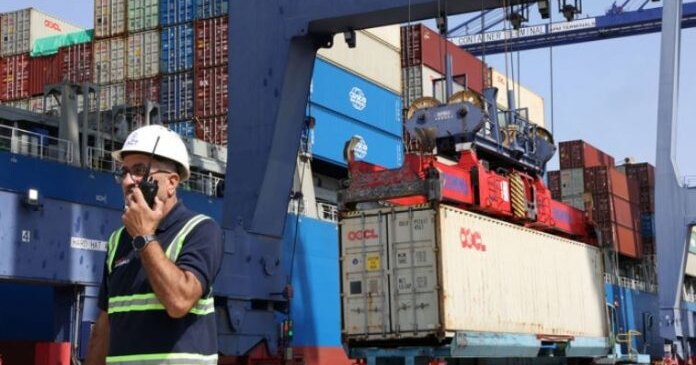
Aqaba gains as shipping avoids Hormuz
Disruption around the Strait of Hormuz is redirecting part of the region’s trade toward Jordan, giving the port of Aqaba a larger role in supply chains serving Iraq. As war and security risks reduce vessel movements through the strait, suppliers and shipping companies are examining routes that do not depend entirely on Gulf ports.
Lebanon Economy reports that transit traffic at Aqaba Container Terminal increased by 155.1% in the first half of 2026 compared with the same period a year earlier. Some cargo is now arriving by sea at Aqaba before travelling roughly 760 kilometres by truck to Iraqi territory. The increase marks more than a temporary rise in port activity: it shows that traders are willing to accept an additional land leg when the security and predictability of the established maritime route deteriorate.
The alternative is particularly relevant to Iraq, whose imports and oil exports are highly exposed to disruption in Hormuz. Baghdad has been considering routes through Turkey, Syria and Jordan, while Iran has issued special permits in recent weeks for some Iraqi oil tankers to cross the strait, according to Lebanon Economy.
Food cargo illustrates the changing route
In non-oil trade, Aqaba offers Iraq a maritime entry point outside the Gulf followed by a relatively direct overland connection. Recent data cited by Lebanon Economy indicate that part of the Thai rice shipments bound for Iraq has been redirected overland through Jordan and Turkey because of the disruption to navigation in Hormuz.
The shift is expanding Aqaba’s function beyond serving Jordan’s domestic economy. It also creates additional business for port operators, trucking companies and customs brokers. For Iraqi importers, the corridor adds redundancy to supply chains that have depended heavily on a single maritime chokepoint. For Asian and European suppliers, it provides another way to reach the Iraqi market when Gulf services become less reliable.
The route is not necessarily shorter or cheaper. Its commercial value depends on the balance between freight cost, security, transit time and predictability. If risks in Hormuz remain elevated, the higher cost of trucking cargo through Jordan may be preferable to exposing an entire shipment programme to delays at one maritime passage.
Jordan seeks to retain emergency traffic
Jordanian authorities are treating the rise in demand as a test of the country’s logistics capacity. In July, the Transport Ministry and logistics companies discussed faster customs clearance, shorter waiting times for vessels and containers, and smoother cargo movements through Aqaba and the Karameh border crossing with Iraq. Amman had already established a specialist committee in May to accelerate transit trade, particularly cargo destined for Iraq.
The central question is whether Aqaba can retain part of this business once navigation through Hormuz stabilises. That will depend on reducing transport costs, accelerating border procedures and improving connections between the port, highways and border facilities. If delays remain high, much of the traffic could return to its former routes when security conditions improve.
The crisis has also revived discussion of the proposed Basra-Aqaba pipeline, a project that could eventually give Iraq an oil export outlet outside Hormuz. The project has remained constrained for years by political and economic considerations, and the current increase in container transit does not resolve those obstacles. It does, however, demonstrate the strategic value of route diversification. Even if emergency volumes later decline, Aqaba has shown Iraqi buyers and international suppliers that an operational alternative exists when Gulf access becomes uncertain.