Prolonged drought and El Niño threaten Honduras corn, bean and rice crops
A prolonged midsummer dry spell intensified by El Niño is threatening Honduras' corn, bean and rice harvests, according to La Prensa. With planting stalled and only 10% of producers holding irrigation, the country's dependence on imports from the United States and Nicaragua looks set to deepen.
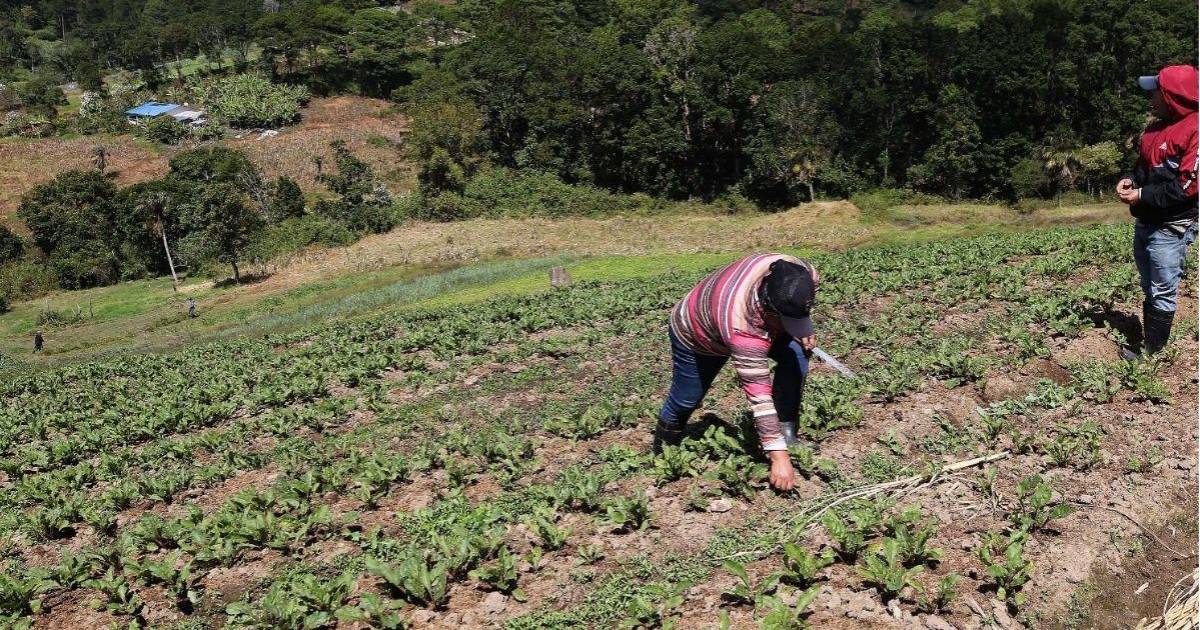
Honduras is facing mounting risks to its 2026 basic grain harvest as a prolonged midsummer dry spell known as the canícula, intensified by the El Niño phenomenon, threatens corn, bean and rice crops, according to La Prensa. Producers already burdened by high input costs, labor shortages and limited irrigation now confront potential losses that could deepen the country's dependence on imports.
Drought outlook worsens under El Niño
Alberto López, a meteorologist at the Comisión Permanente de Contingencias (Copeco), told La Prensa that the canícula has already begun and could extend into the first weeks of September because of El Niño. "The canícula, which generally lasts until August, could be longer this year," he said. Nine departments — Francisco Morazán, La Paz, El Paraíso, Valle, Comayagua, Choluteca, Ocotepeque, Lempira and Intibucá — remain under an indefinite green alert for drought.
López described the current El Niño as weak, forecasting that it will strengthen to moderate between August and September and turn severe in those departments between October and November, with a chance of persisting into next year. He noted that in 2025, under La Niña, rain fell even during the canícula — the opposite of the current pattern. A tropical wave was expected to bring heavy rain this week to Cortés, Atlántida, Yoro and Santa Bárbara.
Planting stalls across grains
In Marcovia, Choluteca, drought is affecting about 24,000 families who depend on farming, artisanal fishing and livestock, said deputy mayor José Ávila. Many producers chose not to plant, while others lost crops to water shortages; some are sowing only for cattle forage rather than human consumption. Authorities have declared a state of emergency, assisting 600 families through the World Food Programme and another 250 via a livelihood recovery program, with a goal of reaching some 10,000 families.
Jairo Aguilera, a bean producer in Danlí and member of the Cámara de Frijol, warned that quantitative losses would begin in El Paraíso if rain did not return within about four days. Roughly 18,000 manzanas of corn and beans were planted in the department, with the bean harvest due in late August. He stressed that only about 10% of the country's producers have irrigation systems, leaving crops fully exposed to the weather.
Import dependence set to deepen
Fredy Torres, president of the Asociación Hondureña de Agricultores and a rice-sector representative, said that by this time in other years roughly 5,000 manzanas of rice would have been planted between the Valle de Comayagua and Jesús de Otoro. This season only 27 manzanas in Jesús de Otoro and 31 in the Valle de Comayagua have been recorded. He blamed fear of El Niño, high fertilizer costs and limited government support. Against national rice demand of 5 million quintales, Honduras produced just 447,000 quintales in 2025 and may reach only 300,000 this year, with the shortfall covered by imports from the United States.
Corn production has also fallen, to 5 million quintales in 2025 from a historical range of 8 to 10 million, against consumption of 22 to 26 million quintales, obliging imports mainly from the United States. Bean output of about 2 million quintales a year trails consumption of 2.4 million, with the deficit filled by Nicaragua. In the Trinacional border region shared with El Salvador and Guatemala, the latest Integrated Food Security Phase Classification (CIF) estimated 113,000 people — 16% of the analyzed population — in crisis or emergency-level acute food insecurity between April and June 2026, a figure projected to rise to 157,000, or 23%, between July and October 2026.