Honduras launches certified-seed rice program to cut import dependence
Honduras's rice sector has begun planting 1,000 manzanas with high-yield certified seed in a pilot backed by a roughly 5-million-lempira investment. The program, reported by infobae.com, aims to improve grain quality and reduce the country's reliance on imported rice.
Certified-seed pilot targets rice quality
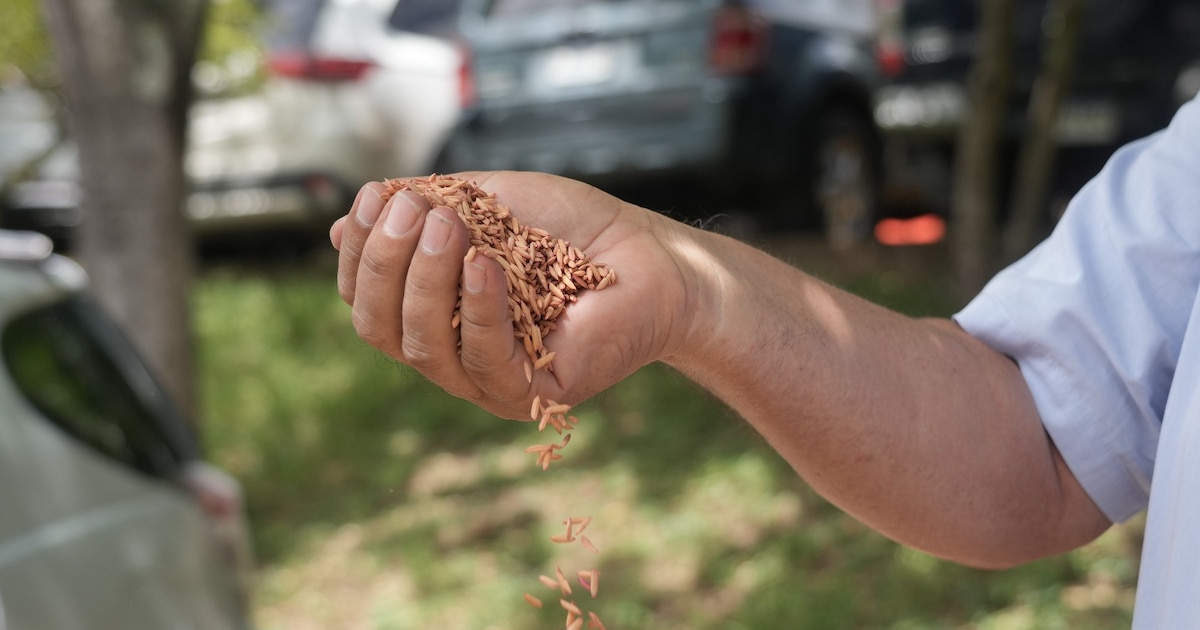
Honduras's rice sector has begun a program to plant 1,000 manzanas with high-yield certified seed, part of a national effort to raise yields and reduce the country's reliance on imported rice, according to infobae.com. The initiative will evaluate how the genetic material behaves agronomically across different producing zones in Honduras and carries an investment of roughly 5 million lempiras, equivalent to about $186,770.
Rice producer Federico Mejía said the seed's arrival was made possible by backing from the Secretariat of Agriculture and Livestock (SAG), which managed the phytosanitary permits and coordinated with authorities in the Dominican Republic to complete the import of the genetic material. The pilot is designed to test whether improved varieties can perform reliably under Honduran field conditions before any wider rollout.
A quality gap versus imported rice
According to Mejía, one of the sector's main challenges is the quality of the grain produced domestically. Part of the national output shows contamination problems and characteristics that reduce its commercial value. That situation has limited the sector's competitiveness against imported rice and narrowed growth opportunities for local producers.
The certified varieties are intended to reverse that by using improved genetics capable of delivering more uniform, more resistant grain with better industrial and commercial characteristics. Results from this pilot phase will form the basis for deciding whether to expand use of the seed in future planting seasons, with the goal of producing higher-quality grain that finds broader acceptance in the domestic market.
Irrigation and water remain constraints
Mejía noted that rice farming still demands significant investment because it requires efficient irrigation systems, permanent water availability and specialized technical assistance to secure good yields. Those conditions are among the main obstacles to expanding the cultivated area in the country.
Honduras currently depends on imports to cover domestic rice consumption. Producers and authorities agree that strengthening local production would reduce that gap, generate greater economic opportunities for farmers and contribute to the country's food security. The 5-million-lempira investment is aimed at reinforcing the rice production chain and improving conditions for growers.
A model for scaling up
If the pilot delivers the expected results, the initiative would serve as a model to expand national production, strengthen the sector's competitiveness and progressively reduce dependence on imported rice, while supporting food security and economic development in producing areas. The results obtained during the project will be evaluated to define future actions that broaden the use of certified seed and strengthen technology transfer to the agricultural sector. Producers, for their part, continue to press the government on the importance of supporting the sector at the national level.