Hokkaido’s onion freight train faces viability crisis as rail losses mount
The freight train serving Japan’s leading onion-producing area around Kitami is at risk as the Sekihoku Line records an annual loss of ¥5.2 billion. Moving the cargo to roads is difficult because Japan’s shortage of truck drivers leaves growers with few practical alternatives.
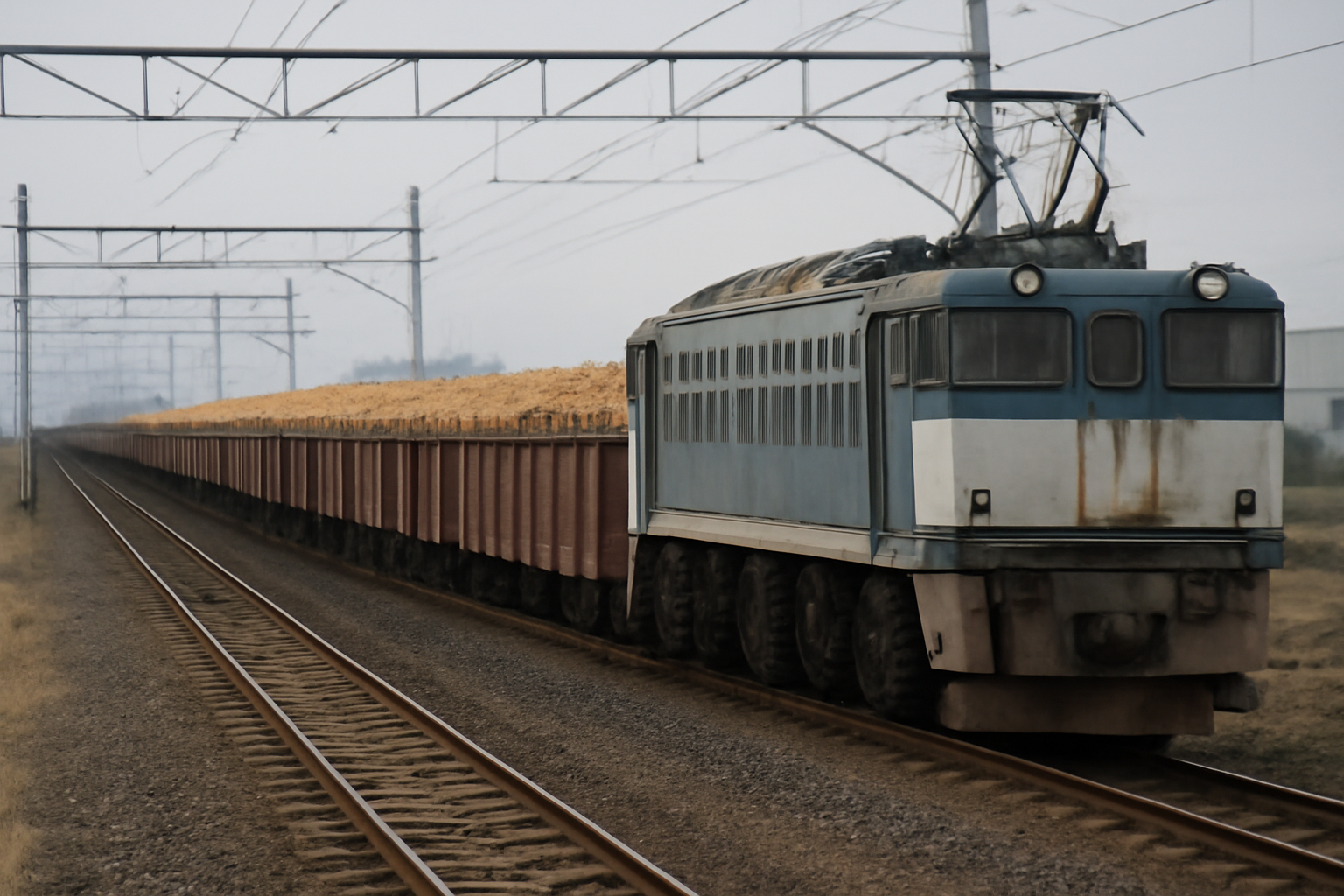
Harvest exposes a critical transport dependency
The freight train carrying onions from the area around Kitami in Hokkaido is facing a viability crisis just as the harvest reaches its peak. Kitami is Japan’s largest onion-producing city, making the service an important part of the logistics system connecting farms in the country’s northernmost main island with downstream markets.
At peak harvest, large volumes of onions must be loaded into containers and moved away from the production area. The dedicated service, widely known as the “onion train,” provides capacity for this concentrated seasonal flow. Its uncertain future therefore concerns more than the operation of a single train: it raises questions about how growers can move a major crop reliably when demand for freight capacity is highest.
Onions are a bulky agricultural product with comparatively low value per unit of weight. Transport cost and access to sufficient capacity can consequently have a direct bearing on growers’ margins and on the commercial reach of the producing region. A disruption to the current system could also affect processors, wholesalers and retailers that depend on predictable deliveries from Hokkaido.
¥5.2 billion annual loss weighs on the line
The train operates over JR’s Sekihoku Line, which runs at an annual loss of ¥5.2 billion. That deficit places the continued operation of services on the route under pressure and makes the onion train’s future inseparable from the broader economics of the railway.
The freight question cannot be assessed solely by comparing one train with a fleet of trucks. Rail infrastructure supports both passenger and freight movements, while the viability of the line depends on the combined use of that network. Maintaining the route has therefore become linked to efforts to increase passenger demand and create a seamless public transport network.
For agricultural users, the immediate issue is whether the railway can remain available during the short period when transport requirements rise sharply. The annual financial loss is borne across the line, but the consequences of service reductions would be concentrated among communities and businesses with limited alternatives. Kitami’s growers are particularly exposed because harvest volumes cannot simply be postponed until transport becomes available.
Truck substitution constrained by driver shortage
A wholesale shift from rail to road would be difficult. The shortage of truck drivers already limits the ability of road haulage to absorb the onion volumes. Replacing train capacity would require enough vehicles and drivers to operate during the harvest peak, precisely when large quantities need to leave the region within a compressed period.
Road transport may remain part of the solution, particularly for first- and last-mile movements, but the driver shortage reduces its ability to serve as a complete substitute. Greater dependence on trucks could leave producers competing for scarce capacity and more exposed to operational disruption. The available information does not provide a cost comparison between the two modes, but the capacity constraint alone makes an immediate conversion impractical.
The issue illustrates the close connection between rural passenger policy and agricultural logistics. Measures intended to sustain the Sekihoku Line through higher passenger use and better links between transport services could also preserve freight options for the onion industry. Conversely, failure to support the wider route would narrow the choices available to producers even if demand for moving the crop remains strong.
The immediate harvest continues, with onions being packed into containers and transported by train. The longer-term question is whether the railway’s financial losses can be addressed before growers are forced to rely on a road freight market that lacks enough drivers. For Kitami, the outcome will shape the reliability of the supply chain serving Japan’s largest onion-producing area.