Higher Yields Sustain Russian Milk Output as the National Cattle Herd Shrinks
Russia is maintaining ample milk production despite a decline in cattle numbers, as genetics, feeding and farm management raise output per cow. Government grants and consolidation are supporting investment, although high operating costs and long production cycles remain barriers for smaller farms.
Productivity offsets fewer cattle
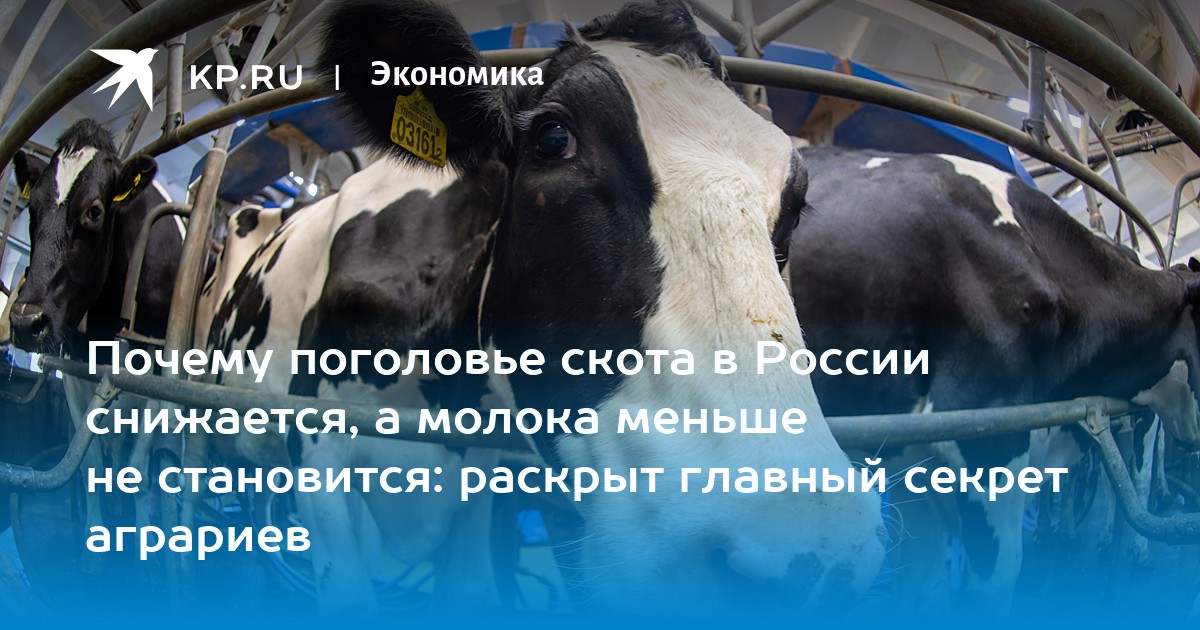
Russia’s cattle population has declined, according to Rosstat figures cited by KP.RU, but the contraction has not produced a corresponding shortage of milk. Domestic supplies remain ample and milk prices are falling, the publication reported. The main explanation is higher output per animal rather than greater use of milk powder or vegetable-fat substitutes.
Improved genetics, balanced feed, veterinary supervision and better housing allow commercial farms to obtain more milk from smaller herds. The trend is particularly important for processors and buyers of raw milk: production volumes can remain stable even as the number of animals falls, but supply becomes increasingly dependent on efficient, well-capitalised farms.
Holstein genetics lift yields
The Tsvetkov family farm in the Moscow region illustrates this model. The business has more than 600 cattle, including about 300 dairy cows, and produces over 200 tonnes of milk annually. Cheese makers buy most of the output because they require milk with sufficient fat, calcium and casein to form a dense curd. The farm also produces yoghurt, cheese and curd desserts.
The operation chose Holstein cattle for their milk yield and fat content. KP.RU reported that Kostroma cows historically produced an average of 3.5-5 tonnes during a lactation period of about 300 days. Holsteins now yield 9-12 tonnes, while the strongest animals can reach 16 tonnes. The Tsvetkov farm’s average has increased from 7 tonnes per cow in 2018 to 9.2 tonnes, with a target of 10-11 tonnes without compromising animal health.
Russia imported more than 266,000 Holstein breeding animals from the United States and Europe between 2000 and 2012, according to Agriculture Ministry data cited by KP.RU. Holstein genetics have also been used since the Soviet period to improve local black-and-white and red-and-white breeds. Crossbreeding combines higher productivity with greater adaptation to Russian climate and farming conditions, although scientists warn that extensive Holsteinisation can reduce breed diversity and erode domestic genetic resources.
Technology and costs shape farm economics
High-yield cattle require precise management. The farm monitors fibre, protein and vitamin intake, conducts blood biochemistry checks and uses herd-management software containing each animal’s pedigree, vaccination, insemination and daily-yield records. Holsteins can release milk at 3.5 litres per minute, allowing a cow producing 30 litres in one session to be milked in less than 10 minutes.
The economics remain demanding. The Tsvetkov business estimates that feed, care and other expenses for one cow total 1,500 rubles per day. A dairy cow provides its first milk only about two years after birth, while Holstein heifers can be inseminated from 12 months if they weigh more than 400 kilograms. That can bring the first return 4-6 months earlier than the previous practice of inseminating at 16-18 months. Sex-sorted semen can also produce female calves in 90-95% of cases, accelerating herd replacement.
Grants encourage larger farms
The family acquired the failed farm at auction in 2018 and rebuilt it with a starting budget of about 150 million rubles, including a 36 million-ruble non-repayable state grant. At the end of July, the Russian government introduced another grant for small farms seeking to accelerate expansion, with support of up to 265 million rubles. Such funding can help finance cattle and machinery, but beneficiaries must still contribute their own or borrowed capital. The result is likely to reinforce consolidation: farms able to invest in genetics, feed production, processing and sales are best placed to maintain output as the national herd contracts.