High-Protein Foods Move From Russian Pharmacies to Grocery Shelves
Pharmacy sales of protein supplements in Russia fell 15.6% in volume and 16.9% in value in January–July 2026, while food manufacturers report growing demand for high-protein items in dairy, snacks and beverages. Average prices for specialised protein blends are falling even as whey protein isolate has risen five-fold in three years to €28,000 per tonne.
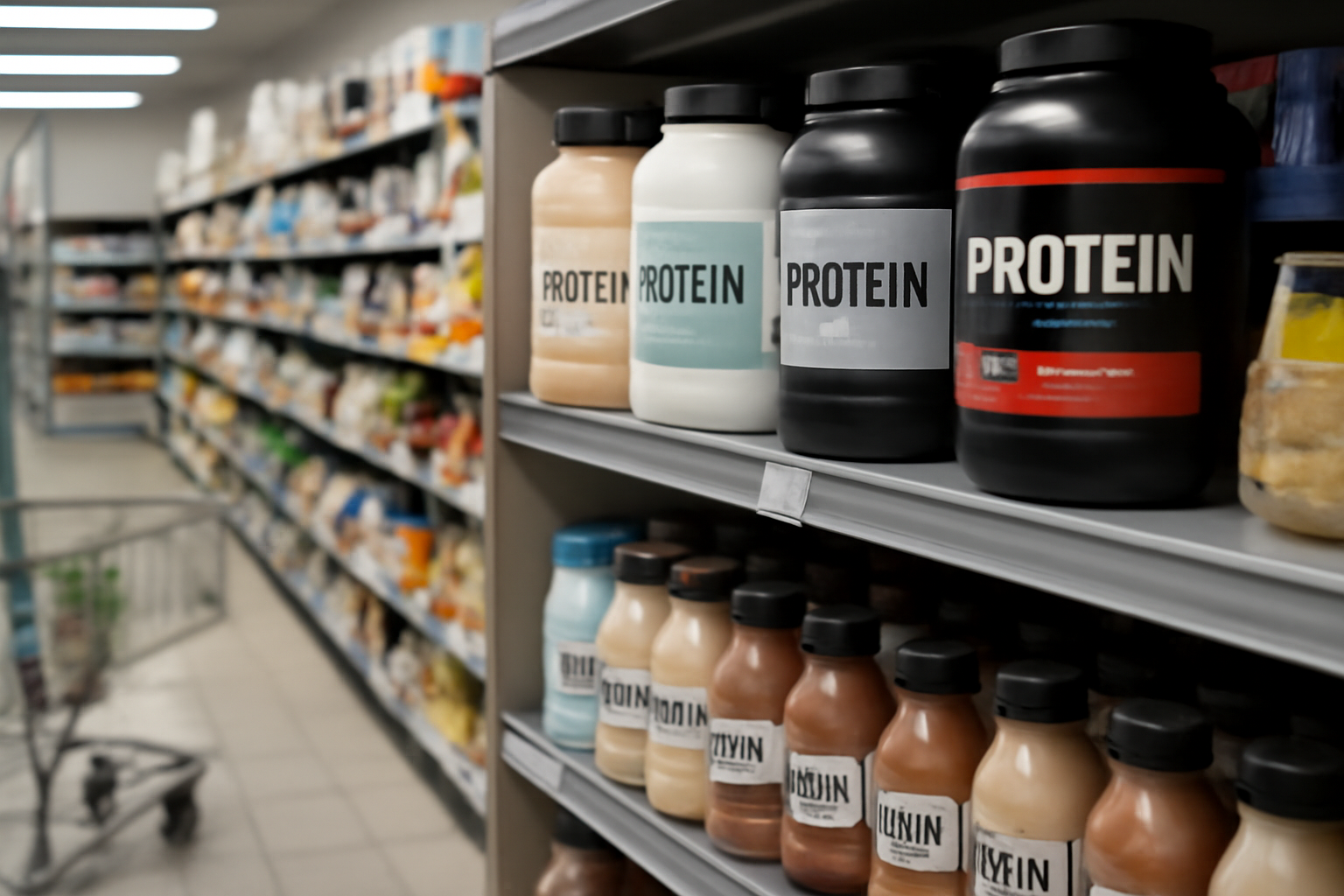
Russian demand for supplementary protein is moving out of specialised dietary supplements and sports nutrition into everyday food categories, logistics.ru reports. Pharmacy sales of protein supplements contracted at double-digit rates in January–July 2026, while food manufacturers record rising interest in high-protein products. Finished protein items are getting cheaper on the shelf even as the key raw materials behind them become markedly more expensive.
Pharmacy channel shrinks while overall consumption grows
According to DSM Group, pharmacy sales of protein-containing dietary supplements in Russia fell 15.6% in volume in January–July 2026, to 238,200 packs, and 16.9% in value, to 97.1 million rubles.
The category as a whole is moving in a different direction. Lyubov Andreeva, head of dietary supplements and sports nutrition at CRPT, points to year-on-year growth in total consumption of protein preparations. DSM Group chief executive Sergey Shulyak links the pharmacy decline to buyers switching to ready-made high-protein products — protein bars and specialised snacks sold through grocery retail. Protein is increasingly becoming an attribute of a familiar product rather than a separate purchase at a pharmacy or a sports nutrition store.
The scale of that transfer cannot yet be measured. Falling pharmacy supplement sales and rising sales of cottage cheese, bars or drinks belong to different channels with different comparison bases, so pharmacy data describe only part of protein demand.
Dairy shows the clearest repositioning
The shift remains limited in absolute terms. Artem Belov, chief executive of the National Union of Milk Producers, estimates that high-protein products account for less than 1–5% of the dairy market. The category is growing from a small base and remains far from mass volumes. The new positioning is most visible in dairy, where Logika Moloka reported the following volume sales growth in the first half of 2026:
- pressed cottage cheese: up 21.8%
- soft cottage cheese: up 62.1%
- curd grain in cream: up 42.6%
- crumbly cottage cheese: up 9.5 times, with the company attributing part of the increase to a product line update
One producer's figures do not characterise the Russian market as a whole. Logika Moloka attributes heightened buyer interest to the popularity of healthy lifestyles and dietary control, and says it now observes high-protein positioning not only in dairy but also among beverages and confectionery. Specialised protein blends are therefore competing for the same demand with products from other categories, since consumers no longer need to move to standalone supplements to raise protein intake.
Retail prices fall as ingredient costs climb
CRPT data show the weighted average price of protein dietary supplements at 1,480 rubles in the second quarter of 2026, 9.5% lower than a year earlier. Products priced below the average accounted for 58.7% of the supply of protein blends. CRPT links the trend to consumer economising and range expansion, with Andreeva explaining that Russian producers are launching more affordable products and partly displacing more expensive positions.
Raw materials are moving the other way. Food manufacturers and supplement producers use milk protein concentrates, whey protein isolates, casein, caseinates and other ingredients. According to Financial Times data for May 2026, whey protein isolate has risen five-fold in three years, to €28,000 per tonne. Alexander Zhestkov, executive director of the Union of Food Supplement Producers, estimates raw material price growth in Russia at 25% in the first quarter of 2026 alone.
There is no cheaper input base behind the lower average price of finished protein supplements: the share of affordable positions is expanding precisely as key ingredient costs rise. Manufacturers are broadening their assortment against more expensive raw materials and cheaper retail offers, and no data are available on how that combination affects margins.
Competition for the protein-focused shopper now involves not only sports nutrition and supplement makers but also companies in dairy, snacks, beverages and confectionery. Different parts of the market are moving unevenly: pharmacy supplement sales are falling, overall consumption of protein preparations is rising, high-protein positions are appearing in new food categories, and average prices for specialised blends are declining while raw materials become dearer.