High costs and low yields widen Nigeria’s palm oil supply deficit
Nigeria’s palm oil industry is struggling to meet domestic demand as high production costs, poor yields and inefficient operations constrain supply. The deficit increases pressure on importers and food manufacturers while strengthening the case for investment in plantations and processing efficiency.
Nigeria’s palm oil productivity challenge
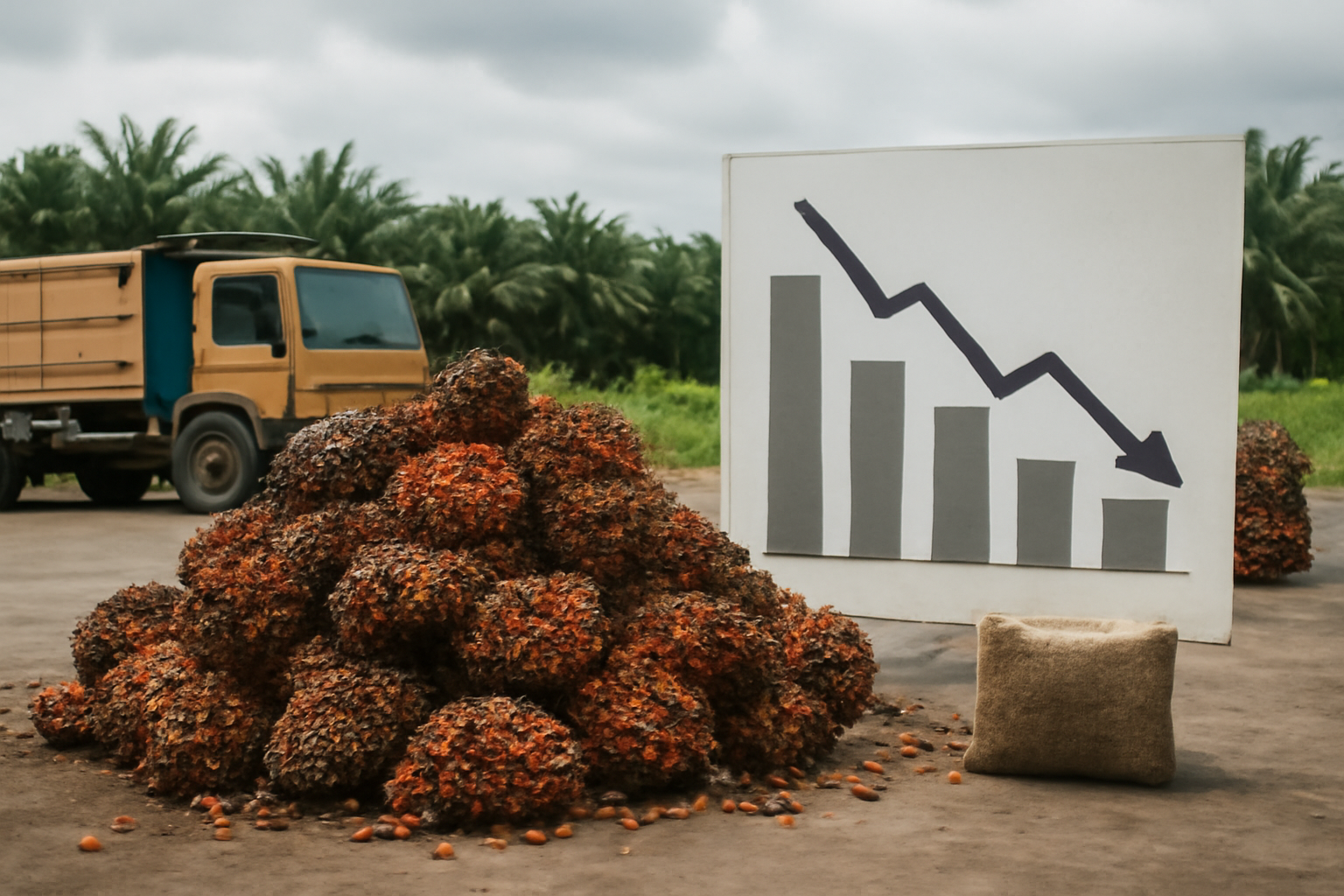
Nigeria’s palm oil industry is facing a widening gap between domestic supply and demand as high production costs, poor yields and inefficient operations restrict output. Industry stakeholders cited in the available report identify productivity as the central problem facing the sector.
The shortage is therefore not presented simply as a consequence of strong consumption. It also reflects constraints within plantations and processing operations. When farms produce less oil from existing planted areas, the cost of cultivation, harvesting and transport is spread over a smaller volume. Inefficiencies during processing can further reduce the amount of saleable oil reaching the market.
These conditions create difficulties for producers across the industry. Plantation operators must manage rising costs without the benefit of stronger yields, while processors depend on a sufficient and reliable flow of fresh fruit bunches. Smaller operators may face particular pressure because they have less capacity to absorb operating costs or finance improvements.
Food manufacturers face tighter supply
Palm oil is an important input for food processing, making the domestic supply gap relevant beyond the plantation sector. A persistent shortage can make procurement more difficult for manufacturers and expose them to higher or less predictable raw-material costs. Companies may need to compete for locally produced oil or seek imported supplies when these are commercially and legally available.
The implications depend on how much of the deficit can be covered and at what cost. Imported palm oil may support continuity for processors, but purchases from foreign suppliers also expose buyers to international prices, currency movements, freight charges and trade policy. Domestic shortages can therefore transmit cost pressure from plantations and processors to manufacturers using palm oil in finished products.
Traders also face a market shaped by uncertain local availability. Limited supply can create opportunities for distributors able to secure dependable volumes, but it raises inventory and pricing risks. Buyers need clearer information on production, processing capacity and delivery schedules to avoid disruptions.
Investment must focus on output per hectare
Closing the deficit requires more than expanding planted area. Improving yields on existing plantations could increase supply while allowing fixed operating costs to be distributed across a larger volume of production. Better planting material, farm management, harvesting practices and timely collection may all be relevant, although the available source material provides no figures on their current adoption or potential impact.
Processing efficiency is the second part of the equation. Mills that recover more oil from available fruit can raise marketable output without a corresponding increase in harvested area. Reliable equipment, maintenance, logistics and coordination between plantations and mills are therefore important investment considerations.
Investors will need to distinguish between projects based mainly on acreage growth and those designed to improve productivity throughout the production chain. The latter may address both sides of the problem by increasing output and lowering unit costs. However, the absence of detailed data on national production, demand, yields and import volumes makes it impossible to quantify the size or likely duration of the deficit from the available material.
Supply security remains the central issue
For producers, the immediate priority is raising commercially recoverable output from existing assets. For processors and food manufacturers, the challenge is securing predictable supplies at manageable costs. Importers may help cover part of the gap, but dependence on external supply introduces additional price and currency exposure.
Nigeria’s palm oil shortage ultimately reflects a productivity problem across cultivation and processing. Until yields and operating efficiency improve, domestic users are likely to remain exposed to constrained availability and the costs associated with balancing local production against imported supply.