Heavy rains put about 10% of Latvia’s potato harvest at risk
Latvian growers could lose about 10% of this year’s potato harvest after prolonged rain left fields waterlogged and machinery unable to operate. The disruption is raising harvesting, sorting and storage costs and could push potato prices higher through winter and spring.
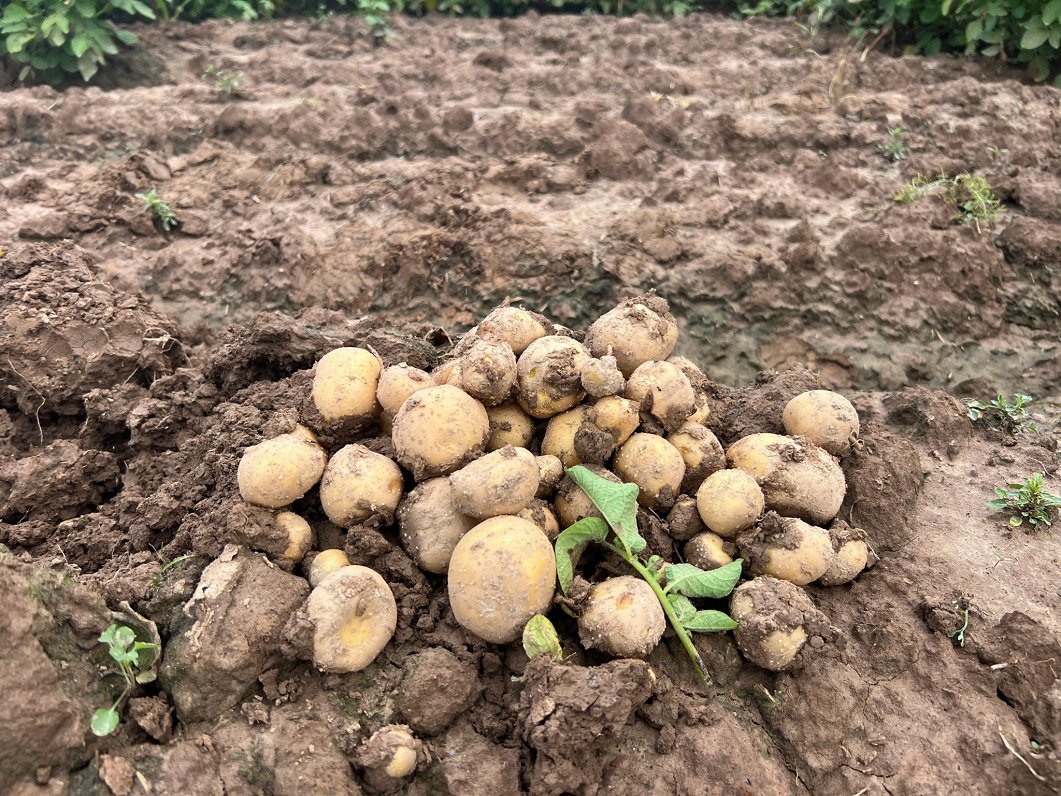
Waterlogged fields halt harvesting
Latvia’s potato growers could lose about 10% of this year’s harvest after prolonged rainfall left fields waterlogged, Latvian Public Broadcasting’s LSM reported. Machinery is sinking into saturated soil, potatoes are beginning to rot and part of the crop is likely to remain unharvested. The final loss cannot yet be calculated because a substantial volume is still in the ground.
Potatoes were planted on approximately 7,500 hectares across Latvia this year. The Potato Growers and Processors Union, which represents 32 large growers, said all its members were experiencing harvesting difficulties. Potatoes that remain under water for two days can begin to rot, according to union chair Aiga Kraukle.
Kraukle said her operation planted 225 hectares but had harvested only close to 30 hectares because equipment could not enter much of the land. On fields where harvesting remains possible, fuel consumption per hectare is double or almost triple the normal level. Additional machinery is also needed to pull bogged-down harvesters and trailers out of the soil.
Growers face losses and higher processing costs
Holland Agro, one of Latvia’s largest potato growers, planted approximately 150 hectares this year and estimates that the crop on about 10 hectares could already be lost. At one field, around 1.5 hectares had been flooded and would no longer be harvested, work manager Arnis Paškevičs told LSM.
The wet conditions create costs beyond the field. Harvesters collect sound potatoes together with wet and rotten tubers, requiring repeated sorting after delivery. Moist soil and crop material can block handling equipment and conveyor belts, while moving loaded trailers across soft ground takes more time, fuel and machinery.
Quality deterioration also threatens the volume that can be stored. Potatoes harvested wet or affected by rot are less likely to remain marketable through winter and into spring. Paškevičs said Latvia may be able to preserve part of the crop, but not all of it, and warned that this would have a strong effect on potato prices.
Emergency measures protect access to support
The Latvian government has declared an agricultural emergency following a proposal from the Ministry of Agriculture. The measure provides farmers with exemptions from certain obligations and, in specified cases, allows them to retain eligibility for support payments when harvesting or compliance with particular requirements is impossible.
The emergency provisions may ease the immediate financial pressure, but they do not recover crops already damaged by standing water. The market impact will depend on how much acreage becomes accessible, how quickly conditions improve and what share of the harvested potatoes remains suitable for storage. With losses currently estimated at about 10%, reduced availability and poorer keeping quality create a risk of tighter Latvian supply and higher prices during winter and spring.