Heat and Water Shortages Damage Japan’s Mikan and Sudachi Crops
Extreme heat and scarce rainfall are discoloring mikan in Ehime Prefecture and raising concerns about lower citrus supplies. Sudachi crops have also been affected, while one manufacturer has suspended ponzu production.
Sun damage spreads through Ehime orchards
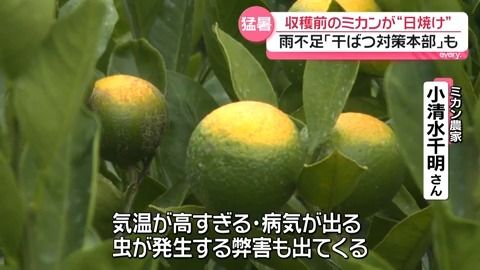
Prolonged heat and a lack of rainfall are damaging citrus crops in western Japan, discoloring mikan before harvest and creating uncertainty for processors and retailers. NTV News reported that green fruit in Uwajima, a major mikan-producing area in Ehime Prefecture, had turned yellow after suffering sun damage. Growers warned that badly affected fruit can eventually turn black and rot.
The immediate causes are unusually high temperatures and insufficient rain. Uwajima received almost no rainfall for roughly one month through the 6th of the month, according to NTV News. Across much of western Japan, average temperatures during the month and a half through the 23rd were at least 1.5°C above normal. Farmers said excessive heat was also contributing to disease and insect problems, adding further risk before the harvest.
The damage is not limited to fruit appearance. Mikan farmer Chiaki Koshimizu said the sunburn was severe and could ultimately result in decay. For commercial growers, fruit losses would reduce marketable output while increasing the amount of labor and water required to protect the remaining crop.
Emergency watering cannot replace rainfall
JA Ehime Minami has established a drought response headquarters for the first time in nine years. Local growers have begun using sprinklers and other irrigation measures, but fruit-tree specialist Takashi Tanaka said the water supplied does not come close to the volume provided by natural rainfall. The intervention may limit some damage, yet it cannot fully offset a sustained dry period.
The situation exposes the vulnerability of orchards when high temperatures and water shortages occur together. Irrigation can support fruit development, but growers must allocate limited water across orchards while monitoring sunburn, pests and disease. If the weather pattern continues, the volume and quality of fruit available for fresh sale and processing could both come under pressure.
Processors prepare for tighter raw-material supplies
Businesses that rely on Ehime mikan are already assessing procurement risks. Makiko Oyabu of Tokyo-based specialist shop I’m mikan told NTV News that farmers had reported poor development and drying caused by the lack of rain and extreme heat. The shop sells gelato made with Ehime fruit and promotes 100% mikan juice dispensed from a tap.
Oyabu said the volume harvested determines how much juice can be produced. The business is therefore seeking to expand its supplier base in case availability declines. That response illustrates how orchard losses can move rapidly down the value chain: less marketable fruit means less material for juice, desserts and other processed citrus products.
Sudachi, another citrus fruit associated with western Japan, has also been affected by the extreme heat. NTV News reported that one manufacturer suspended ponzu production as a result. No production-loss estimate or timetable for resuming output was provided. The suspension nevertheless shows that weather damage is already affecting manufacturing decisions, not only expectations for the coming harvest.
For growers, processors and buyers, the central issue is now the duration of the heat and rainfall deficit. Continued shortages would increase competition for usable citrus and could force manufacturers to broaden procurement, reduce output or adjust product ranges. The final market impact will depend on how much fruit survives in saleable condition and whether rainfall improves before harvesting advances.