Extreme Heat Threatens Croatia’s Late Potato Crop and Raises Supply Risks
Croatian growers warn that extreme heat and delayed rainfall have damaged late potato varieties and postponed harvesting. Domestic production covered only about 40% of national demand last year, while constrained supplies elsewhere in Europe may limit Croatia’s ability to offset a shortfall through imports.
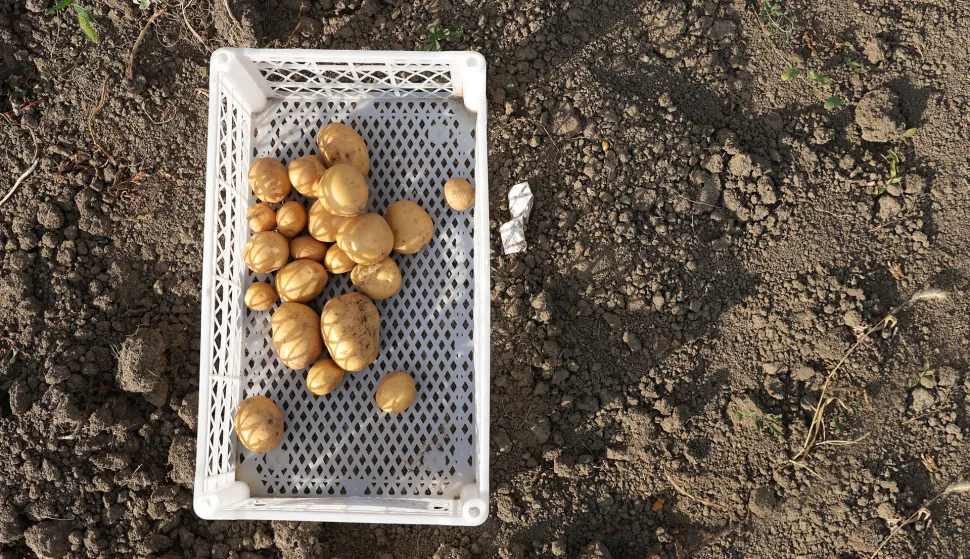
Heat delays the late potato harvest
Croatian potato growers are waiting for the first substantial rainfall after a prolonged heatwave before harvesting late varieties, amid warnings that high soil temperatures and rot could reduce the crop. Damir Mesarić, vice-president of the Međimurje Association of Ware Potato Producers, told Glas Slavonije that the extent of the damage will become clear only when lifting begins.
Temperatures in July and August were exceptionally high, according to Mesarić, and late potatoes are already developing rot in the ground. Growers cannot safely move the crop into storage while the tubers remain hot. Potatoes are currently at 25 degrees Celsius or more and need to cool to at least 18 degrees before storage. Mesarić said rainfall of at least 60-70 litres per square metre would be needed before producers could speak of starting the late harvest.
On Mesarić’s farm, potatoes are lifted mechanically from around 5 a.m. Only the volume needed for immediate sale is harvested, with further work suspended as daytime temperatures rise. He grows early and late varieties on approximately 35 hectares, down from about 50 hectares previously, and said weather and other production conditions had forced him to reduce his planted area.
Early varieties outperform last year
The outlook for early potatoes is less severe. Around Belica in northern Croatia, a major potato-producing area, the average yield is expected to reach 25-30 tonnes per hectare this year, compared with only about 15 tonnes per hectare last year. Mesarić said some rain in June helped early varieties withstand drought more successfully than in 2025.
Even so, the expected yield remains below the 30-40 tonnes per hectare associated with a good or optimal season. Međimurje producers therefore assess 2026 as a moderately poor year so far. Early varieties cannot solve the broader supply problem because they are intended for prompt consumption and cannot be stored for winter use.
Irrigation will be a key dividing line for late potatoes. Mesarić expects farms with irrigation to obtain at least some yield, while growers without it could face heavy losses. The delayed start to harvesting also increases uncertainty over both the marketable volume and the quality of potatoes suitable for storage.
Low self-sufficiency increases import exposure
Croatia is not self-sufficient in potatoes. Domestic output had previously covered 60-70% of national requirements, but that share fell to about 40% last year, Glas Slavonije reported. A weak late crop would consequently increase the need for imported potatoes.
Growers are uncertain whether imports can close the gap. Mesarić said European producers planted less and are also recording lower yields. France, Spain and Germany have experienced high temperatures, leaving their crop prospects uncertain. Unlike last year, when Europe had surpluses, he expects potato availability to remain below the levels seen in good seasons.
Growers say current prices do not cover costs
Mesarić said producers receive €0.30 per kilogram for potatoes supplied in 10-kilogram packs. After deducting packaging and transport for delivery to Zagreb, the grower retains €0.24-€0.25 per kilogram. Producers consider €0.35 per kilogram a viable price that would cover their work and production costs.
Some foreign-owned retail chains offered five-kilogram packs for €1.45 during the week covered by the report. That puts the retail price of potatoes presented as domestically produced below €0.30 per kilogram. Mesarić said traders had been expecting cheap imported potatoes, but such supplies were not available. With domestic output already covering only a minority of demand, losses in late varieties and limited European availability could tighten Croatia’s market and intensify pressure on growers, retailers and importers.