Heat Brings Forward Italy’s Grape Harvest as Yields Fall Sharply
High temperatures have accelerated Italy’s grape harvest while yields are reported to be falling dramatically. Water stress is now a central concern for growers, prompting calls for new water reserves.
Heat advances the harvest
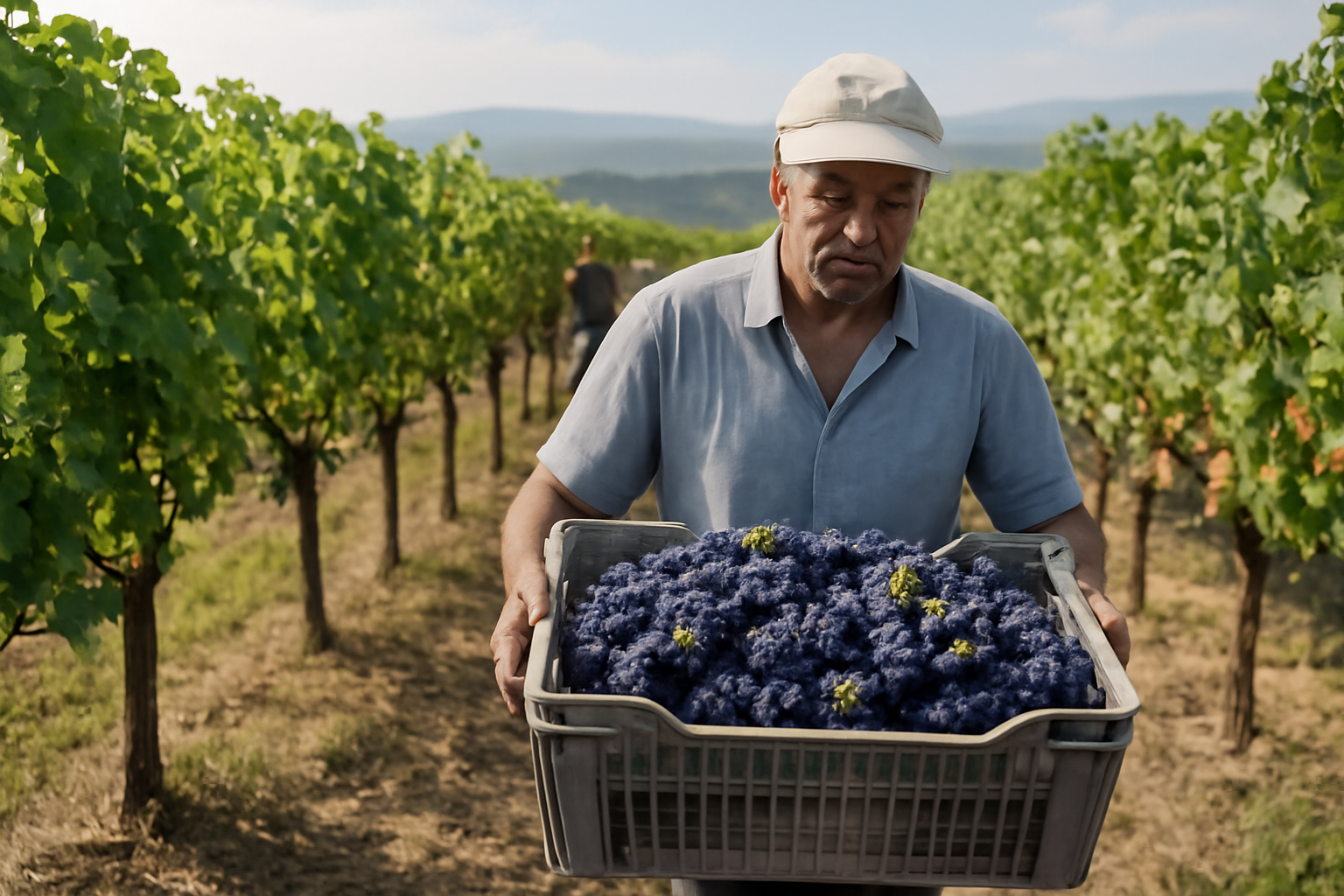
High temperatures have accelerated grape harvesting in Italy, forcing growers to respond to an earlier production cycle while managing severe water stress. The available report describes yields as being in dramatic decline, although it provides no numerical estimate of the losses or a comparison with the previous harvest.
The combination of earlier picking and lower yields creates two separate challenges. Producers must mobilize workers, machinery and processing capacity sooner than expected, while also handling a smaller volume of grapes. For wineries, the timing matters because harvested fruit must reach processing facilities promptly. An accelerated harvest can therefore concentrate demand for labor, transport and cellar capacity within a shorter period.
Water stress becomes the central production issue
Growers have focused their efforts on managing water stress caused by the heat. Cinzia Pagni, president of the Italian Farmers Confederation, or Cia, said new water reserves are needed. Her call indicates that the problem extends beyond decisions made during the harvest itself and raises questions about how vineyards secure water during periods of high temperatures.
Additional reserves could give producers more flexibility when rainfall and existing supplies are insufficient. However, the source material does not specify proposed projects, required investment, affected wine regions or a timetable. It also does not state whether the reported yield decline is uniform across Italy. Those details will determine which growers face the greatest exposure and where investment in storage and irrigation could have the largest effect.
Lower availability may pressure the wine supply chain
A sharp reduction in vineyard yields means less fruit is available from the affected land. The commercial impact will depend on the scale of the losses, grape varieties involved and the ability of wineries to adjust their sourcing, none of which is quantified in the report. Producers with limited water access may face the most immediate pressure, while processors must plan around uncertain intake volumes and an earlier delivery schedule.
For grape buyers and wineries, lower availability can intensify competition for suitable fruit, particularly where quality requirements restrict substitution between regions or varieties. The report does not provide grape or wine prices, so a direct cost impact cannot yet be measured. Still, reduced yields can raise unit costs because vineyard expenses are spread across fewer grapes, even when some harvest-related spending falls with volume.
The early Italian harvest is therefore both an immediate operational issue and a test of longer-term water resilience. Growers must complete the current harvest under heat and water constraints, while industry organizations are pressing for additional reserves. The next indications on regional output, grape quality and prices will show whether the decline remains a localized production problem or becomes a broader supply and cost issue for Italy’s wine sector.